
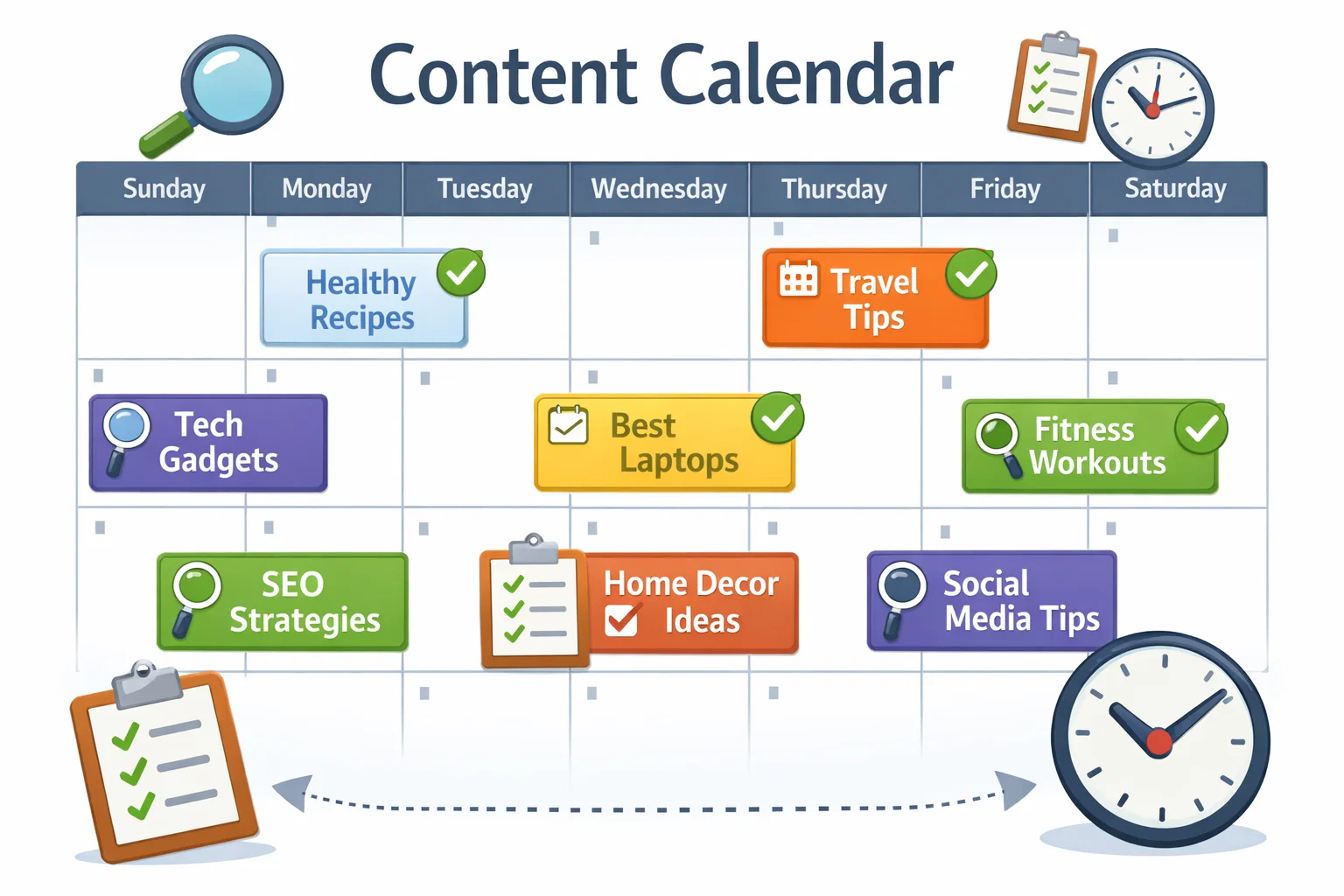
Companies create an SEO post calendar by planning content around keyword research, search intent, and publishing frequency. The calendar outlines what to publish, when to publish it, and which keywords to target, helping teams stay consistent, build topical authority, and improve organic rankings over time.
Key Takeaways
-
 SEO post calendars are built around keyword research and search intent.
-
Companies plan content in advance to maintain consistency.
-
Posting frequency is based on resources and goals, not guesses.
-
Calendars help build topical authority and support internal linking.
-
Performance data is used to refine and update the calendar over time.
Why Companies Need an SEO Post Calendar
An SEO post calendar helps companies move away from random content publishing and toward a structured, goal-driven approach. Without a calendar, content is often created reactively, which leads to inconsistent posting and weak SEO results.
With a clear calendar in place, companies can align content with business objectives, seasonal trends, and keyword priorities. It also ensures that related topics are published in a logical sequence, supporting internal linking and topical authority.
Over time, this consistency helps search engines better understand the website and improves long-term visibility.
How Companies Create a Post Calendar for SEO
Companies follow a structured process to ensure their SEO post calendar supports rankings, consistency, and business goals.
Step 1: Keyword Research and Topic Mapping
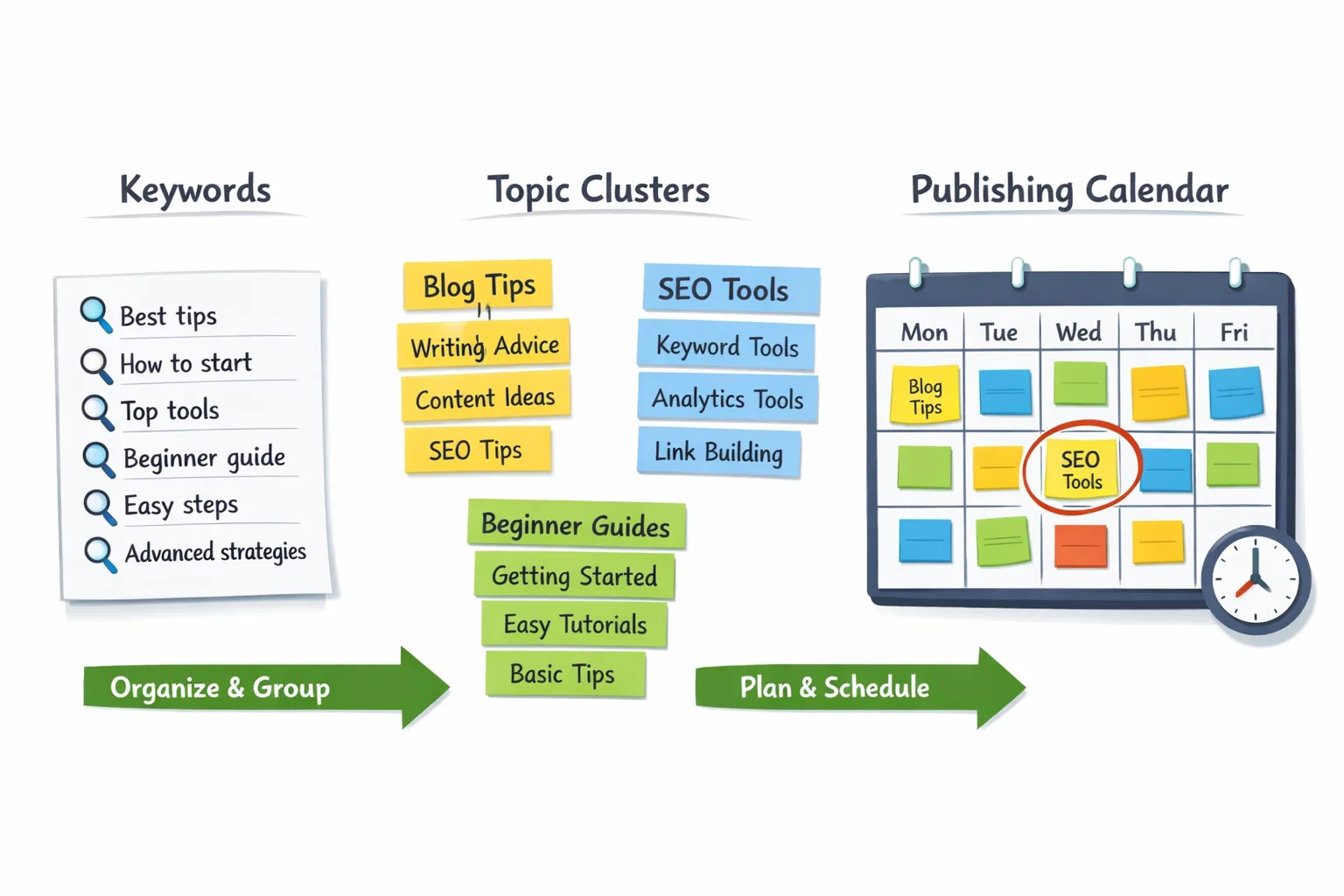 The process starts with keyword research. Companies identify primary keywords, supporting keywords, and related topics. These keywords are then grouped into topic clusters so multiple pieces of content support one main theme instead of competing with each other.
Step 2: Search Intent and Funnel Planning
Each keyword is mapped to search intent. Informational topics are used for awareness, while commercial or transactional topics support conversions. This ensures the calendar covers every stage of the buyer journey, not just blog traffic.
Step 3: Content Type and Format Selection
Companies decide which format fits each topic best. Some keywords require long-form guides, others work better as FAQs, comparison posts, or landing pages. Choosing the right format improves engagement and ranking potential.
Step 4: Publishing Frequency and Timeline
Posting schedules are set based on available resources and competition. Instead of posting daily, most companies focus on a realistic and consistent timeline, such as one to three SEO-focused posts per week.
Step 5: Internal Linking and SEO Structure
Planned internal links are added directly into the calendar. This ensures new content connects to existing pages, strengthens topical authority, and improves crawlability.
Step 6: Performance Tracking and Calendar Updates

After publishing, companies monitor rankings, traffic, and engagement. The calendar is updated based on performance data, allowing teams to improve underperforming content and prioritize topics that drive results.
5 Common Mistakes Companies Make with SEO Calendars
Even with a calendar in place, many companies struggle to see SEO results because of avoidable mistakes.
- Planning content without keyword research. Some companies choose topics based on ideas or trends without validating search demand. This leads to content that doesn’t rank or attract meaningful traffic.
- Overloading the calendar. Trying to publish too much content too quickly often results in low-quality posts and missed deadlines. A realistic schedule performs better than an aggressive one.
- Ignoring search intent. Publishing content that doesn’t match what users are actually searching for leads to poor engagement and weak rankings, even if keywords are included.
- Treating the calendar as fixed. SEO calendars should evolve. Companies that don’t update their calendar based on performance data miss opportunities to improve or expand successful topics.
- Focusing only on new content. Neglecting updates to existing posts is a common mistake. Refreshing and optimizing older content is often more effective than constantly creating new pages.
How SEO Specialist USA Builds SEO Post Calendars
SEO Specialist USA builds SEO post calendars based on keyword research, search intent, and business goals. Each calendar defines what content to publish, when to publish it, and which keywords to target.
The service includes topic clustering, internal linking planning, and performance-based updates to ensure content supports long-term SEO growth.
Talk to an SEO SpecialistFrequently Asked Questions
What is an SEO post calendar?
An SEO post calendar is a structured plan that outlines what content to publish, when to publish it, and which keywords to target. It helps companies stay consistent and align content with SEO goals.
How far in advance should companies plan an SEO content calendar?
Most companies plan their SEO post calendar one to three months in advance. This allows enough flexibility to adjust based on performance and search trends.
How often should companies publish content for SEO?
There is no fixed rule. Many companies publish one to three high-quality SEO posts per week, depending on resources, competition, and goals.
Do small companies need an SEO post calendar?
Yes. An SEO post calendar is especially helpful for small teams because it saves time, improves focus, and ensures content efforts are aligned with ranking opportunities.
Should SEO post calendars be updated regularly?
Yes. SEO calendars should be reviewed and updated based on ranking performance, traffic data, and changing search intent to stay effective.
Final Thoughts
An SEO post calendar helps companies plan content strategically instead of posting randomly. By aligning keywords, search intent, and publishing schedules, businesses can stay consistent, build topical authority, and improve long-term search visibility. A well-planned calendar turns content creation into a structured system that supports sustainable SEO growth.