
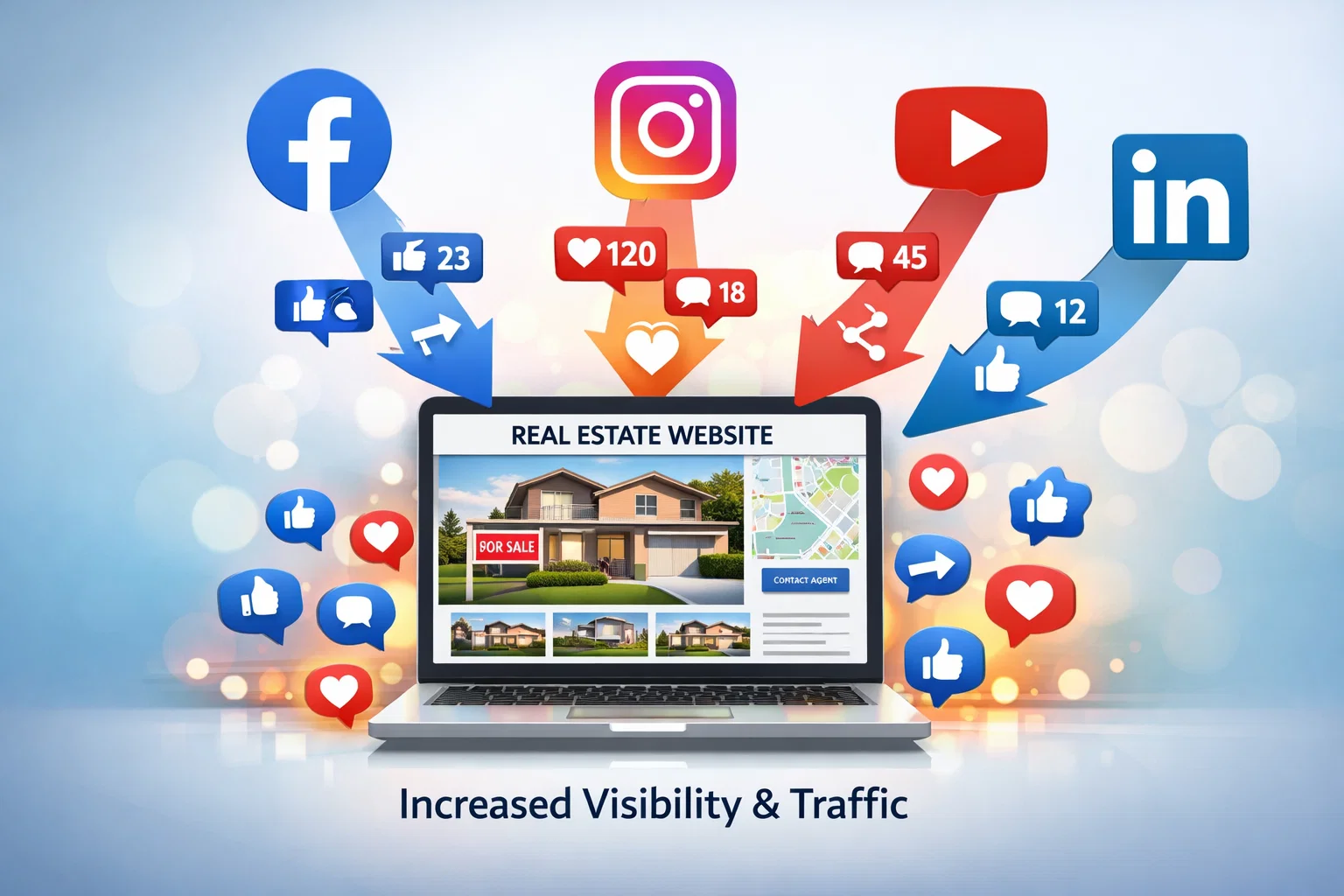
Social signals don’t directly impact Google rankings, but they influence real estate website SEO indirectly. Social media engagement increases content visibility, referral traffic, brand searches, and backlink opportunities, which collectively support stronger SEO performance and improved search presence for real estate websites.
Key Takeaways
-
 Social signals aren’t a direct Google ranking factor but strongly support SEO indirectly.
-
Higher social engagement helps real estate websites attract more traffic and visibility.
-
Social sharing increases brand recognition and branded search demand.
-
Consistent social activity creates more opportunities for natural backlinks.
-
Real estate SEO performs best when social media and SEO strategies work together.
What Are Social Signals in SEO?
Social signals refer to the interactions content receives on social media platforms, such as likes, shares, comments, saves, and mentions.
In SEO, these signals are not ranking factors themselves, but they reflect how content is discovered, engaged with, and distributed across the web, especially in competitive industries like real estate.
Do Social Signals Directly Affect Google Rankings?
No, social signals don’t directly influence Google’s ranking algorithm. Google has confirmed that likes, shares, and followers aren’t used as ranking factors. However, strong social engagement often leads to higher visibility, increased traffic, and more brand searches, which can positively support SEO performance over time.
Why Social Signals Matter for Real Estate Websites
Real estate is a highly competitive market where visibility and trust strongly influence user decisions. Social signals help real estate websites stay visible in front of potential buyers and sellers, build brand credibility, and generate repeated exposure. When users frequently engage with real estate content on social platforms, it increases awareness and drives qualified traffic back to the website.
How Social Signals Indirectly Improve Real Estate SEO
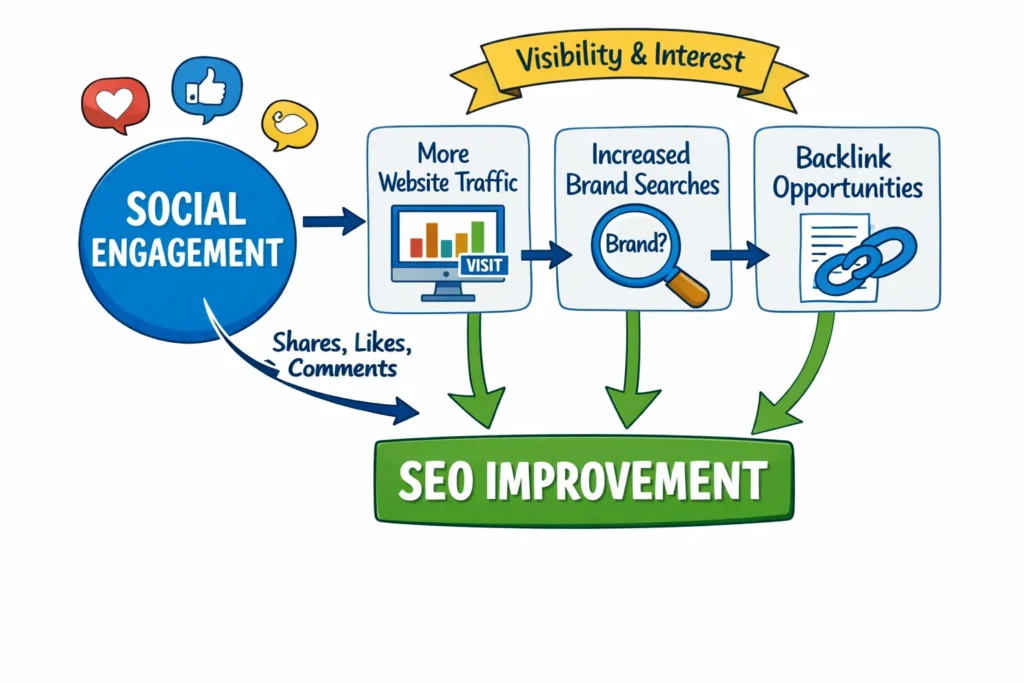
Increased Website Traffic and User Engagement
When real estate content is shared on social media, it reaches a wider audience and drives referral traffic to the website. This traffic often results in longer session durations and more page views, which are positive engagement signals that support overall SEO performance.
Stronger Brand Awareness and Branded Searches
Consistent social visibility helps real estate brands stay top of mind. As awareness grows, more users search for the brand name directly on Google, sending strong relevance signals that can support higher rankings.
More Backlink Opportunities
Social sharing increases the chances of content being discovered by bloggers, local publishers, and industry websites. These discoveries can lead to natural backlinks, which remain one of the strongest ranking factors in SEO.
Best Social Media Platforms for Real Estate SEO
Not all social platforms contribute equally to real estate SEO. Some platforms are better suited for visibility, engagement, and traffic generation.
1. Facebook and Instagram
Facebook and Instagram are highly effective for property listings, local updates, and audience engagement. Visual content performs especially well and encourages sharing.
2. YouTube
YouTube supports long-term SEO value through video searches, property tours, and local keyword optimization.
3. LinkedIn
LinkedIn helps build professional credibility and brand authority, particularly for agents and real estate firms targeting investors or commercial clients.
Social Media SEO Best Practices for Real Estate Websites
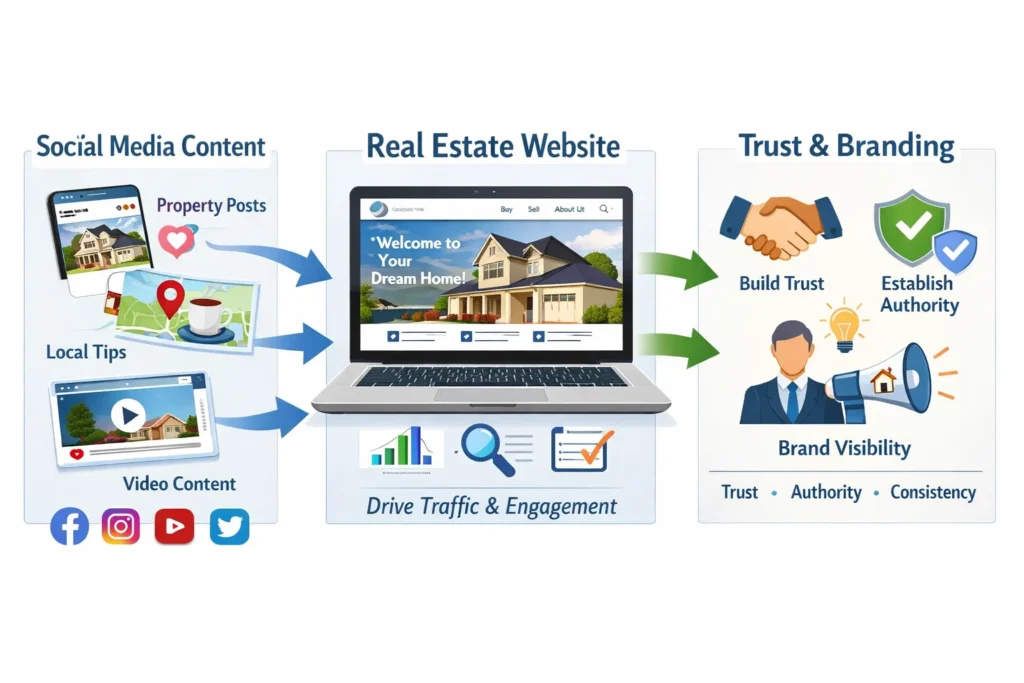
For social media to support real estate SEO, it must be used with a clear purpose, not just for posting listings. Every social activity should help users discover your website, understand your expertise, and engage with your content.
- First, real estate businesses should regularly share website content on social platforms. This includes blog articles, neighborhood guides, market updates, and property pages. Each post should link back to a relevant page on the website, making it easy for users to continue their research.
- Second, consistency across social profiles is critical. Business name, contact details, location, and branding should match the information on the website. This consistency helps build trust with users and supports local SEO signals, especially for real estate searches tied to specific cities or neighborhoods.
- Third, social content should focus on engagement, not just promotion. Posts that encourage comments, questions, or shares such as local insights, buying tips, or short market explanations tend to perform better. Higher engagement increases content visibility, which leads to more traffic and exposure.
- Finally, social media should be used to highlight expertise. Sharing insights about local markets, explaining buying or selling processes, and responding to user questions positions a real estate website as a reliable source. This trust and visibility indirectly supports SEO by increasing brand searches and repeat visits.
5 Common Mistakes Real Estate Websites Make with Social Signals
Many real estate websites struggle to gain SEO value from social media because of a few common mistakes. Understanding these issues makes it easier to correct them and improve overall performance.
- Prioritizing follower count over engagement. A high number of followers does not guarantee SEO benefits. If users are not interacting with posts or clicking through to the website, social activity adds little value. Engagement matters more than audience size.
- Sharing content without website links. Posting images or updates without linking back to relevant website pages limits traffic potential. Social posts should always guide users toward property listings, blog content, or local market pages.
- Inconsistent posting schedules. Irregular posting reduces visibility and weakens brand recognition. Real estate brands benefit more from consistent, steady activity than from occasional bursts of content.
- Ignoring content quality and relevance. Generic or repetitive posts fail to attract attention or shares. Social content should provide value, such as local insights, market trends, or practical advice for buyers and sellers.
- Not tracking social traffic and performance. Without analyzing referral traffic and engagement data, it’s difficult to improve strategy. Tracking performance helps identify which platforms and content types support SEO most effectively.
How SEO Specialist USA Helps Real Estate Websites Grow
Real estate SEO requires more than keyword optimization. It demands a strategy that connects search visibility with real user behavior. SEO Specialist USA helps real estate websites align SEO and social media efforts so both channels support long-term growth.
The team focuses on building SEO strategies that increase organic traffic while ensuring social media activity drives qualified visitors to the website. This includes optimizing real estate content for search, creating share-worthy pages, and improving local visibility for location-based searches.SEO Specialist USA also strengthens brand presence, which leads to higher branded searches and improved trust. By combining technical SEO, content optimization, and social visibility, real estate websites gain authority in highly competitive markets.
Final Thoughts on Social Signals and Real Estate Website SEO
Social signals may not directly influence search engine rankings, but their impact on real estate website SEO is still significant. When social media is used strategically, it helps increase content visibility, attract relevant traffic, strengthen brand recognition, and create opportunities for backlinks.
For real estate businesses competing in crowded markets, combining SEO with consistent social media activity leads to stronger online presence and long-term growth. The most effective results come from aligning both channels with clear goals, measurable performance, and a strategy built around real user engagement.
Get A Free QuoteFrequently Asked Questions (FAQs)
Do social signals directly affect Google rankings for real estate websites?
No, social signals such as likes, shares, and comments are not direct Google ranking factors. However, they indirectly support SEO by increasing content visibility, driving traffic, and improving brand awareness for real estate websites.
How do social signals help real estate website SEO indirectly?
Social signals help by sending referral traffic, increasing engagement, encouraging branded searches, and creating opportunities for natural backlinks. These factors contribute to stronger SEO performance over time.
Which social media platform is best for real estate SEO?
There is no single best platform. Facebook and Instagram work well for property visibility, YouTube supports long-term search visibility through video content, and LinkedIn helps build professional credibility and brand authority.
Can social media traffic improve SEO rankings?
Social media traffic itself does not improve rankings directly, but high-quality traffic can improve engagement metrics, increase brand searches, and lead to backlink opportunities that support SEO growth.
How often should real estate websites post on social media?
Consistency matters more than frequency. Posting several times per week with relevant, high-quality content is usually more effective than posting daily without a clear strategy.
Do social shares create backlinks automatically?
Social shares do not count as backlinks. However, they help content reach a wider audience, increasing the chance that bloggers, publishers, or local websites link to the content naturally.
Is social media important for local real estate SEO?
Yes. Social media supports local visibility by increasing brand recognition, driving local traffic, and reinforcing consistent business information across platforms, which helps build trust with users.
Should real estate agents link every social post to their website?
Most posts should include a link when relevant, especially for blog content, property listings, and market updates. Not every post needs a link, but website-driven content should be prioritized.
Can social media replace SEO for real estate websites?
No. Social media and SEO serve different purposes. Social platforms support visibility and engagement, while SEO focuses on long-term organic search performance. Both work best when used together.
How can SEO Specialist USA help with social media and SEO integration?
SEO Specialist USA develops SEO strategies that align with social media activity, ensuring content is optimized for search, shareable across platforms, and designed to drive qualified traffic and long-term growth for real estate websites.