

The difference between SEO and keyword research lies in their scope and purpose. SEO is a complete strategy for improving website visibility in search engines, while keyword research is the process of identifying search terms users type into Google. Keyword research supports SEO but does not replace it.
Key Takeaways:
-
 SEO is a complete strategy focused on improving search engine visibility and rankings.
-
Keyword research is a specific process used within SEO to identify search terms and user intent.
-
Keyword research helps guide content, optimization, and targeting decisions.
-
SEO includes multiple elements beyond keywords, such as technical optimization and backlinks.
-
Effective SEO cannot succeed without proper keyword research.
What Is SEO?
SEO, or search engine optimization, is the practice of improving a website’s visibility in search engine results pages. The goal of SEO is to attract relevant, organic traffic by making a website more accessible, authoritative, and useful to search engines and users.
SEO includes multiple components working together, such as on-page optimization, technical SEO, content quality, internal linking, and backlinks. Unlike keyword research, which focuses on identifying search terms, SEO is the broader strategy that turns those insights into higher rankings and sustained traffic growth.
What Is Keyword Research?
Keyword research is the process of identifying and analyzing the search terms people use in search engines when looking for information, products, or services. It helps businesses understand what their audience is searching for and how often those searches happen.
The goal of keyword research is to uncover relevant keywords, evaluate search intent, and assess competition. These insights are then used to plan content, optimize web pages, and guide SEO strategy. While keyword research is essential, it is only one part of the broader SEO process and does not improve rankings on its own.
SEO vs Keyword Research: Key Differences
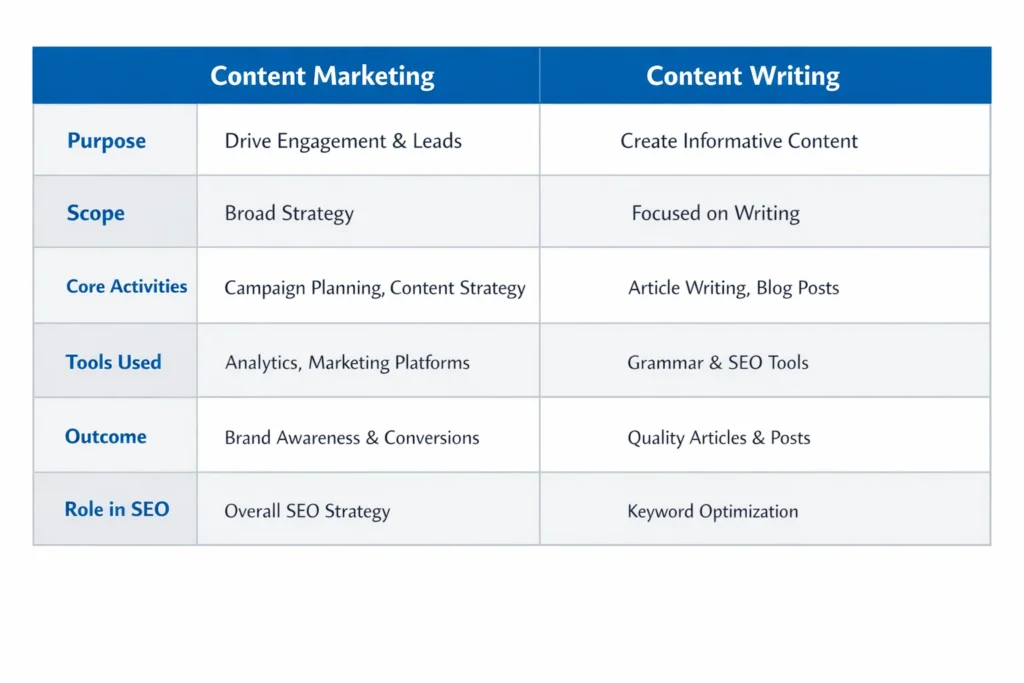
The table below clearly explains the difference between SEO and keyword research so readers can quickly understand how they compare and how they work together.
| Factor | SEO | Keyword Research |
| Purpose | Improve overall search engine visibility and rankings | Identify what users search for in search engines |
| Scope | Broad strategy covering multiple optimization areas | Narrow, focused research process |
| Core Activities | On-page SEO, technical SEO, content optimization, backlinks | Finding keywords, analyzing search intent and competition |
| Tools Used | Google Search Console, analytics tools, SEO platforms | Keyword planners, SEO tools, search data |
| Outcome | Higher rankings, traffic, and long-term visibility | Keyword insights used to guide SEO decisions |
| Role in SEO | Complete execution strategy | Foundational step within SEO |
This comparison shows that keyword research supports SEO but does not replace it.
Is Keyword Research Part of SEO?
Yes, keyword research is a core part of SEO, but it is not the entire strategy. Keyword research provides the data SEO relies on to make informed decisions about content creation, page optimization, and targeting the right audience.
Without keyword research, SEO efforts are often based on assumptions rather than real search behavior. However, keyword research alone does not improve rankings. It must be followed by proper on-page optimization, technical SEO improvements, content development, and link building to be effective.
In short, keyword research informs SEO, while SEO executes and delivers results.
What Comes First: Keyword Research or SEO?
Keyword research comes first in the SEO process. Before optimizing pages or creating content, it is essential to understand what your target audience is searching for and how they phrase those searches.
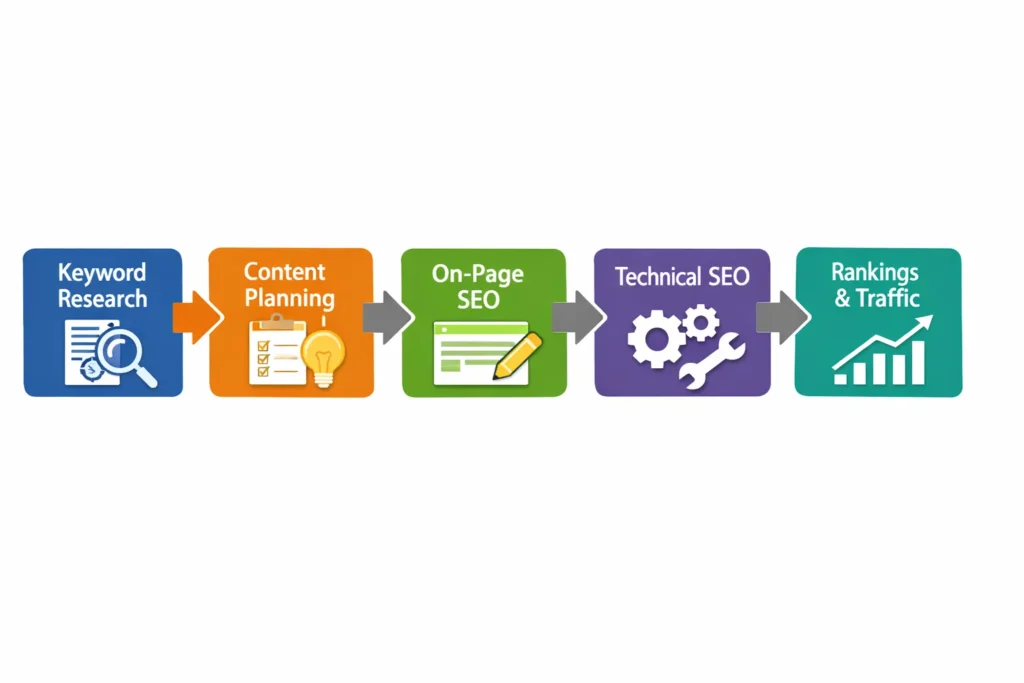
Keyword research helps identify the right topics, search intent, and opportunities to target. Once this data is available, SEO can be applied through content optimization, technical improvements, and link building. Skipping keyword research often leads to misaligned content and poor results, which is why it is considered the foundation of any successful SEO strategy.
How SEO and Keyword Research Work Together
SEO and keyword research work together as part of a single, connected process. Keyword research identifies what people are searching for, while SEO uses that information to optimize content and improve rankings.
Keyword research guides decisions such as which topics to cover, which pages to optimize, and how to structure content. SEO then applies these insights through on-page optimization, technical improvements, internal linking, and backlinks. When combined correctly, keyword research ensures SEO efforts are focused on real demand, and SEO turns that demand into measurable search visibility and traffic.
Common Misconceptions About SEO and Keyword Research
There are several common misunderstandings about SEO and keyword research that can lead to ineffective strategies and poor results.
“SEO Is Just About Keywords”
Keywords are important, but SEO goes far beyond them. Technical SEO, content quality, user experience, and backlinks all play a major role in rankings.
“Keyword Research Alone Can Improve Rankings”
Keyword research only provides data. Without proper optimization and execution, keywords alone will not improve search visibility.
“Once Keyword Research Is Done, It Never Needs Updating”
Search behavior changes over time. Keyword research should be revisited regularly to stay aligned with trends, competition, and user intent.
“More Keywords Mean Better SEO”
Targeting too many keywords without strategy can dilute focus. Effective SEO prioritizes relevance and intent over keyword volume.
Clearing up these misconceptions helps businesses apply SEO and keyword research correctly and avoid wasted effort.
How SEO Specialist USA Uses Keyword Research in SEO
SEO Specialist USA uses keyword research as the foundation of every SEO strategy. Instead of targeting random or high-volume keywords, the focus is on understanding search intent, competition, and real business opportunities.
The process starts with identifying keywords that match how users actually search. These insights are then mapped to the right pages, content topics, and optimization goals. Keyword research guides on-page SEO, content creation, internal linking, and long-term growth planning, ensuring SEO efforts are data-driven and aligned with measurable outcomes.
FAQs
What is the difference between SEO and keyword research?
SEO is the overall process of improving a website’s visibility in search engines, while keyword research is the step where you identify what search terms people are using. Keyword research supports SEO but is not the same thing.
Is keyword research part of SEO?
Yes. Keyword research is a foundational part of SEO. It helps determine which topics and search terms SEO efforts should target, but SEO also includes content optimization, technical work, and link building.
Can you do SEO without keyword research?
You can, but it is not recommended. Without keyword research, SEO efforts are often based on assumptions instead of real search behavior, which usually leads to poor results.
What comes first: SEO or keyword research?
Keyword research comes first. SEO strategies are built using insights from keyword research to ensure content and optimization efforts align with what users are actually searching for.
Are keywords still important for SEO?
Yes, keywords are still important. However, modern SEO focuses more on search intent and topic relevance rather than repeating exact keywords excessively.
How often should keyword research be updated?
Keyword research should be updated regularly, especially when creating new content, expanding services, or when search trends and competition change.
Do small businesses need keyword research for SEO?
Yes. Keyword research helps small businesses target realistic opportunities, avoid unnecessary competition, and attract the right audience through SEO.
Discover More Articles with SEO Specialist USA