

Questions for local SEO help businesses evaluate how well they appear in local search results, Google Maps, and nearby searches. By asking the right questions about Google Business Profile, local keywords, reviews, citations, website optimization, and tracking, businesses can identify issues, improve visibility, and attract more local customers.
Key Takeaways:
-
 Local SEO focuses on visibility in nearby and location-based searches.
-
Asking the right questions helps identify gaps and opportunities.
-
Google Business Profile is central to local search success.
-
Consistent business information builds trust with search engines.
-
Reviews influence rankings, clicks, and customer decisions.
-
Tracking local performance is essential for ongoing improvement.
What Is Local SEO and Why It Matters
Local SEO is the process of optimizing a business’s online presence so it appears in search results for location-based and nearby searches. These searches often include city names, neighborhoods, or phrases like “near me,” and they usually show map results alongside organic listings.
Local SEO matters because search engines prioritize relevance and proximity when users are looking for local solutions. A well-optimized local presence helps businesses appear in Google Maps, local packs, and localized organic results. This visibility directly influences calls, website visits, direction requests, and in-store traffic.
Unlike general SEO, local SEO places strong emphasis on accurate business information, proximity signals, customer reviews, and local relevance. Businesses that invest in local SEO are more likely to attract high-intent customers who are ready to take action.
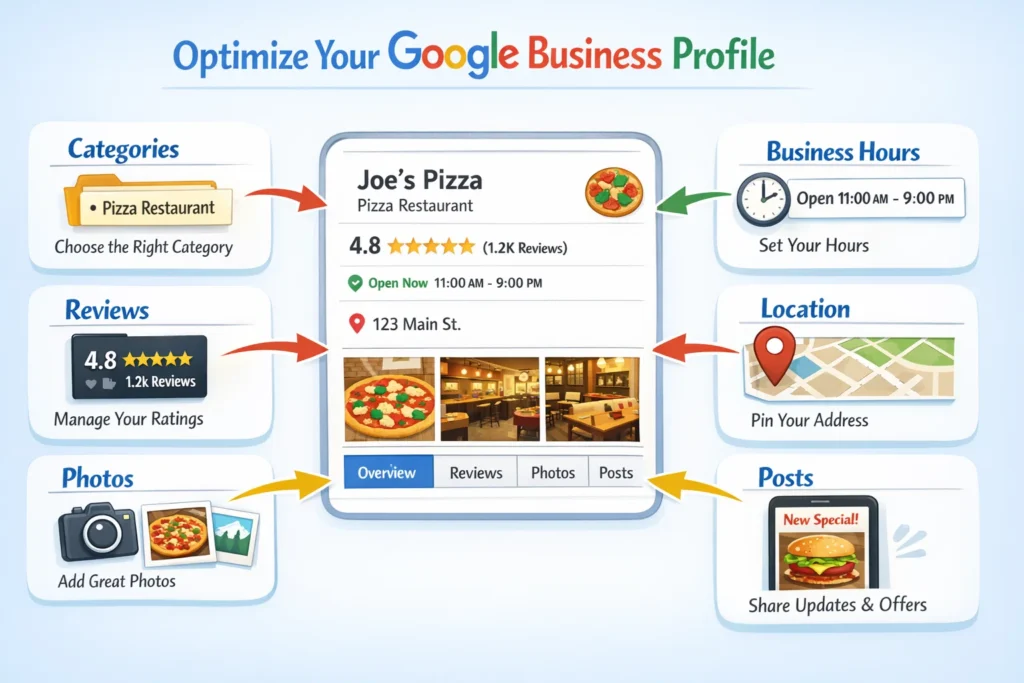
Questions to Ask About Google Business Profile
Your Google Business Profile is one of the most important factors in local SEO. It plays a direct role in how your business appears in Google Maps and local search results. Asking the right questions helps ensure your profile is accurate, competitive, and optimized for visibility.
Is my Google Business Profile claimed and verified?
Your profile must be claimed and verified to appear properly in local search and Google Maps. Verification gives you full control over business details, allows you to respond to reviews, add updates, and ensures Google trusts the listing as legitimate.
Is my business name, address, and phone number accurate and consistent?
Your business name, address, and phone number must be correct and match exactly across your website and all online listings. Inconsistent information can confuse Google and users, which can negatively affect local rankings and customer trust.
Are my business categories correct and specific?
Your primary category is one of the strongest ranking signals in Google Business Profile. It should clearly describe your main service. Secondary categories should support, not dilute, your core offering. Accurate categories help Google match your business to the right searches.
Are my business hours and attributes fully up to date?
Accurate hours, holiday schedules, and attributes such as services offered or accessibility features improve user experience and reduce negative interactions. Google also favors profiles that are complete and regularly maintained.
Do I regularly add photos, posts, and updates?
Regularly adding photos, posts, and updates keeps your profile active and engaging. Fresh content signals relevance, improves click-through rates, and helps your listing stand out compared to competitors with inactive profiles.
These questions ensure your Google Business Profile is optimized to support strong local rankings, better visibility in Maps, and higher engagement from nearby customers.
Questions About Local Keywords and Content
Local SEO works only when your content matches how real people search in your area. These questions help you evaluate whether your website truly reflects local search intent and customer behavior.
What local keywords are my customers actually using?
Customers rarely search using industry terms. They use simple, location-based phrases such as service plus city, neighborhood, or “near me.” You should identify keywords based on real search data, not assumptions, and focus on terms that show clear local intent.
Do my pages clearly target specific locations and services?
Each important service should be connected to a specific location where you operate. This means mentioning the city or service area naturally within page titles, headings, and main content so search engines and users instantly understand relevance.
Do I have dedicated pages for key locations or service areas?
If you serve multiple cities or regions, each one should have its own dedicated page. These pages should provide unique, useful information about services in that location rather than reused or generic content.
Is my content written for local intent, not just SEO?
Local content should reflect local needs, problems, and context. This includes referencing local landmarks, service areas, customer concerns, or region-specific details that make the content genuinely useful to nearby users.
Am I clearly answering local customer questions?
Strong local pages answer common questions such as availability, service areas, pricing expectations, response times, and local regulations. Clear answers improve rankings and help convert visitors into customers.
When local keywords and content are aligned with real search behavior, your website becomes more relevant to both search engines and potential customers.
Questions About Citations and Business Listings
Citations and business listings help search engines confirm that your business is real, trustworthy, and located where you say it is. Asking the right questions here prevents confusion and protects local rankings.
Is my business information consistent across all listings?
Your business name, address, and phone number must match exactly across directories, maps, and platforms. Even small differences can confuse search engines and weaken local trust signals.
Am I listed on the most important local and industry directories?
Being listed everywhere isn’t necessary. What matters is presence on authoritative platforms such as Google Business Profile, major local directories, and industry-specific sites that customers actually use.
Do I have duplicate or outdated listings?
Duplicate listings split ranking signals and can mislead customers. Old addresses, incorrect phone numbers, or previous business names should be corrected or removed as soon as possible.
Are my listings complete and detailed?
Strong listings include accurate categories, descriptions, business hours, photos, and services. Complete profiles help search engines better understand your business and improve user engagement.
How often do I audit my citations?
Listings should be reviewed regularly, especially after changes such as moving locations, changing phone numbers, or updating services. Ongoing audits prevent errors from damaging visibility over time.
Clean, accurate citations reinforce your local presence and support stronger rankings in both map results and localized search.
Questions About Reviews and Online Reputation
Reviews play a major role in local SEO because they influence rankings, visibility, and customer trust. Search engines and users both rely on reviews to evaluate local businesses.
Do I consistently receive reviews from real customers?
A steady flow of genuine reviews signals that your business is active and trusted. Reviews should come naturally from real customer experiences rather than being collected all at once.
Am I responding to reviews regularly and professionally?
Responding to reviews shows engagement and accountability. Thanking customers for positive reviews and addressing negative feedback calmly helps build trust and sends strong signals to search engines.
Are my reviews recent and relevant?
Older reviews lose impact over time. Recent reviews indicate current service quality and are more influential for both rankings and user decisions.
Do I manage negative reviews properly?
Negative reviews should not be ignored or argued with publicly. A professional, solution-focused response demonstrates reliability and often improves customer perception, even when issues occur.
Are reviews influencing customer decisions?
Reviews are often the final factor before a customer contacts a business. Clear patterns in feedback can highlight strengths to promote and weaknesses to improve.
A strong review strategy supports local rankings and increases conversion rates by building confidence before customers even visit your website.
Questions About Website and On-Page Optimization
Your website supports everything you do in local SEO. Even with a strong Google Business Profile and reviews, a poorly optimized website can limit local visibility and conversions.
Is my website optimized for local search terms?
Your pages should naturally include local keywords in titles, headings, meta descriptions, and body content. This helps search engines understand where you operate and which searches your site should appear for.
Does my website clearly show who I serve and where?
Visitors and search engines should immediately understand your service areas. This information should be visible on key pages such as the homepage, service pages, and contact page.
Is my site mobile-friendly and easy to use?
Most local searches happen on mobile devices. A site that loads slowly, displays poorly, or is hard to navigate will lose users and rankings.
Do I use structured data for local businesses?
Local business schema helps search engines understand your business details such as location, services, and contact information. Proper implementation improves clarity and eligibility for enhanced search features.
Are my local pages designed to convert visitors?
Local SEO traffic is high intent. Pages should make it easy for users to call, request directions, book appointments, or submit forms without friction.
A website optimized for local intent strengthens rankings and turns visibility into real customer actions.
Questions About Local Backlinks and Authority
Local backlinks help search engines understand how trusted and relevant your business is within a specific geographic area. Quality matters far more than quantity.
Do I have backlinks from local and relevant websites?
Links from local news sites, community organizations, chambers of commerce, suppliers, or industry partners signal strong local relevance and trust.
Are my backlinks earned naturally and ethically?
Search engines value links that come from genuine relationships or useful content. Paid or low-quality links can damage local rankings instead of improving them.
How do my local backlinks compare to competitors?
Analyzing competitor backlinks helps identify gaps and opportunities. If competitors have links from trusted local sources, earning similar links can strengthen your authority.
Do I actively pursue local link opportunities?
Local events, sponsorships, partnerships, and community involvement often lead to valuable backlinks. These activities also increase real-world brand visibility.
Are my backlinks supporting my most important local pages?
Links should point to key service or location pages, not just the homepage. This helps strengthen rankings for specific local searches.
Strong local backlinks reinforce credibility and help your business stand out in competitive local markets.
Questions About Tracking, Analytics, and Performance
Local SEO only works when you measure what is actually driving visibility, leads, and customers. These questions help ensure you are tracking the right data and making informed decisions.
Am I tracking local search performance accurately?
You should be monitoring impressions, clicks, and rankings for location-based keywords. This shows whether your local visibility is improving or declining over time.
Do I track actions from local visitors?
Local SEO success is measured by actions such as calls, direction requests, form submissions, and bookings. Tracking these actions reveals whether traffic is turning into real customers.
Am I using Google Business Profile insights effectively?
Google Business Profile provides valuable data on searches, calls, and map interactions. Reviewing these insights helps identify what attracts local customers and where improvements are needed.
Do I understand which pages drive local conversions?
Knowing which service or location pages generate leads allows you to prioritize optimization efforts where they matter most.
Am I reviewing performance regularly?
Local SEO requires ongoing monitoring. Regular reviews help catch issues early and ensure steady growth rather than sudden drops.
Accurate tracking transforms local SEO from guesswork into a measurable growth strategy.
Questions About Competition and Local Strategy
Understanding your local competition helps you see what is working in your market and where you can gain an advantage. These questions guide smarter strategic decisions rather than copying blindly.
Who are my real local competitors in search results?
Your true competitors are the businesses that appear alongside you in local packs and map results, not just companies you compete with offline. Identifying these competitors shows who Google considers most relevant.
What keywords and locations are competitors ranking for?
Analyzing competitor rankings reveals which local keywords drive visibility and where opportunities exist to outperform them with better content or optimization.
How strong are competitors’ Google Business Profiles?
Competitor profiles often reveal gaps in categories, reviews, photos, and updates. Improving these areas can help you stand out even in competitive markets.
What do competitors do better than my business?
Competitors may have stronger reviews, better local content, or more authoritative backlinks. Understanding these strengths helps prioritize your own improvements.
Where can I differentiate locally?
Differentiation comes from clearer messaging, better service information, stronger trust signals, and more helpful content. Local strategy should focus on standing out, not just matching others.
A clear understanding of competition allows you to build a local SEO strategy that is proactive, focused, and sustainable.
How SEO Specialist USA Helps Businesses Win at Local SEO
Asking the right local SEO questions is only the first step. Turning those answers into measurable results requires experience, strategy, and consistent execution. This is where SEO Specialist USA plays a critical role.
SEO Specialist USA helps businesses identify gaps in their local SEO performance and implement solutions that align with how Google actually ranks local results today. Their approach is data-driven, compliant with Google guidelines, and tailored to each business’s location, industry, and competition.
What SEO Specialist USA Does for Local SEO
- Audits Google Business Profiles for accuracy, categories, and optimization.
- Identifies high-intent local keywords based on real search behavior.
- Optimizes location and service pages for local relevance and conversions.
- Cleans up and manages citations and business listings.
- Builds strong local authority through ethical backlink strategies.
- Improves review generation and reputation management processes.
- Tracks local performance using reliable analytics and reporting.
Why Businesses Choose SEO Specialist USA
SEO Specialist USA focuses on sustainable growth, not shortcuts. Their local SEO strategies are designed to improve visibility in Google Maps, local packs, and organic search while attracting customers who are ready to take action.
For businesses that want clarity, consistency, and long-term local rankings, SEO Specialist USA provides the expertise needed to turn local SEO questions into real results.
Final Thoughts
Local SEO success doesn’t come from guessing or applying random tactics. It comes from asking the right questions and using the answers to guide smart decisions. Every aspect of local visibility, from Google Business Profile to reviews, content, links, and tracking, depends on accuracy, relevance, and consistency.
By regularly reviewing these local SEO questions, businesses can identify weaknesses, prioritize improvements, and stay competitive in their local market. Local search is constantly evolving, but businesses that focus on clarity, trust, and user intent are best positioned for long-term success.
Asking the right questions is the first step toward stronger local rankings, higher visibility, and more local customers.