

To measure SEO ROI for a dental practice, calculate the revenue generated from new patients acquired through organic search minus the cost of SEO investment. Track new patient calls and form submissions from organic traffic, apply your average patient lifetime value, and compare against your monthly SEO spend. Even conservative patient value estimates make dental SEO one of the highest-ROI marketing channels available to practices.
Key Takeaways
-
 SEO ROI for dental practices is calculated from new patient revenue, not just traffic or rankings
-
The average lifetime value of a dental patient in the US ranges from $8,000 to $15,000, one new patient from SEO can justify months of investment
-
The key tracking setup is: organic traffic source → phone call or form submission → new patient appointment
-
GBP Insights calls, Google Analytics 4 conversions, and call tracking are the three tools that connect SEO to actual revenue
-
Dental SEO ROI compounds over time, the investment does not reset monthly the way paid ads do
Why Dental SEO ROI Is Often Underestimated
Most practices measure SEO performance by keyword rankings or website traffic. These are useful intermediate metrics, but they don’t directly answer the question that matters: is SEO generating new patients and revenue?
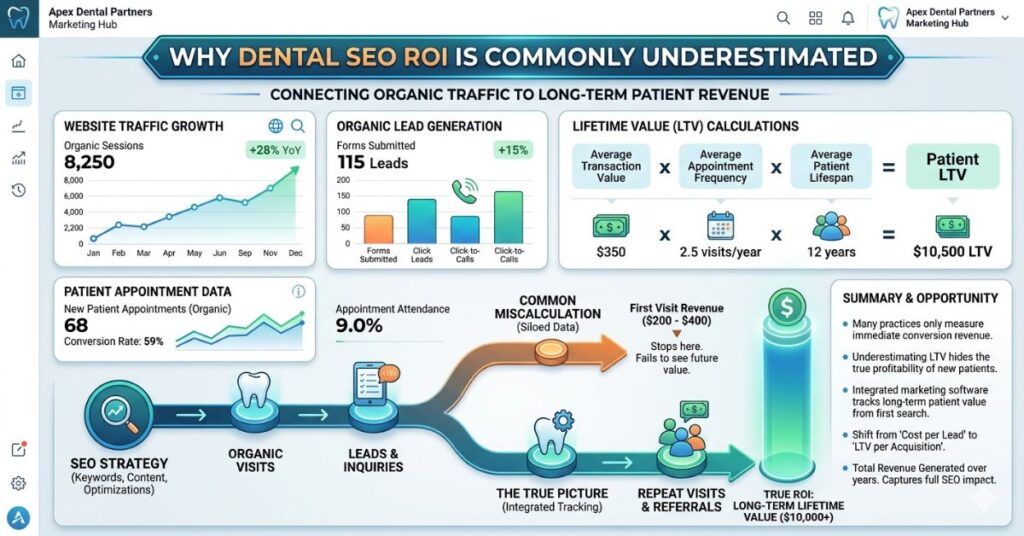
When you calculate ROI using actual patient acquisition data, the numbers look very different. A dental practice paying $1,000 per month for SEO that generates five new patients per month at an average lifetime value of $10,000 is generating $50,000 in long-term patient value from a $1,000 investment. That is a 4,900% return, which no paid advertising channel typically matches at scale.
For more on how SEO drives real revenue for local practices, see our dental SEO services.
The ROI Formula for Dental SEO
The basic formula:

ROI = ((New Patient Revenue from SEO) – (SEO Investment)) / (SEO Investment) x 100
To apply this, you need three numbers:
- New patients attributed to organic search per month
- Average patient lifetime value at your practice
- Monthly SEO investment (agency fee or internal cost)
Example: 6 new patients per month × $8,000 average LTV = $48,000 in patient value generated. Subtract $1,500 monthly SEO cost = $46,500 net return. ROI = 3,100%.
Even if you use a more conservative 90-day value rather than full lifetime value, the math typically still shows strong positive returns.
How to Set Up Proper Dental SEO Tracking
1. Google Business Profile Insights
Your GBP dashboard shows calls, direction requests, and website clicks broken down by how patients found you: Direct Search (typed your name), Discovery Search (searched a service), or Branded Search. Track calls from Discovery Search monthly, these are new patients who found you through a local keyword search, the clearest signal of SEO-driven new patient acquisition.
2. Google Analytics 4 Goal Tracking
Set up conversion events in Google Analytics 4 for: appointment form submissions, click-to-call button interactions, and live chat initiations. Filter these by organic traffic source to isolate the conversions that SEO is driving. This gives you a monthly count of SEO-sourced leads to apply your patient value against.
3. Call Tracking
Call tracking tools (CallRail, CallTrackingMetrics, or similar) assign a unique local phone number to organic search visitors. When a patient calls that number, it is attributed to organic search. This closes the gap between Google Analytics and actual phone-based patient inquiries, which make up the majority of new dental patient contacts.
4. New Patient Intake Source Tracking
The simplest and most direct method: ask every new patient how they found the practice. Train your front desk to record this in your practice management software. ‘Found you on Google’ or ‘searched online’ responses should be counted as SEO-attributed patients, and you can cross-reference with your digital tracking data.
Metrics to Track Monthly
- Organic search sessions (Google Analytics 4)
- GBP calls and direction requests (Discovery Search)
- Appointment form completions from organic traffic
- Organic-attributed phone calls (call tracking)
- Rankings for primary target keywords (primary and emergency service terms)
- New patient count attributed to organic/Google search
- Average new patient value or first-appointment revenue
Timeframe: When Does Dental SEO ROI Become Positive?
Most dental SEO campaigns reach positive ROI between months 4 and 8. The early months are investment in foundation work: technical fixes, GBP optimization, citation building, and content creation. By month 4 to 6, rankings on primary keywords typically improve enough to generate measurable organic inquiry volume. By month 9 to 12, the compounding effect of accumulated ranking authority, review growth, and content depth makes the cost-per-new-patient through SEO significantly lower than any paid channel.
Unlike Google Ads or Facebook Ads, which stop generating patients the moment you stop paying, SEO-driven rankings continue producing results. This compounding return is what makes dental SEO ROI grow, not shrink, over time.
How SEO Specialist USA Reports Dental SEO ROI
SEO Specialist USA builds reporting frameworks for dental clients that connect organic traffic data, GBP insights, and call tracking to actual new patient acquisition metrics. Monthly reports show not just where rankings moved but how many inquiries were generated and what the estimated patient value from those inquiries represents. Clients see a clear picture of what their SEO investment is returning.
Frequently Asked Questions