
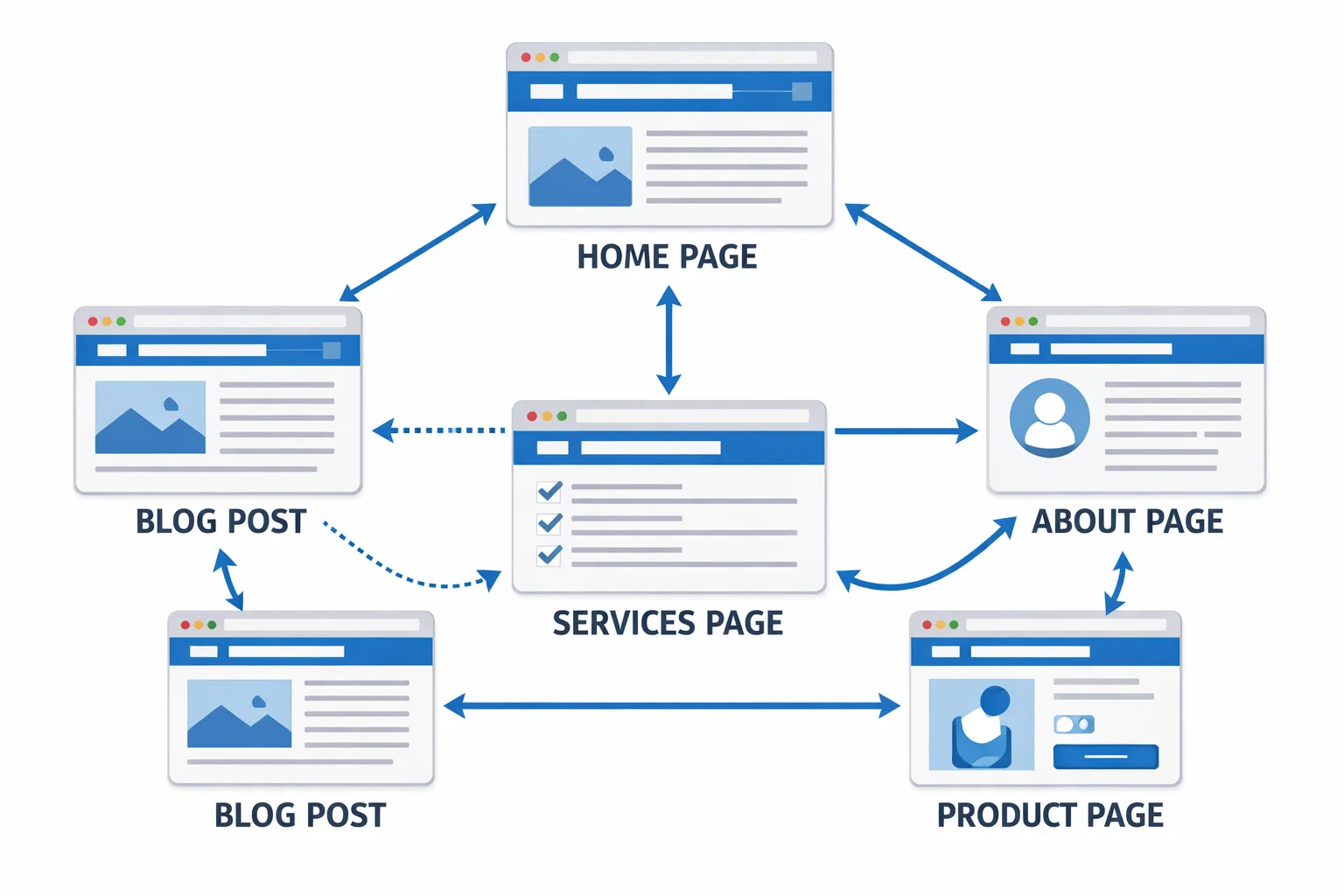
Cross linking in SEO is the practice of linking one page of a website to another related page within the same site. It helps search engines understand content relationships, improves crawlability, and guides users to relevant information, making it a key part of internal linking and site structure optimization.
Key Takeaways:
-
 Cross linking in SEO means linking related pages within the same website.
-
It helps search engines understand page relationships and site structure.
-
Cross linking improves crawlability and indexing of important pages.
-
Strategic cross linking distributes link authority across the website.
-
Proper cross linking enhances user experience and engagement.
What Is Cross Linking in SEO?
Cross linking in SEO refers to the practice of connecting relevant pages within the same website through internal links. The goal is to create clear relationships between related content so both users and search engines can navigate the site more easily.
For example, a blog post may link to a related service page, or one article may link to another article covering a similar topic in more detail. These internal cross links help search engines understand how pages are connected and which pages are more important within the site structure.
Cross linking is often used interchangeably with internal linking, but it specifically emphasizes linking related or supporting content together to strengthen topical relevance and improve overall SEO performance.
How Cross Linking Works in SEO
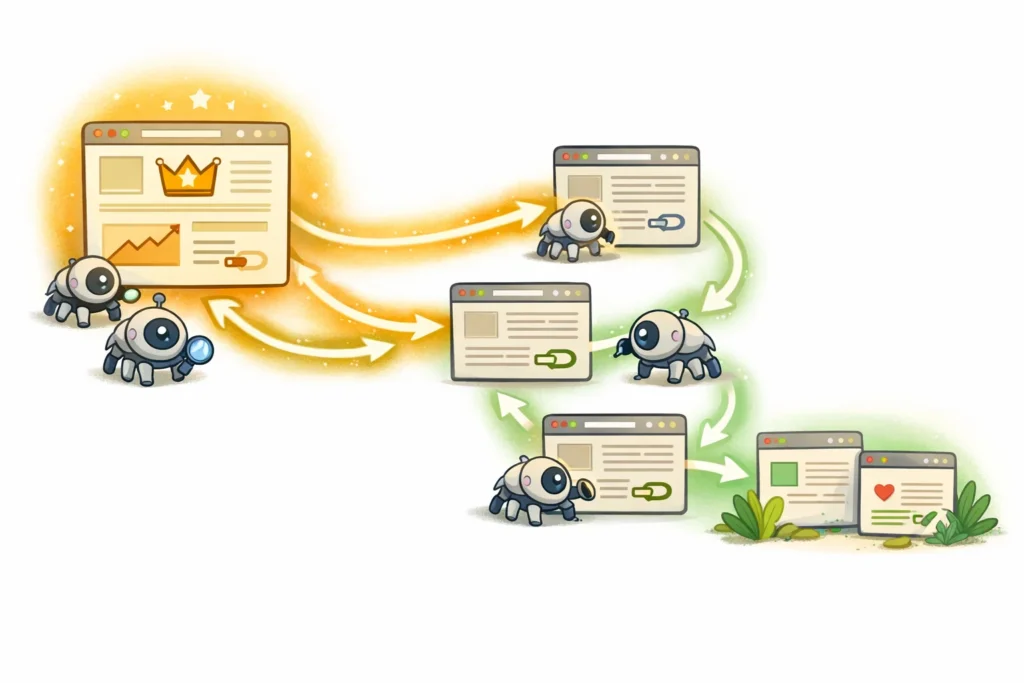
Cross linking works by helping search engines discover, crawl, and understand the relationship between different pages on a website. When pages are linked together logically, search engine crawlers can move through the site more efficiently and index content more accurately.
Internal cross links also pass link equity (sometimes called authority) from one page to another. Pages with stronger authority can share value with related pages, helping them rank better in search results.
At the same time, cross linking guides users to additional relevant content, increasing time on site and improving overall user experience, both of which support SEO performance.
Cross Linking vs Internal Linking: Is There a Difference?
Cross linking and internal linking are closely related and are often used interchangeably, but there is a slight difference in how the terms are commonly used in SEO.
- Internal linking is the broader concept of linking any page on a website to another page on the same site.
- Cross linking usually refers to strategically linking related or supporting content together to strengthen topical relevance and site structure.
In practice, cross linking is a type of internal linking. It focuses on improving content relationships rather than just navigation. When done correctly, both approaches work together to enhance crawlability, authority flow, and user experience.
Benefits of Cross Linking in SEO
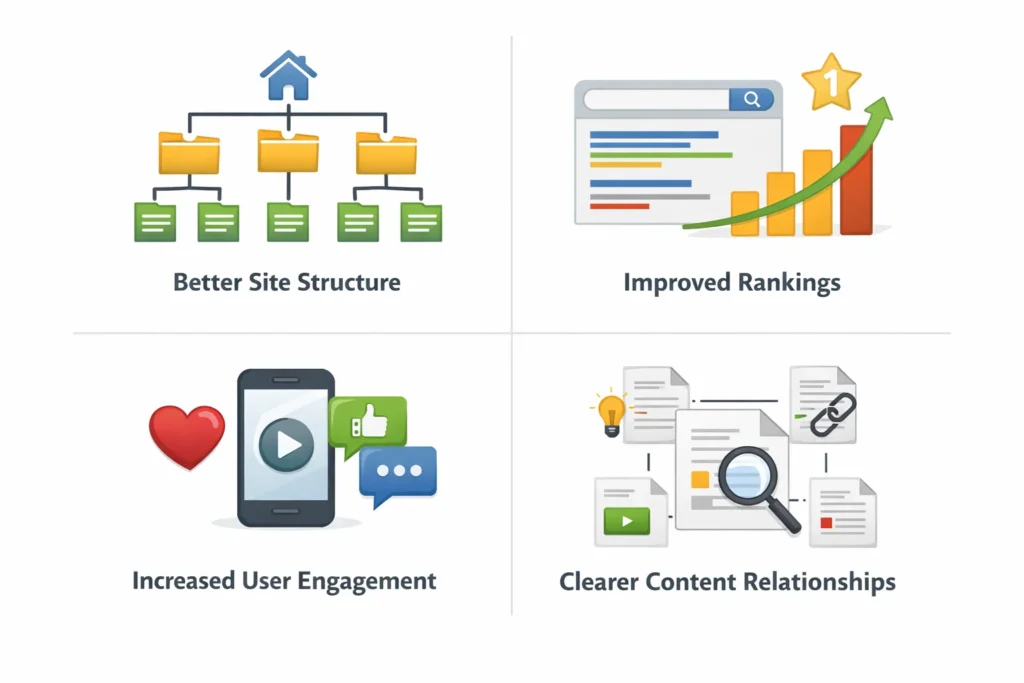
Cross linking offers several SEO and user experience benefits when implemented correctly. It helps both search engines and users navigate a website more effectively.
- Improved Crawlability: Search engine crawlers can discover and index pages more efficiently.
- Better Website Structure: Cross linking creates clear relationships between related content and topics.
- Stronger Authority Distribution:Link equity is shared across pages, helping important pages gain more visibility.
- Enhanced User Experience:Users can easily find relevant information, increasing engagement and time on site.
- Improved Topical Relevance:Linking related pages signals content depth and subject authority to search engines.
Key Benefits of Cross Linking:
These benefits make cross linking a foundational element of on-page SEO and content optimization.
Best Practices for Cross Linking
To get the most SEO value from cross linking, links should be added thoughtfully and strategically rather than randomly. Proper implementation helps improve rankings without risking over-optimization.
- Link Only Relevant Pages: Ensure links connect content that is contextually related and useful to users.
- Use Descriptive Anchor Text:Anchor text should clearly describe the linked page without keyword stuffing.
- Place Links Naturally Within Content:Links should appear where they make sense, not forced into paragraphs.
- Prioritize Important Pages: Use cross links to support key pages such as service pages or pillar content.
- Avoid Excessive Linking:Too many links can dilute value and confuse users and search engines.
Cross Linking Best Practices:
Following these best practices helps build a clean, effective internal linking structure that supports SEO performance.
Common Cross Linking Mistakes to Avoid
While cross linking is beneficial, poor implementation can reduce its effectiveness or even harm SEO. Avoiding these common mistakes helps maintain a clean and effective site structure.
Cross Linking Mistakes to Watch Out For
- Linking Irrelevant Pages: Adding links that do not match the topic or user intent confuses both users and search engines.
- Overloading Pages with Links: Too many internal links on a single page can dilute link value and reduce clarity.
- Using Generic or Repetitive Anchor Text: Overusing anchors like “click here” or repeating the same keyword can weaken relevance.
- Ignoring Broken Links: Broken internal links disrupt crawlability and create a poor user experience.
- Forgetting User Value: Cross links should always help users find useful content, not just serve SEO purposes.
Avoiding these mistakes ensures your cross linking strategy supports rankings and usability.
How SEO Specialist USA Uses Cross Linking Strategically
SEO Specialist USA uses cross linking as a core part of on-page SEO and site architecture planning. Instead of adding random internal links, each link is placed based on content relevance, search intent, and page importance.
The process includes mapping content relationships, identifying high-authority pages, and using them to support key service and informational pages.
Regular internal link audits ensure that important pages receive enough link equity and that outdated or broken links are fixed. This strategic approach helps improve crawlability, rankings, and overall site performance.
FAQs
What is cross linking in SEO?
Cross linking in SEO means linking one page of your website to another related page within the same site to improve navigation, structure, and search engine understanding.
Is cross linking the same as internal linking?
Cross linking is a type of internal linking. Internal linking is the broader concept, while cross linking focuses specifically on connecting related or supporting content pages.
Does cross linking help SEO rankings?
Yes. Cross linking helps SEO by improving crawlability, passing link authority between pages, and strengthening topical relevance, which can support better rankings.
How many cross links should a page have?
There is no fixed number. A page should include only relevant cross links that add value to users without overwhelming them or appearing spammy.
Can cross linking hurt SEO?
Yes, if done incorrectly. Over-linking, linking irrelevant pages, or using keyword-stuffed anchor text can reduce effectiveness and harm user experience.
What is the difference between cross linking and backlinks?
Cross linking uses internal links within the same website, while backlinks are links from external websites pointing to your site.
Where should cross links be placed?
Cross links should be placed naturally within content where they help users find related information, not forced into text just for SEO purposes.
Discover More Articles with SEO Specialist USA