
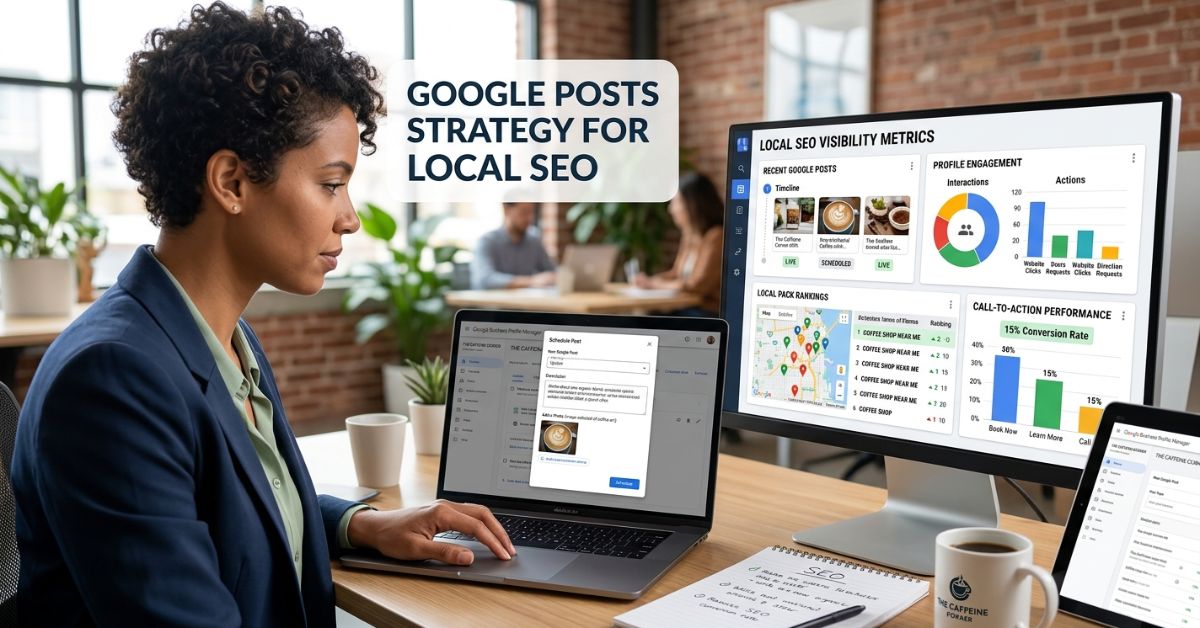
Google Posts are moderately important for local SEO. They do not directly move keyword rankings, but they signal to Google that your Google Business Profile is active and managed, which contributes to Local Pack visibility. More importantly, they give searchers more reasons to click and call when they find your profile, making them a meaningful conversion tool even if their ranking impact is indirect.
Key Takeaways
-
 Google Posts signal profile activity to Google, which is a soft local ranking signal
-
Businesses that post regularly see higher GBP engagement metrics including calls and direction requests
-
Posts appear directly in Google Search and Maps results, giving customers visible reasons to act
-
Different post types (offers, updates, events, products) serve different conversion goals
-
Consistency matters more than perfection — posting twice a week beats posting brilliantly once a month
What Are Google Posts?
Google Posts are short content updates that businesses publish directly on their Google Business Profile. They appear in Google Search results when someone views your business listing, and in some cases in Google Maps. They can include text, images, and a call-to-action button that links to a specific URL.
Think of them as a micro-blog or social media feed that lives directly on your Google listing. The key difference from social media is that they appear to people actively searching for your business or your service category, which makes the audience far more commercially intent-driven.
To understand how GBP fits into the broader local SEO picture, explore SEO Specialist USA’s local SEO services.
The Direct SEO Value of Google Posts
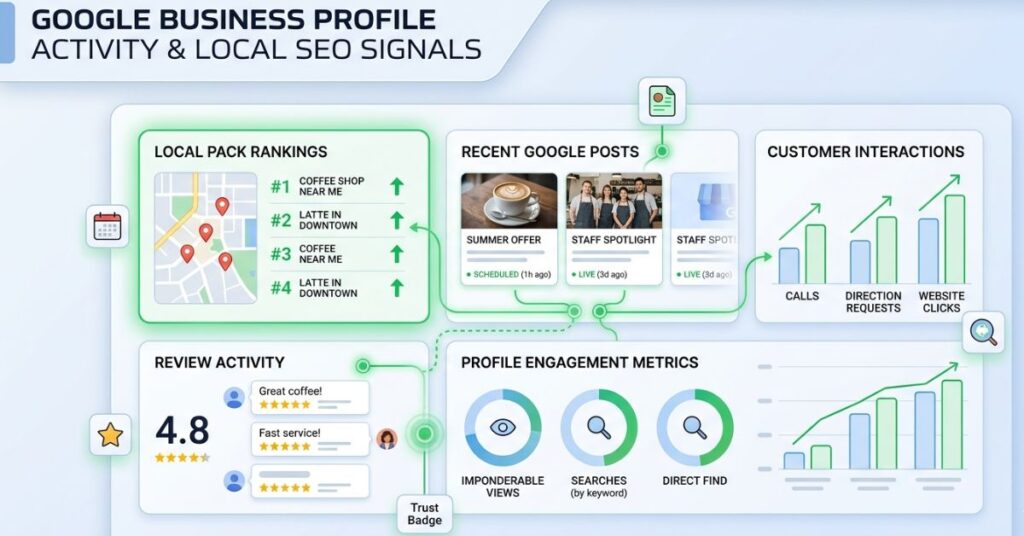
The debate around whether Google Posts directly affect local search rankings has been ongoing in the SEO community. The current consensus, supported by multiple ranking factor studies and practitioner testing, is that Google Posts do not directly move keyword rankings in a major way. They are not a primary ranking signal like review count, citation consistency, or GBP category selection.
However, they do carry indirect SEO value through a well-documented mechanism: profile activity signals. Google has confirmed that it evaluates how actively a business manages its GBP. Regular posting demonstrates that the profile is being managed by an engaged, operational business. This activity signal contributes to the overall trustworthiness score that Google applies when determining which businesses to surface in local results.
In other words, posting regularly is not going to catapult you from position 8 to position 1 on its own. But a profile that has been dark for months is at a disadvantage compared to one with consistent, recent posts, all else being equal.
The Conversion Value of Google Posts: Often Underestimated
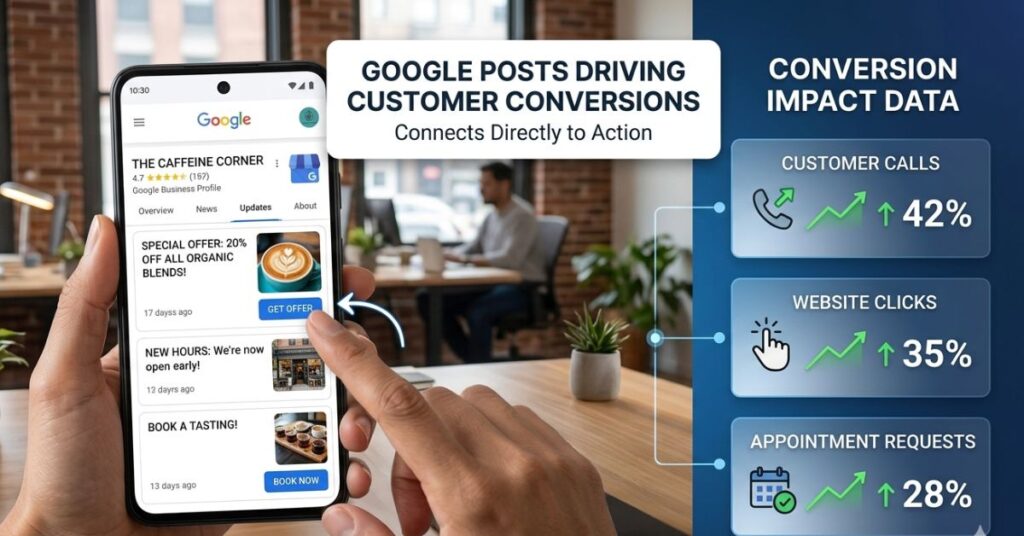
The bigger practical value of Google Posts is not SEO in the traditional ranking sense. It is conversion. When a potential customer finds your GBP in search results, what they see on that profile determines whether they call, visit your website, or scroll past.
A Google Post that says ‘Free Inspection This Month for First-Time Customers’ or ‘Now Offering Same-Day Service in [City]’ gives the searcher a concrete reason to choose you over a competitor whose profile is silent. That kind of micro-conversion moment happens at the exact point of decision, and it is one of the most direct ways to turn a Google search into a phone call.
How Posts Influence Conversion
- They display time-sensitive offers that create urgency
- They highlight specific services or products the customer might need
- They demonstrate activity, showing the business is operational and responsive
- They humanize the business through event coverage, team updates, and behind-the-scenes content
- They provide direct calls to action like ‘Book Now,’ ‘Get Offer,’ or ‘Learn More’ linked to specific landing pages
[ BUTTON ] Optimize Your Google Business Profile with Our Local SEO Team → https://www.seospecialistusa.com/local-seo/
Types of Google Posts and When to Use Each
1. Update Posts
The most common post type. Use these for general business announcements, news, new services, seasonal promotions, or staff updates. Update posts expire after seven days by default unless you set a custom end date. Post two to three update posts per week to maintain a consistent presence.
2. Offer Posts
Designed for promotions and discounts. Offer posts display with a distinct ‘View Offer’ badge in your GBP and allow you to set a start and end date with optional redemption codes. Use these for seasonal sales, introductory discounts, or special package deals. They are among the highest-conversion post types.
3. Event Posts
For businesses hosting or sponsoring local events. Event posts display your event name, date, and time prominently. They are particularly effective for restaurants, fitness studios, service businesses hosting workshops, and any business involved in community activities. Event posts also support local SEO by connecting your business to specific local events.
4. Product Posts
For businesses that want to highlight specific products with images, descriptions, and a purchase or learn-more link. These work well for retail businesses, contractors showcasing specific service packages, or healthcare practices highlighting specific treatment options.
What to Post: Content Ideas That Perform
The biggest reason businesses stop posting is running out of ideas. Here are reliable content categories that keep a posting schedule sustainable:
- New or seasonal service announcements: ‘Spring HVAC Tune-Ups Now Available’
- Limited-time offers: ‘Book This Month and Save on Installation’
- Customer success stories: ‘We just completed a full roof replacement for a family in [Neighborhood]’
- Team highlights: ‘Meet [Team Member], our newest service technician’
- Local event involvement: ‘Proud sponsor of the [City] Annual Business Awards’
- FAQ-style educational posts: ‘What to do if your water heater starts making noise’
- Weather or seasonal tips relevant to your services
- Before and after work showcases with photos
- Review highlights: ‘What our customers are saying…’ with a quote and review link
- Holiday hours or schedule changes
Variety keeps your profile dynamic. Rotate through different post types and content categories to signal ongoing activity and give different customer segments something relevant to engage with.
How Often Should You Post on Google Business Profile?
The recommended frequency for most local businesses is two to four posts per week. This cadence is active enough to signal consistent management without being difficult to sustain. For businesses with strong marketing resources, daily posting is possible but not necessary for most markets.
Consistency is more important than frequency. A business that posts twice a week, every week, outperforms one that posts daily for a month and then goes silent for two months. Google’s activity signals respond to sustained consistency over time, not short bursts.
Set a recurring calendar reminder and batch-create posts once per week or once per month. Tools like Semrush, BrightLocal, and Publer allow scheduled posting directly to Google Business Profile, which makes maintaining the cadence much easier.
Common Google Posts Mistakes to Avoid
- Letting posts expire without replacing them: An empty posts section on your GBP looks neglected. Always have at least one recent post visible.
- Using posts as keyword-stuffed SEO content: Posts are for customers, not Google crawlers. Write naturally for a human reader.
- No call-to-action: Every post should tell the reader what to do next. Link to a service page, a booking form, or a contact page.
- Low-quality images: Posts with poor-quality or pixelated photos undermine professionalism. Use clear, well-lit images sized for Google’s recommended dimensions.
- Posting only promotional content: Mix informational, conversational, and promotional posts. An all-promotional feed feels transactional and earns less engagement.
- Ignoring post analytics: Google Business Profile Insights shows views and clicks for your posts. Review this data monthly and post more of what your audience engages with.
For a full picture of GBP optimization beyond posts, explore local SEO for small businesses.
Google Posts for Local SEO: Key Statistics
- Businesses that post regularly on Google Business Profile receive 30% more profile views compared to inactive businesses (Google)
- GBP posts with images receive 50% more clicks than text-only posts (BrightLocal GBP study)
- Offer posts generate the highest engagement rate of any Google Post type (BrightLocal)
- Businesses with at least one post in the past 30 days rank higher in local pack results compared to those with no recent posts (Whitespark Local Search Ranking Factors)
- Only 29% of businesses post to their GBP regularly, making consistency a significant competitive differentiator (BrightLocal)
How SEO Specialist USA Manages Google Posts for Local SEO Clients
SEO Specialist USA includes Google Business Profile management, including regular posting, as a core component of its local SEO services. The team creates and schedules a mix of post types for each client, tailored to their industry, services, and seasonal opportunities.
Every post is written to perform for both human readers and as a profile activity signal for Google. CTAs are set to drive traffic to the most relevant pages on each client’s website, supporting both GBP engagement and organic traffic goals simultaneously.
Frequently Asked Questions