
Yes, responding to Google reviews helps SEO indirectly. While replies are not a direct ranking factor, they improve local SEO by increasing engagement, trust, and click-through rates. Active review responses signal business credibility and improve Google Business Profile performance in local search results.
Key Takeaways
-
 Responding to Google reviews supports SEO indirectly, not as a direct ranking factor.
-
Review responses improve local SEO engagement signals and profile activity.
-
Active replies help build trust and credibility, increasing click-through rates.
-
Google Business Profiles with regular responses appear more reliable to users.
-
Responding to both positive and negative reviews strengthens online reputation.
-
Consistent review management supports long-term local search visibility.
How Google Reviews Influence SEO
Google reviews play a critical role in how businesses perform in local search results. While reviews are not the only ranking factor, they strongly influence local pack visibility, trust signals, and user behavior, all of which affect SEO performance.
Search engines use reviews to understand business relevance, prominence, and reliability. A steady flow of recent reviews signals that a business is active and trusted, which helps improve visibility in competitive local markets.
Beyond rankings, reviews influence click-through rates (CTR). Listings with higher ratings and visible owner responses attract more user attention, leading to higher engagement. Increased engagement sends positive behavioral signals to Google, supporting stronger local SEO performance over time.
Google reviews also add fresh, user-generated content to a Google Business Profile. This content helps Google better understand services, locations, and customer experiences, which improves local relevance without the need for keyword manipulation.
In short, Google reviews impact SEO by shaping user trust, engagement, and local authority, making them a core component of any effective local SEO strategy.
Does Responding to Google Reviews Improve Local SEO?
Responding to Google reviews improves local SEO indirectly, not through a direct ranking boost. Google has not confirmed that review replies alone increase rankings, but responses influence several signals that support stronger local search performance.
When businesses reply to reviews, they show ongoing activity and engagement on their Google Business Profile. Active profiles are more likely to earn user trust, which leads to higher interaction rates such as profile clicks, calls, and direction requests. These behavioral signals help reinforce local visibility.
Review responses also strengthen brand credibility. Users are more likely to choose businesses that acknowledge feedback, especially in competitive local searches. Higher click-through rates and longer engagement improve overall listing performance in Google’s local ecosystem.
Additionally, responding to reviews helps maintain a fresh and updated profile, which supports local relevance. While keywords in responses should never be forced, natural language replies contribute context about services and customer experience.
Overall, responding to Google reviews supports local SEO by improving trust, engagement, and profile quality, all of which help businesses compete more effectively in local search results.
How Google Review Responses Affect Click-Through Rates (CTR)
Click-through rate (CTR) is a key indicator of how users interact with local search listings, and Google review responses strongly influence this behavior. When users see active, professional replies, they perceive the business as more trustworthy and engaged, which increases the likelihood of clicks.
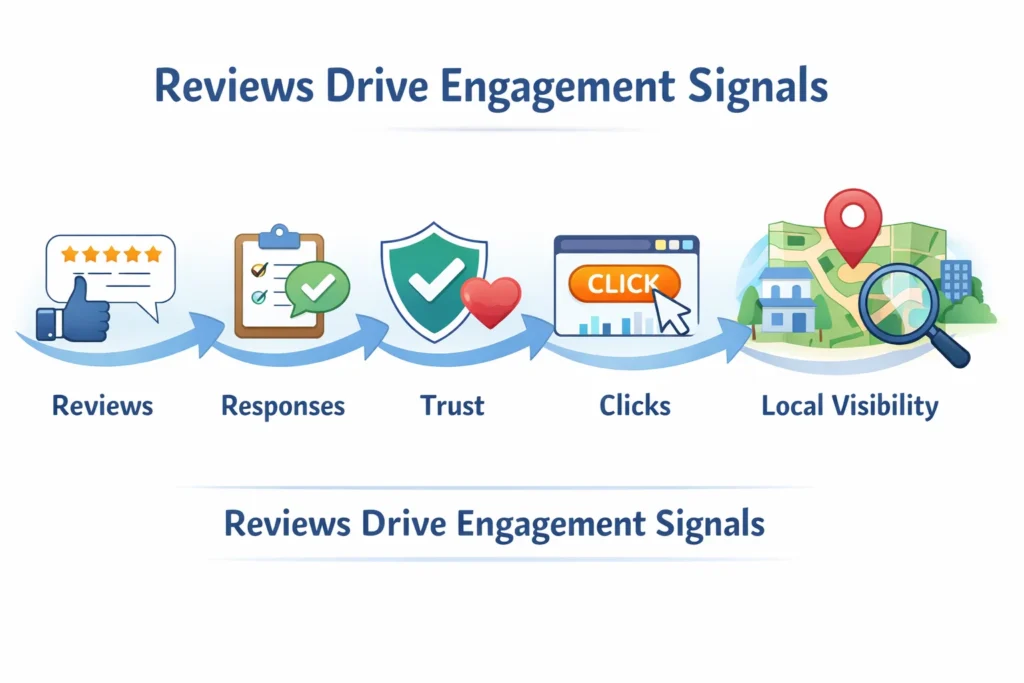
- Building immediate trust: Users feel more confident choosing businesses that acknowledge customer feedback.
- Reducing decision friction: Clear, thoughtful responses help users feel reassured before clicking.
- Standing out in competitive listings: Active profiles appear more credible than silent competitors.
- Improving perception after negative reviews: Professional replies can offset concerns and encourage engagement.
- Encouraging profile actions: Higher trust leads to more calls, website visits, and direction requests.
Responding to reviews improves CTR by:
Higher CTR sends positive engagement signals to Google. While not a direct ranking factor, these signals support stronger local visibility and reinforce the SEO value of consistently responding to Google reviews.
Responding to Positive vs Negative Google Reviews
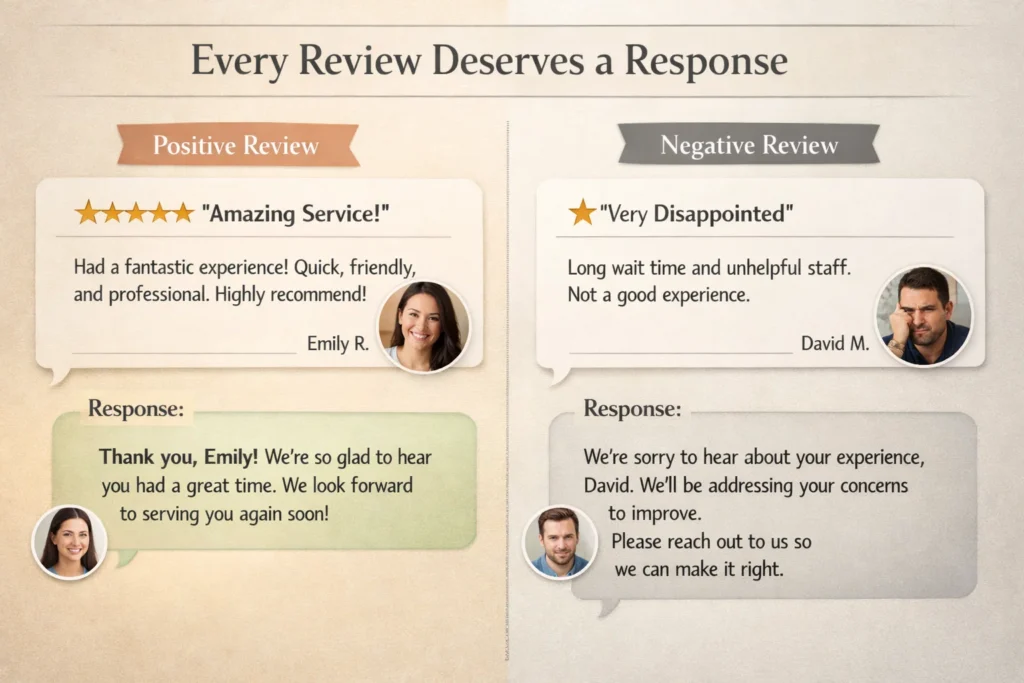
Responding to both positive and negative Google reviews is essential for maintaining a strong online presence. Each type of response serves a different purpose, but together they strengthen trust, engagement, and local SEO performance.
Why Responding to Positive Reviews Matters
Positive reviews reinforce your brand reputation, but responses add an extra layer of credibility. Acknowledging satisfied customers shows appreciation and encourages repeat engagement.
Responding to positive reviews helps by:
- Strengthening customer relationships and loyalty.
- Encouraging future reviews and interactions.
- Reinforcing brand trust for new users.
- Keeping your Google Business Profile active and up to date.
How to Respond to Negative Reviews for SEO Benefits
Negative reviews can influence user decisions, but how you respond matters more than the review itself. Professional, calm replies demonstrate accountability and transparency.
Effective responses to negative reviews help:
- Reduce the impact of criticism on potential customers.
- Show commitment to customer satisfaction.
- Increase user confidence despite lower ratings.
- Prevent loss of clicks and conversions.
When handled correctly, both positive and negative review responses contribute to stronger engagement signals and support long-term local SEO performance.
Best Practices for Responding to Google Reviews (SEO-Friendly)
To maximize the SEO and trust benefits of Google review responses, businesses should follow consistent, user-focused best practices. The goal is not keyword optimization, but authentic engagement that improves user experience and profile activity.
- Respond promptly: Timely replies signal active business management and improve user trust.
- Personalize every response: Use the reviewer’s name or reference their experience when possible.
- Maintain a professional tone:Stay courteous, even when responding to negative feedback.
- Avoid keyword stuffing: Forced keywords can appear spammy and reduce credibility.
- Be concise and helpful: Short, clear replies are more readable and trustworthy.
- Respond consistently: Regular engagement keeps your Google Business Profile fresh.
- Address issues offline when needed: Invite dissatisfied customers to continue the conversation privately.
Effective SEO-friendly review response practices include:
Following these practices helps businesses improve engagement signals, trust, and click behavior, all of which support stronger local SEO performance without risking policy violations.
Common Myths About Google Review Responses and SEO
There are several misconceptions about how Google review responses affect SEO. Understanding what actually matters helps businesses focus on effective local SEO strategies rather than outdated or misleading advice.
Common myths include:
- “Responding to reviews directly boosts rankings.”
Google has not confirmed review replies as a direct ranking factor. Their value comes from improved engagement and trust. - “Only negative reviews need responses.”
Responding to positive reviews is equally important for credibility, relationship-building, and profile activity. - “Using keywords in review responses guarantees SEO gains.”
Forced keywords can harm credibility. Natural language responses are more effective and policy-safe. - “Old reviews don’t need replies.”
Responding to older reviews still shows engagement and professionalism to potential customers. - “High ratings matter more than responses.”
Ratings matter, but active responses often influence user decisions more than star count alone.
Avoiding these myths helps businesses build a sustainable, user-first review management strategy that supports long-term local SEO success.
When Google Review Responses Matter Most
While responding to Google reviews benefits most businesses, it has the greatest impact in situations where trust, competition, and local visibility directly influence customer decisions. In these cases, review responses can significantly improve engagement and conversion rates.
Responding to reviews matters most for:
- Local service businesses: Plumbers, dentists, lawyers, contractors, and home service providers rely heavily on trust and local search visibility.
- Competitive local markets: Active responses help businesses stand out when multiple listings have similar ratings.
- Multi-location businesses: Consistent engagement across locations improves brand perception and local profile performance.
- Trust-sensitive industries: Healthcare, legal, and financial services benefit from visible professionalism and transparency.
- Businesses with mixed reviews: Strong responses help offset negative feedback and retain user confidence.
In these scenarios, review responses act as a decision-making signal, helping users choose one business over another and reinforcing the indirect SEO benefits tied to engagement and local relevance.
Improve Local SEO with Strategic Review Management
Managing Google reviews requires more than just collecting ratings, it requires consistent engagement and strategic optimization. At SEO Specialist USA, we help businesses strengthen local SEO performance through Google Business Profile optimization, review management strategies, and data-driven local search improvements.
If your business relies on local visibility, responding to Google reviews should be a standard part of your SEO approach, done correctly and consistently.
FAQs: Google Reviews and SEO
Does replying to Google reviews improve SEO rankings?
Replying to Google reviews does not directly improve rankings, but it supports SEO indirectly. Responses increase engagement, trust, and click-through rates, which help strengthen Google Business Profile performance in local search results.
How often should businesses respond to Google reviews?
Businesses should respond to Google reviews as consistently as possible, ideally within a few days. Regular responses signal active profile management and improve user trust, which supports stronger engagement and local visibility.
Do keywords in Google review responses help SEO?
Keywords in review responses do not guarantee SEO benefits. Google recommends natural, helpful replies. Forced keywords can reduce credibility, while clear, authentic language supports user trust and engagement.
Should businesses respond to every Google review?
Yes, responding to all reviews—both positive and negative—is recommended. Consistent replies demonstrate professionalism, customer care, and transparency, which positively influence user decisions and local search performance.
Can responding to reviews help with Google local pack rankings?
Responding to reviews can help indirectly. While not a direct ranking factor, improved engagement, higher CTR, and stronger user trust can support better performance in Google’s local pack over time.
Does Google penalize businesses for not responding to reviews?
Google doesn’t penalize businesses for not responding to reviews. However, inactive profiles may lose user trust and engagement, which can negatively affect local visibility compared to more active competitors.
Final Thoughts: Does Responding to Google Reviews Help SEO?
Responding to Google reviews helps SEO indirectly by improving trust, engagement, and user behavior. While replies are not a direct ranking factor, they support stronger click-through rates, better Google Business Profile activity, and improved local visibility. Consistent, professional responses remain a key part of any effective local SEO strategy.
Discover More Articles with SEO Specialist USA