
Geographic (GEO) marketing is not always more effective than SEO for local marketing. Geographic marketing delivers fast, location-based reach through targeted campaigns, while SEO builds long-term visibility in organic local search results. The right approach depends on goals, budget, and whether short-term exposure or sustainable growth is needed.
Key Takeaways:
-
 Geographic (GEO) marketing focuses on location-based targeting for immediate visibility.
-
SEO supports long-term growth through organic local search results.
-
GEO marketing works well for short-term promotions and quick reach.
-
SEO is more effective for building trust, authority, and consistent leads.
-
The best local marketing strategy often combines Geographic marketing and SEO.
What Is Geographic (GEO) Marketing?
Geographic (GEO) marketing is a digital marketing strategy that targets users based on their physical location. It delivers marketing messages to people in specific cities, regions, or proximity areas using location data from devices, apps, or platforms.
- Geo-targeted ads
- Location-based promotions
-
Mobile notifications triggered when users enter a defined area.
GEO marketing is often used for short-term campaigns, special offers, or event promotions where immediate local visibility is the primary goal.
Common examples of Geographic marketing include:
What Is SEO for Local Marketing?
SEO for local marketing focuses on improving a business’s visibility in organic, location-based search results. It helps businesses appear when users search for services or products using city names or “near me” queries.
Local SEO relies on strategies such as:
- Optimizing Google Business Profile
- Managing local listings
- Building local citations
- Earning reviews
- Targeting location-specific keywords.
Unlike Geographic (GEO) marketing, SEO doesn’t rely on paid targeting and instead builds sustainable visibility that continues to generate traffic and leads over time.
Geographic (GEO) Marketing vs SEO: Key Differences
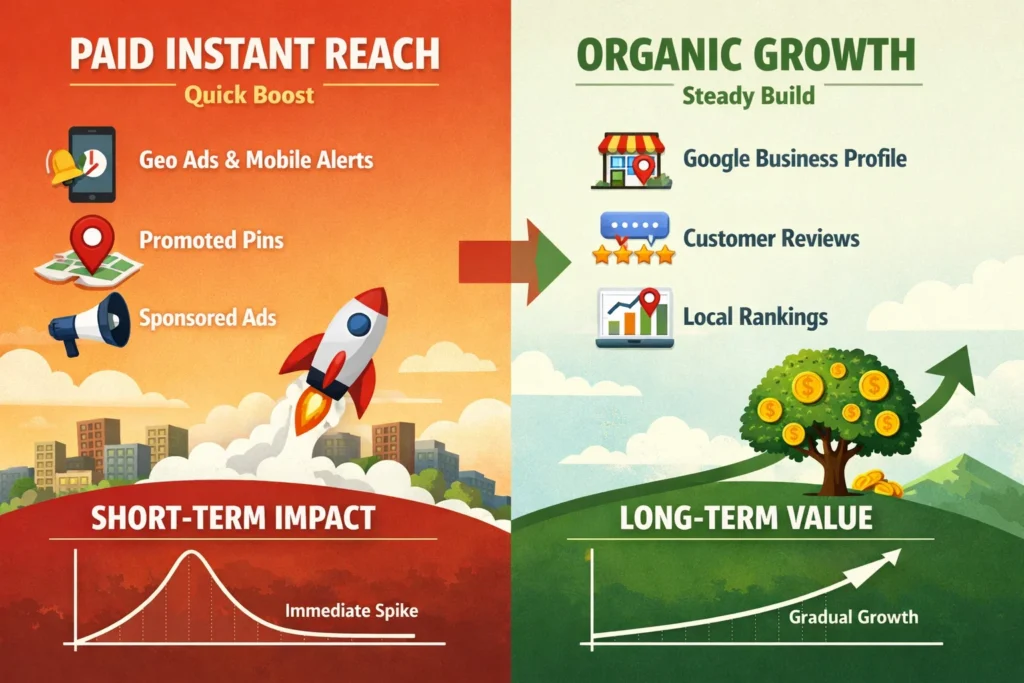
Below is a clear comparison table to help businesses understand the key differences between Geographic (GEO) marketing and SEO for local marketing.
| Factor | Geographic (GEO) Marketing | SEO for Local Marketing |
| Targeting Method | Targets users based on real-time geographic location | Targets users searching for local services organically |
| Cost Structure | Paid campaigns (ads, promotions, impressions) | Primarily organic; investment in optimization |
| Speed of Results | Immediate visibility once campaigns launch | Takes time to build, but delivers lasting results |
| Longevity | Stops when the ad budget ends | Continues generating traffic over time |
| Trust & Credibility | Lower trust due to paid placement | Higher trust from organic rankings |
| Best Use Case | Short-term promotions and events | Long-term local business growth |
This comparison highlights why neither strategy is universally better—the effectiveness depends on business goals and timelines.
Is Geographic (GEO) Marketing More Effective Than SEO?
Geographic (GEO) marketing isn’t universally more effective than SEO for local marketing. It delivers faster results by targeting users based on location, but those results stop once the campaign ends. SEO, on the other hand, takes longer to show impact but provides ongoing visibility and consistent local traffic.
GEO marketing works best for businesses that need immediate exposure, such as time-sensitive offers or local events. SEO is more effective for businesses focused on long-term growth, brand trust, and sustainable lead generation. Choosing the right approach depends on whether speed or longevity is the priority.
When Should You Use Geographic (GEO) Marketing?
Geographic (GEO) marketing is most effective when businesses need fast, location-specific visibility. It is designed for short-term impact rather than long-term growth.
- Time-Sensitive Promotions: Ideal for limited-time offers, discounts, or seasonal campaigns.
- Local Events or Launches: Useful for promoting store openings, events, or special announcements in a specific area.
- Immediate Traffic or Awareness Needs: Helps businesses reach nearby users quickly when instant exposure is required.
- Highly Competitive Local Markets: Can provide short-term visibility while organic SEO efforts are still building.
Situations Where Geographic (GEO) Marketing Works Best:
Geographic marketing is a powerful tool when speed matters, but it is most effective when used alongside longer-term strategies like SEO.
When Is SEO Better for Local Marketing?
SEO is the better choice for local marketing when a business wants consistent visibility and long-term results. Unlike Geographic (GEO) marketing, SEO continues to generate traffic even without ongoing ad spend.
Situations Where SEO Is More Effective
- Long-Term Business Growth: Ideal for businesses focused on sustainable lead generation and brand authority.
- High-Intent Local Searches: Targets users actively searching for services, often resulting in higher conversion rates.
- Building Trust and Credibility: Organic rankings are generally trusted more than paid placements.
- Cost Efficiency Over Time: While SEO takes time to build, it delivers ongoing returns without continuous advertising costs.
For businesses aiming to establish a strong and lasting local presence, SEO offers greater value than short-term location-based targeting alone.
Best Strategy: Geographic (GEO) Marketing + SEO Together
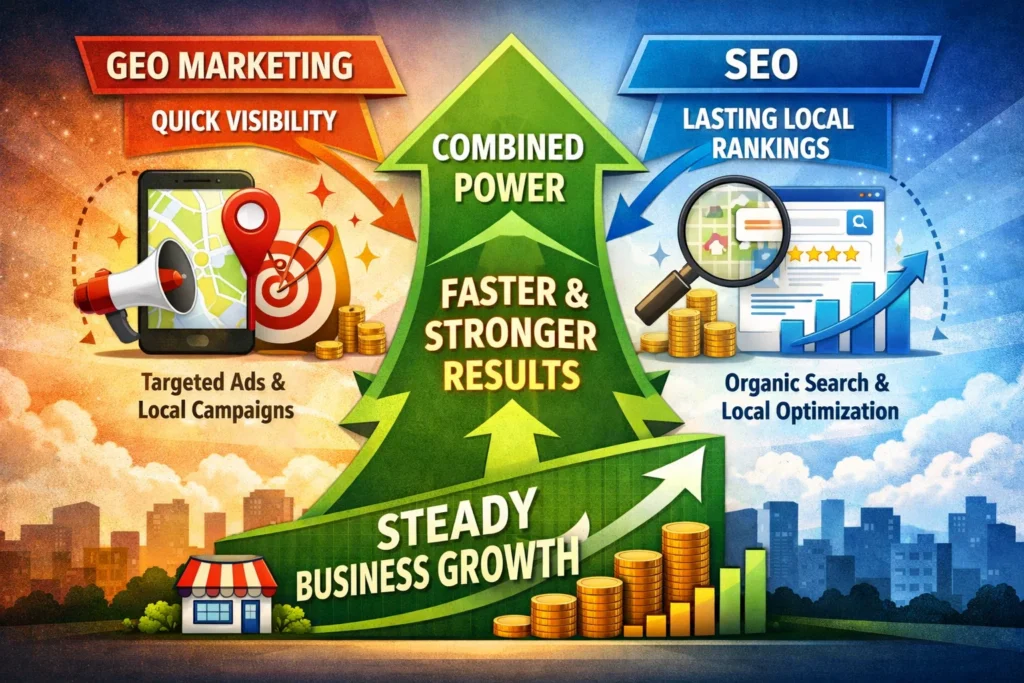
For most local businesses, the most effective approach is combining Geographic (GEO) marketing with SEO, rather than choosing one over the other. Each strategy supports different stages of the customer journey.
Geographic marketing delivers immediate visibility by reaching users in a specific location, making it ideal for short-term goals. SEO, meanwhile, builds long-term organic presence, helping businesses appear consistently in local search results.
- GEO marketing drives quick awareness and traffic
- SEO captures high-intent searches over time
- GEO campaigns can support SEO while rankings are still building
-
SEO reduces long-term dependency on paid campaigns
When used together strategically, businesses can achieve faster results without sacrificing sustainable growth.
Why Using Both Works Better:
How SEO Specialist USA Helps Businesses Choose the Right Strategy
Choosing between Geographic (GEO) marketing, SEO, or a combined approach depends on your business goals, budget, and timeline. SEO Specialist USA helps businesses make the right decision by evaluating their local market, competition, and growth objectives.
Our approach focuses on identifying whether immediate visibility, long-term organic growth, or a balanced strategy will deliver the best results. By aligning Geographic marketing efforts with strong SEO foundations, businesses can maximize local reach while building sustainable online visibility.
CTA: Get Started
FAQs: Geographic (GEO) Marketing vs SEO for Local Marketing
Is Geographic (GEO) marketing better than SEO for local marketing?
Geographic marketing is better for short-term visibility, while SEO is better for long-term growth. GEO marketing works through paid location-based targeting, but SEO continues to bring traffic even after the work is done.
Can Geographic marketing replace local SEO?
No. Geographic marketing cannot replace local SEO. Once GEO campaigns stop, visibility disappears. Local SEO builds lasting presence in Google Search and Maps, which continues to generate leads over time.
Which brings faster results: Geographic marketing or SEO?
Geographic marketing brings faster results because it relies on paid targeting. SEO usually takes weeks or months to show strong results but provides more sustainable traffic once rankings improve.
Is SEO still effective for local marketing in 2025?
Yes. SEO remains highly effective for local marketing because people still rely on Google Search and Google Maps to find nearby businesses. Local SEO continues to be a core ranking and lead-generation strategy.
Do small businesses need Geographic marketing or SEO?
Most small businesses benefit more from SEO first because it is cost-effective long term. Geographic marketing can be added later for promotions, launches, or when immediate exposure is needed.
Which strategy is more cost-effective long term?
SEO is more cost-effective long term because it does not require continuous ad spend. Geographic marketing requires ongoing budget to maintain visibility.
Can Geographic marketing help while SEO is still building?
Yes. Many businesses use Geographic marketing temporarily while SEO efforts are gaining traction. This helps generate traffic and leads during the early stages of SEO.
What is the best local marketing strategy overall?
For most businesses, the best strategy is combining Geographic marketing for short-term visibility with SEO for long-term growth. This creates both immediate reach and sustainable local presence.
Discover More Articles with SEO Specialist USA