
Roofing SEO helps contractors appear when nearby homeowners search for roof repair, replacement, inspections, and storm damage services. Start with an accurate Google Business Profile, clear service pages, real project proof, and a fast mobile website. Then measure qualified calls, estimates, and booked jobs, not just rankings or website visits.
Key takeaways
- Make your Google Business Profile accurate and useful before paying for a long list of SEO tasks.
- Give roof repair, replacement, inspection, and genuine specialties the right pages, based on what customers are trying to book.
- Show real jobs, real service areas, and verifiable credentials instead of copying city names into near-identical pages.
- Review search visibility alongside calls, estimates, and won jobs so you can see which work creates business value.
- Treat storm-related demand and AI search as opportunities for better information, not excuses for exaggerated claims or shortcuts.
A homeowner with water coming through the ceiling isn’t searching the same way as someone comparing metal roof options for a remodel. One needs prompt help. The other may spend weeks comparing contractors, materials, warranties, and costs. If your website gives both people the same vague quality roofing services pitch, it misses what each visitor came to do.
That’s why this guide takes a different approach. Instead of recommending every SEO tactic at once, we’ll follow the decisions a roofing business makes to reach more of the right customers, earn trust, and turn search visits into quote requests. The examples are illustrative, not client results.
Begin with the roofing jobs you want to book
Before looking at search volume, open your job records. Which services make sense for your crews, equipment, season, coverage area, and profit margins? A residential repair specialist and a commercial flat-roof contractor shouldn’t have identical SEO plans.
Start by grouping searches into four practical types:
| Search type | Example a customer might type | Best destination |
|---|---|---|
| Urgent repair | emergency roof leak repair in Austin | Roof repair page with genuine availability and phone number |
| Planned project | asphalt shingle roof replacement Austin | Replacement page with scope, materials, and estimate process |
| Research | how long does a metal roof last in Texas | Helpful guide linking to the relevant metal roofing service |
| Provider comparison | roofing contractor near me | Useful homepage, Google Business Profile, and trustworthy reviews |
A roofing business might also specialize in TPO roofs, gutters, hail damage, skylights, or inspections. Give a specialty its own page when customers have a distinct need and the company can show meaningful experience with that work. Don’t build ten thin pages for ten ways to say roof repair.
Quick check: Write down your five most valuable job types and three service areas where your team regularly works. Compare that list with the pages and contact options on your site. If an important service is difficult to find, fix that before writing another broad blog post.
Make Google Business Profile accurate and useful
Roofing is local by nature. A homeowner typically wants a contractor who serves the address, can explain the work, and answers the phone. A well-maintained Google Business Profile helps customers understand those basics.
Check the business name, primary category, phone number, hours, website link, and services. The name should match your real business name; adding keywords or city names that aren’t part of it violates Google’s guidelines. If the business travels to customers and doesn’t receive people at its address, Google says to hide the address and set a genuine service area. A virtual office isn’t a substitute for an eligible location.
Google explains that local results are mainly influenced by relevance, distance, and prominence. You can improve accurate business details, supporting information, and reputation, but you can’t pay Google for a preferred Maps position or make your office closer to every homeowner. Source: Google local ranking guidance.
A useful roofing profile should include:
- The roofing services actually offered, with accurate descriptions.
- Real photos of crews, completed jobs, and the business, shared with permission.
- Current hours and a reachable phone number. If you don’t offer 24-hour service, don’t advertise it.
- A review process that asks every eligible customer for genuine feedback, without rewards or pressure.
- Replies to reviews that are courteous and don’t expose private customer details.
You don’t need to post the same stock roof photograph every day. Genuine, relevant information is more valuable than an artificial activity schedule.
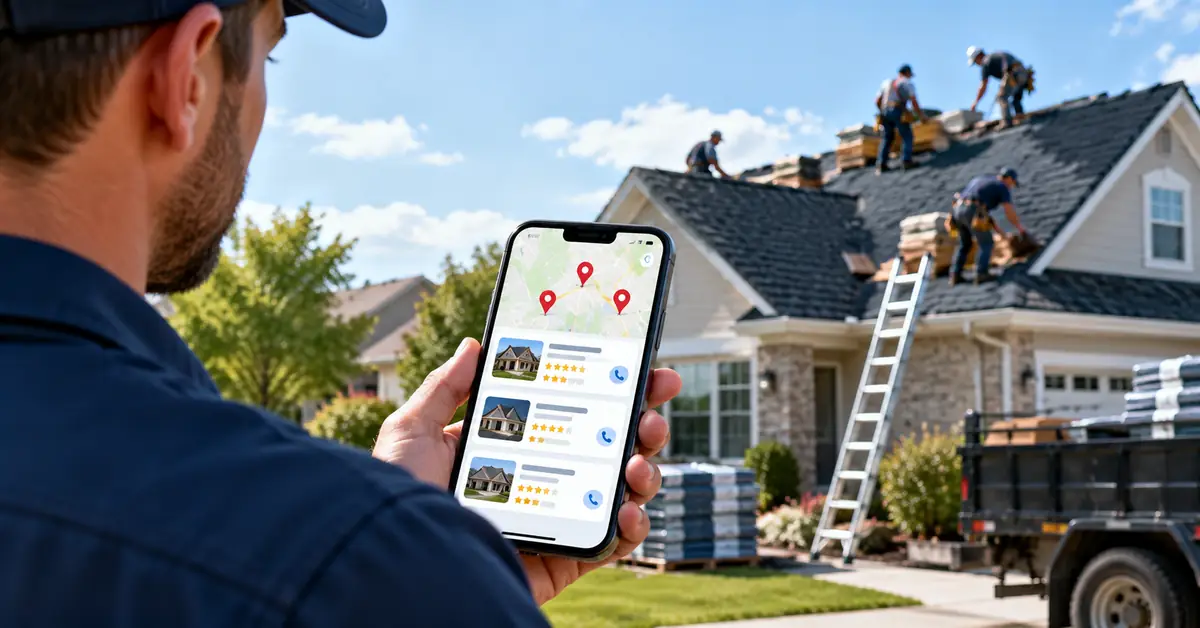
Related reading: For broader guidance, see SEO Specialist USA’s local SEO services and its existing article on how SEO helps roofing companies win local leads.
Build service pages that help homeowners decide
A strong roofing service page doesn’t just repeat roofing contractor in [city]. It explains the job. What problems do you fix? What happens during an inspection? Which roofing systems does your company work with? What’s included in an estimate? How can a homeowner reach you?
Consider a fictional contractor called Cedar Ridge Roofing in Austin. The company’s homepage introduces the business and service area. Its roof repair page answers repair questions. Its replacement page explains materials, the estimate process, disruption, and cleanup. A real completed-project page shows the work and links back to the appropriate service.
Here’s a sensible starting architecture:
| Page | Main customer need | Helpful proof or next step |
|---|---|---|
| Homepage | Can this company handle my roofing project? | Services, coverage, real jobs, contact details |
| Roof repair | Can you fix this problem? | Leak and flashing issues, process, inspection CTA |
| Roof replacement | What happens if I need a new roof? | Roof systems, process, financing if genuinely offered |
| Commercial roofing | Can you work on my building? | Actual systems, safety approach, relevant projects |
| Completed projects | Have you done similar jobs? | Real photos, scope, area, outcome with permission |
The page title, H1, introduction, and internal links should make each page’s purpose obvious. Don’t write a separate page for every close variation of the same phrase. Google and visitors both benefit from a site that has a clear structure.
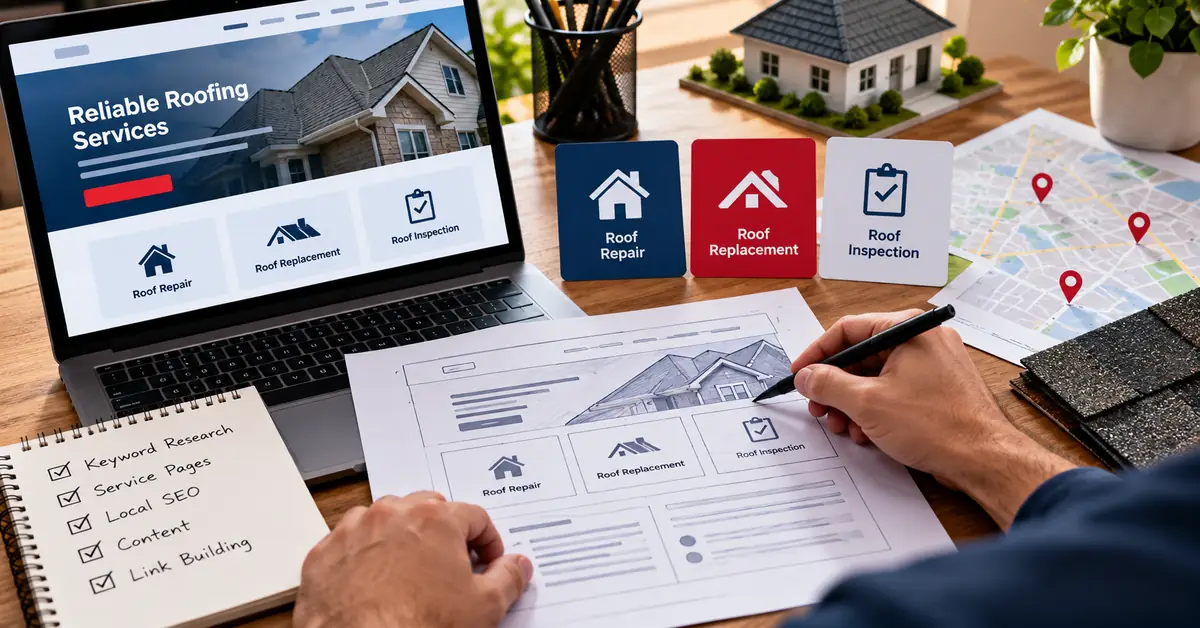
What makes a roofing service page useful?
Start with the service and who it’s for. Explain common signs that prompt customers to call, what the inspection or estimate process involves, the materials or systems you actually work with, and how you handle safety, cleanup, and warranties. Add authentic job photos where they’re relevant. End with a short, accessible request-an-estimate form or click-to-call option.
A customer should never have to hunt through a generic image carousel just to find a phone number. Test every form and call link on a phone, especially on repair pages where a visitor may be standing under a leaking roof.
Use completed projects as evidence, not decoration
Roofing customers make expensive decisions about their homes and buildings. A claim like trusted roofing experts tells them less than a well-documented project in a neighborhood they recognize.
Build a simple project record after suitable jobs. With permission, document the service, general area, roof system, problem, work performed, and realistic outcome. Photos should show the actual job. Avoid posting home addresses, insurance paperwork, or identifying customer details without permission.
A useful project caption might say: Asphalt shingle replacement on a single-family home in North Austin. Our crew removed damaged shingles, checked the roof decking, replaced underlayment where required, and completed cleanup. Only publish details the contractor can verify.
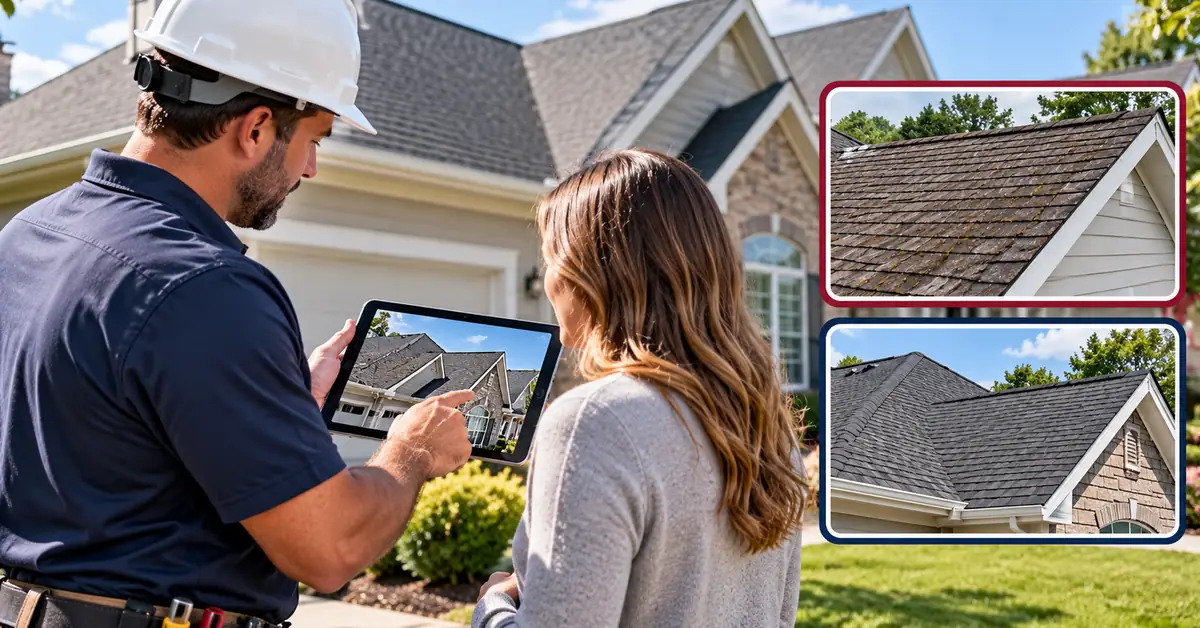
Licenses, insurance coverage, manufacturer credentials, and warranty statements should be current and specific to the business. Rules differ by state and service, so don’t imply every roofing contractor holds the same license or that an insurance claim will definitely be approved. Proof makes the content useful only when it’s true.
Create service-area pages only when they add value
A roofing company might work across several towns. That doesn’t mean each town deserves a near-identical 700-word page with a different place name in the heading.
Before creating a city page, ask what a homeowner there would learn that isn’t already covered. Useful distinctions may include projects completed in the area, actual travel coverage, local roof types, climate considerations, photos, permitting considerations that have been verified, and available service hours. Include a clear route back to the relevant service page and contact options.
If the company has no distinct information to offer for a nearby suburb, a clear service-area section may be better than another page. Google’s spam policies specifically warn against doorway pages made mainly to target similar location searches.
Keep the roofing website fast and easy to contact
Roofing sites often have large photos, videos, sliders, and third-party widgets. Those assets can be useful, but they shouldn’t make the mobile experience slow or hide the next step.
Check a few essentials before expanding content:
- Confirm your important service pages load, are indexable, and are linked from the website navigation or related pages.
- Compress real project photos, use descriptive filenames, and write alt text that explains the visible image.
- Make phone numbers tap-to-call, label forms clearly, and test submissions yourself.
- Check that the mobile menu, estimate form, and primary call button work on a small screen.
- Use canonical URLs and redirects deliberately when replacing old pages; don’t leave broken links from past campaigns.
- Check Search Console and Core Web Vitals to find issues affecting important pages, rather than treating every audit warning as equally serious.
If this work feels unfamiliar, SEO Specialist USA’s technical SEO checklist is a useful next reference. The priority is a site that’s accessible and usable, not a perfect score on every tool.
Earn local trust without buying questionable links
There isn’t a shortcut where a bulk directory order suddenly makes a roofing business the most trusted contractor in town. A more sustainable approach is to make your company easy to verify and relevant to the community.
Keep important listings accurate. Consider appropriate local chambers, real trade associations, and supplier or manufacturer directories where the company genuinely qualifies. Local event sponsorships can make sense if they’re real relationships, not just a scheme to purchase a link. Avoid paid link networks, fabricated reviews, and mass-produced guest posts.
Google permits businesses to ask customers for honest reviews, but incentives and selective positive-review requests violate its rules. A straightforward follow-up after a completed job is better than pressuring a homeowner to leave five stars at the worksite.
Measure roofing leads, not just impressions
A roofing company can rank for a lot of informational searches and still have a quiet sales calendar. The question isn’t simply how many people found the website. It’s how many relevant homeowners contacted the business, requested estimates, and ultimately hired the team.
Use Google Search Console to understand search queries and landing pages. Use analytics and properly configured forms or call tracking to understand enquiries. Then connect qualified leads to job records in your CRM or a simple spreadsheet. Keep privacy and consent rules in mind when using call recordings or customer data.

A simple roofing SEO scorecard
| Measure | What it tells you | Common mistake to avoid |
|---|---|---|
| Relevant local impressions | Searchers can encounter your pages | Assuming all impressions are potential customers |
| Organic calls and forms | People are reaching out | Counting spam or unrelated calls as leads |
| Qualified estimates | The enquiry fits your service area and work | Treating every call as an estimate opportunity |
| Booked jobs | SEO contributed to actual work | Claiming every job was caused by one search click |
| Service and town mix | Which jobs and areas produce interest | Optimizing only for the broadest roofing keyword |
For illustration, imagine a roofing business gets 40 enquiries, 19 qualified estimate requests, and 7 booked jobs during a reporting period. Those numbers aren’t a benchmark or an SEO Specialist USA case study. They’re an example of how to ask better questions: Which service pages attracted the qualified enquiries? Did the business answer calls? Did estimates turn into contracts? Was the demand seasonal?
Tracking makes decisions easier. If a roof repair page attracts relevant calls but the business misses them after hours, improving the call-handling process may matter more than publishing another ten blog posts.
A realistic 90-day roofing SEO action plan
Ninety days is a useful period for setting up, correcting, and measuring work. It isn’t a promise of page-one rankings or a fixed number of roofing leads.
| Period | Focus | What should be ready for review |
|---|---|---|
| Days 1–30 | Check Google Business Profile, baseline data, service pages, contact paths, and indexability | Accurate business information, working contact options, prioritized fixes |
| Days 31–60 | Improve priority service pages, add authentic projects, address important mobile and technical issues | Useful pages for actual job types, better internal links, verified project evidence |
| Days 61–90 | Review enquiry quality, refine weak pages, request genuine customer feedback, assess nearby markets | Call and form tracking, qualified-lead patterns, a clearer next-quarter plan |
If a storm creates a genuine spike in roof inspection demand, update the relevant services, availability, and safety information promptly. Don’t manufacture urgent storm damage pages for neighborhoods the business doesn’t serve or claim insurance outcomes you can’t support.
How much should a roofing company spend on SEO?
There’s no useful fixed price without knowing the market, website condition, number of service areas, and who will handle implementation. A one-location roofing company with a small, healthy website needs a different scope from a multi-city contractor with technical problems, several divisions, and no lead tracking.
Compare proposals by deliverables rather than headline prices. Ask which pages will be improved, how Google Business Profile will be managed, how technical recommendations will be handled, what reporting includes, and who owns the website, analytics, profiles, and content. A low-cost package that produces irrelevant pages or spam links can be poor value. An expensive plan without clear priorities isn’t better.
If you’re already paying for SEO, try SEO Specialist USA’s guide to prioritizing SEO work before approving another large task list.
Can roofing businesses appear in AI search answers?
AI-powered search experiences can help homeowners research roofing materials, compare repair and replacement options, and discover nearby contractors. The best foundation is still clear, accurate information that search systems and customers can access.
Explain your real services, locations, credentials, estimate process, and project examples in readable text. Keep business listings accurate. Make important pages crawlable and avoid thin copy created only to target AI-generated questions. Google’s AI search guidance says traditional SEO fundamentals remain relevant and that special AI markup isn’t required for inclusion.
A clear answer to Do you repair storm-damaged shingles in North Austin? is genuinely useful if your team actually provides that service. There’s no need to insert dozens of unnatural question headings or promise an AI citation.
When should you hire a roofing SEO specialist?
A roofing owner can handle some basics: checking contact details, collecting authentic project photos, asking for honest reviews, and explaining services. Expert support becomes useful when several important pages aren’t indexed, the site has migration problems, city pages overlap, analytics don’t capture enquiries, or the team can’t agree on priorities.
SEO Specialist USA offers local SEO services, technical guidance, and broader SEO support for service businesses. The starting point shouldn’t be an inflated content plan. It should be a clear assessment of the roofing work you want, where your site is falling short, and what can reasonably be fixed.
Want a clearer plan? Discuss Your Roofing SEO
Roofing SEO frequently asked questions
What is roofing SEO?
Roofing SEO is the work of improving a roofing contractor’s visibility in local search and on its own website. It includes an accurate Google Business Profile, useful service pages, technical accessibility, genuine reviews, relevant business information, and tracking of qualified roofing enquiries.
Is local SEO important for roofers?
Yes. Most roofing projects have a service-area requirement, so nearby homeowners need to know a contractor can reach them. Local SEO improves the accuracy and usefulness of Google Maps information and location-related website pages, helping the right customers assess the business.
How do roofers rank higher on Google Maps?
Start with an eligible, accurate Google Business Profile, the right real-world business details, genuine service coverage, current contact information, and honest customer feedback. Google mainly considers relevance, distance, and prominence, so no agency can guarantee a specific Maps position.
How long does roofing SEO take to work?
There’s no fixed timeline. Updates to business details may appear relatively quickly, while improvements to competitive service-page visibility often require ongoing work and evaluation over months. Website history, local competition, project demand, and the quality of implementation all affect the outcome.
Can a roofing contractor do SEO without an agency?
Yes. Owners can maintain business information, request honest reviews, collect project photographs, improve service descriptions, and check phone and form links. Technical troubleshooting, complex migrations, strategy, and reliable lead attribution may justify outside support when the team lacks time or experience.
Does every roofing service need its own website page?
No. Create a separate page when a service has distinct customer intent and enough useful detail to stand alone. Roof repair and roof replacement often deserve different pages, but small keyword variations shouldn’t become near-duplicate pages created only to capture extra searches.
Should roofers create a page for every nearby city?
Only when each page adds real value. A city page should reflect genuine service coverage and helpful, verified local information. Copying the same text across dozens of suburbs with a changed place name can create doorway-style content that helps neither homeowners nor search visibility.
What’s the best roofing SEO keyword to target first?
Start with the job your business wants and can deliver reliably, such as roof repair or roof replacement, plus your actual service market. Look at the searcher’s need, local competition, and the quality of the matching page rather than chasing the highest estimated volume.
What should roofing companies track besides rankings?
Track qualified calls, estimate requests, appointment or inspection bookings, and signed projects alongside relevant search visibility. Review the results by roofing service and area. These numbers help identify both SEO problems and operational gaps, such as missed calls or slow estimate follow-up.
Can AI search recommend my roofing company?
It may surface your business when relevant information is available and useful, but inclusion isn’t guaranteed. Keep your website crawlable, explain real services, maintain accurate listings, and publish trustworthy project information. Special AI files or FAQ markup aren’t a shortcut to guaranteed recommendations.
How much do roofing SEO services cost?
Pricing depends on the number of markets, existing website issues, content needs, competitive conditions, and the amount of ongoing support. Request a defined scope with prioritized deliverables, account ownership, and qualified-lead reporting before choosing a monthly budget or signing a contract.
Should I hire an SEO agency that guarantees roofing leads?
Be cautious. An agency can’t control Google’s rankings, storm demand, your call-answering rate, or every homeowner’s decision. Look instead for realistic projections with clear assumptions, transparent work, access to your accounts, and reporting that distinguishes enquiries from booked roofing jobs.
The next practical step for your roofing website
Pick one important service page and ask three questions: Can a homeowner understand the offer? Is there proof the business can do the work? Is it easy to get an estimate? Then review the related Google Business Profile details and lead tracking. Fixing that path is a useful starting point before expanding into more content.
If you’d like help deciding what deserves attention first, contact SEO Specialist USA to discuss a focused roofing SEO review. We’ll start with your actual business goals rather than a generic checklist.