
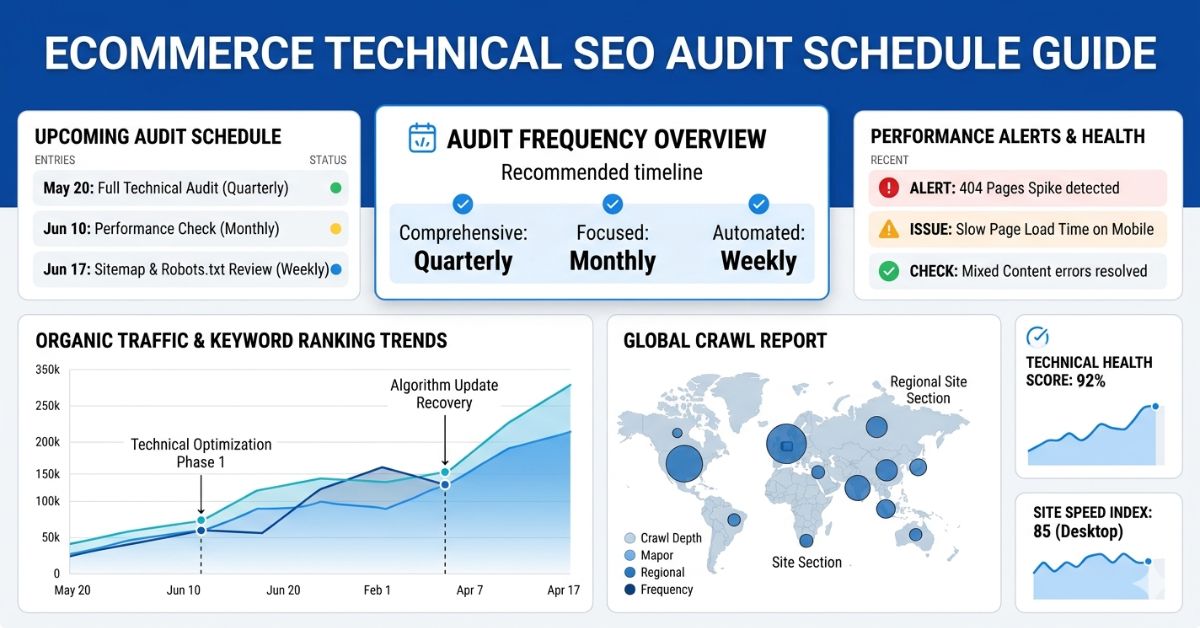
Ecommerce businesses should run a comprehensive technical SEO audit at least once every six months, with lighter monthly health checks in between. Large stores with catalogs above 10,000 SKUs, active development cycles, or aggressive inventory turnover benefit from quarterly full audits. Certain business events, a platform migration, a significant site redesign, a sudden ranking drop, or a confirmed Google algorithm update, should trigger an immediate unscheduled audit regardless of when the last one occurred.
Key Takeaways
-
 The minimum audit frequency for any ecommerce store is twice per year, every six months
-
Large stores with 10,000+ SKUs, frequent product changes, or active development should audit quarterly
-
Monthly technical health checks (lighter scope than a full audit) catch emerging issues before they compound
-
Platform migrations, redesigns, and major algorithm updates require immediate audits regardless of schedule
-
The cost of a missed technical issue multiplies with catalog size, a canonical error on 10,000 product pages is 10,000 times more damaging than the same error on a 10-page service site
Why Audit Frequency Matters More for Ecommerce Than Any Other Site Type
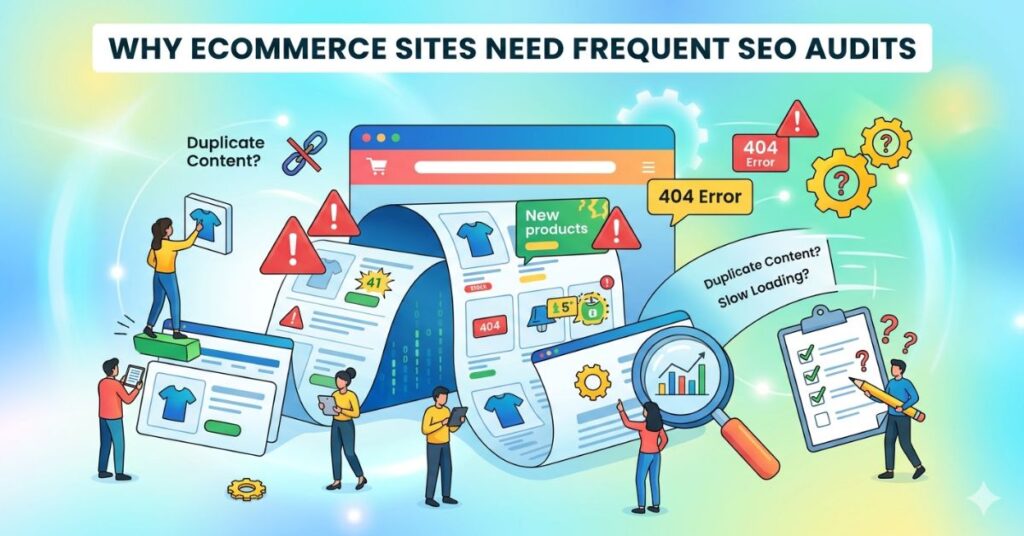
Ecommerce websites change constantly. New products are added. Old products go out of stock or are discontinued. Categories are restructured. Promotional pages are created and removed. Developers push code updates. Platform plugins are installed and updated. Every one of these changes can introduce new technical SEO issues, broken canonicals, accidental noindex tags, new URL parameter variants, broken internal links, or schema errors on new page templates.
On a small website, a technical error might affect 5 pages. On an ecommerce store, the same error introduced by a template change might affect 5,000 pages simultaneously. The faster issues are caught, the less damage they do to rankings and organic revenue.
For a full-scope ecommerce technical audit, see technical SEO audit services.
Recommended Audit Schedule by Store Size
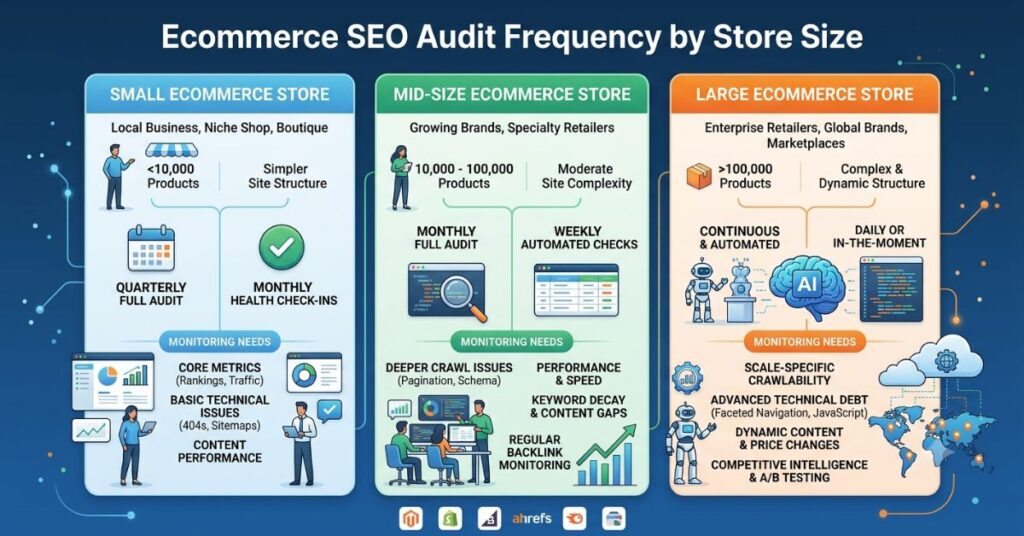
Small Ecommerce Stores: Under 1,000 Products
Recommended frequency: Full technical audit every 6 months, monthly health check.
- Twice-yearly comprehensive audits cover crawl health, indexation, Core Web Vitals, schema, and duplicate content
- Monthly health checks: review Google Search Console for new crawl errors, coverage drops, and Core Web Vitals flags
- Trigger an immediate full audit after any major website change, platform update, new theme installation, significant category restructure
At this catalog size, most issues affect a manageable number of pages. A six-month cadence is sufficient to catch problems before they compound significantly.
Mid-Size Ecommerce Stores: 1,000 to 10,000 Products
Recommended frequency: Full technical audit every 3 to 4 months, monthly health check.
- Quarterly audits account for the higher rate of product changes, category updates, and development activity typical at this scale
- Monthly health checks should include crawl coverage reports, index count monitoring, and Core Web Vitals data review
- Seasonal inventory changes, pre-holiday catalog expansion, post-season clearance restructuring, should trigger a targeted crawl and indexation review
- Platform or plugin updates affecting templates or URL structure should trigger an immediate audit
Large Ecommerce Stores: 10,000+ Products
Recommended frequency: Full technical audit every quarter, continuous automated monitoring.
- Quarterly full audits are the minimum. Active stores with aggressive product development or frequent platform changes may benefit from monthly audits
- Continuous automated crawl monitoring tools (Botify, Sitebulb continuous, ContentKing) provide real-time visibility into technical changes without waiting for a scheduled audit
- Log file analysis should be conducted at least monthly to track Googlebot’s crawl behaviour relative to the catalog size
- Dedicated pre-launch checklists for any code or template change prevent new issues from being introduced in the first place
For ecommerce stores at this scale, explore ecommerce SEO services for ongoing technical management.
Events That Should Trigger an Immediate Technical SEO Audit
Beyond the scheduled audit cadence, certain events should prompt an immediate unscheduled audit regardless of when the last one occurred:
Platform or CMS Migration
Moving from one ecommerce platform to another, Magento to Shopify, WooCommerce to BigCommerce, or any similar migration, is one of the highest-risk SEO events a store can undergo. URL structures change, redirect maps must be implemented, canonical configurations must be rebuilt, and schema templates must be reconfigured. A pre-migration and post-migration technical audit is not optional, it is essential for protecting organic traffic through the transition.
Site Redesign or Major Theme Change
A new website design often means new page templates. New templates introduce new risks: canonical tags may be incorrectly configured in the new template, schema markup may not carry over, internal linking structures may change, and new JavaScript behaviour may affect how Google renders and indexes content. Any significant design change should be followed immediately by a technical crawl and coverage review.
Significant and Unexplained Ranking Drop
A sudden drop in organic rankings or traffic that correlates with no obvious change is frequently a technical issue. Accidental noindex tags applied to key pages, a robots.txt misconfiguration blocking important sections of the site, or a canonical tag error following a code push can suppress rankings within one to two re-crawl cycles. When rankings drop without a clear reason, a technical audit is the first diagnostic step.
Google Algorithm Update
Major Google algorithm updates, Core Updates, Spam Updates, and Page Experience Updates, can shift rankings significantly. A technical audit following a major update helps identify whether any of your pages have been devalued due to quality or spam signals, whether your Core Web Vitals scores have changed relative to the updated benchmarks, or whether new ranking factors introduced in the update require technical changes to capitalize on.
Major Catalog Changes
Adding a new product category with its own URL structure, removing a significant section of the catalog, or restructuring category hierarchies are all events that create technical SEO risk. Redirect chains, orphaned pages, and new duplicate content patterns can all emerge from catalog restructuring. A targeted technical review following major catalog changes catches these issues early.
What a Monthly Technical Health Check Should Cover
Between full audits, a monthly health check is faster and lighter but catches emerging issues before they compound:
- Google Search Console, Coverage: Check for new errors (server errors, blocked by robots, noindex), significant drops in indexed page count, or pages moving from indexed to excluded
- Google Search Console, Core Web Vitals: Monitor for any new URLs entering the ‘poor’ threshold, particularly after site updates
- Google Search Console, Enhancements: Check for new schema errors or rich result eligibility issues
- Organic traffic comparison: Compare month-over-month organic sessions in Google Analytics 4, flagging any category or product page groups showing unexpected declines
- Crawl error check: A quick Screaming Frog crawl of the homepage and key category pages identifies new broken internal links or redirect chains
Monthly health checks take two to four hours for most stores and catch the majority of issues before they escalate to full ranking problems.
The Cost of Infrequent Audits
Waiting too long between audits has a compounding cost. A canonical tag error introduced in a platform update might affect 3,000 product pages. If that error is left unfixed for six months while the store operates on an annual audit schedule, Googlebot processes those 3,000 pages through multiple crawl cycles under the incorrect configuration. Google may consolidate ranking signals to an unintended URL, which then needs time to be corrected even after the technical fix is applied.
The earlier a technical issue is caught, the lower the recovery cost. Frequent, well-structured audits are an investment in protecting the organic revenue the store has already built.
How SEO Specialist USA Supports Ecommerce Technical Audit Cadences
SEO Specialist USA provides both one-time ecommerce technical SEO audits and ongoing technical monitoring retainers for ecommerce clients. The team configures the audit frequency and scope appropriate to each store’s size, development activity, and competitive environment, and delivers prioritised action plans with each audit cycle.
Clients with ongoing technical retainers receive monthly health check reports, access to continuous crawl monitoring, and immediate investigation support when unexpected ranking changes occur.
Frequently Asked Questions