
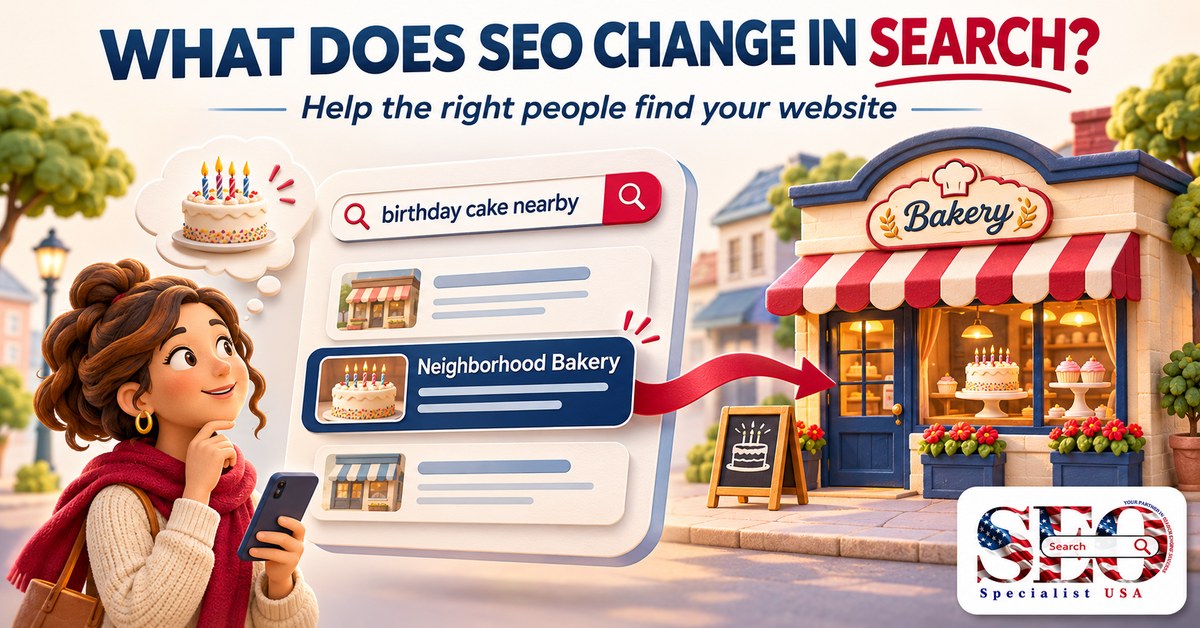
SEO affects which website pages can appear in search results, how well they match a person’s question, and how clearly they’re presented. Better search engine optimization can improve relevant visibility and help earn clicks. It doesn’t control Google’s decisions, guarantee first place, or turn every visitor into a customer.
Imagine you need a birthday cake for Saturday, so you open your phone and search for a bakery nearby. As you scan the results, you choose a listing that explains what the bakery offers and seems to match what you need.
Where does SEO fit into that moment?
Let’s follow your search, then look at the same situation through the bakery owner’s eyes using a fictional bakery and sample listings.
Key Takeaways
-

SEO can help a suitable page become easier to discover and understand.
-
Different questions need different answers, even when they involve the same business.
-
Clear search listings help people decide what to open; Google chooses the displayed wording.
-
A search appearance, a click, and an inquiry are separate events.
-
Judge progress by useful searches and customer actions, not a single position on your phone.
SEO can help connect a customer’s question with a suitable business page.
What Effect Does SEO Have on Your Search Results?
For a searcher, SEO can affect the pages available to find and the information used to present them. For a business owner, that creates opportunities to reach people looking for something the business actually offers.
Think of a shop with an unclear sign that you might walk past because you can’t tell what’s inside. A useful website page gives search engines and visitors clearer information about the business. That clarity helps, but the search engine still decides which results suit each search.
Google describes SEO as helping search engines understand content and helping people decide to visit a site. Its SEO Starter Guide provides the foundation for this explanation.
Your page has a better chance of being found
Before someone can discover the bakery through its cake page, the search engine needs access to that page. If useful pages are hidden behind broken links or unavailable to search engines, they may miss potential visitors.
Your page can match a more useful question
A page explaining cake designs, pickup arrangements, and ordering helps someone planning a purchase, while a baking tutorial helps someone who wants to make a cake. SEO helps clarify which need each page serves.
Your result can become easier to understand
A descriptive title tells someone what they’ll find before they open the page, helping them decide if it’s worth a visit without promising that they’ll click.
How Does a Website Become a Search Result?
Picture a librarian learning about a new book, recording it in a catalog, and later finding it for a reader. Search engines follow a more complex process, but this comparison helps explain three important stages.
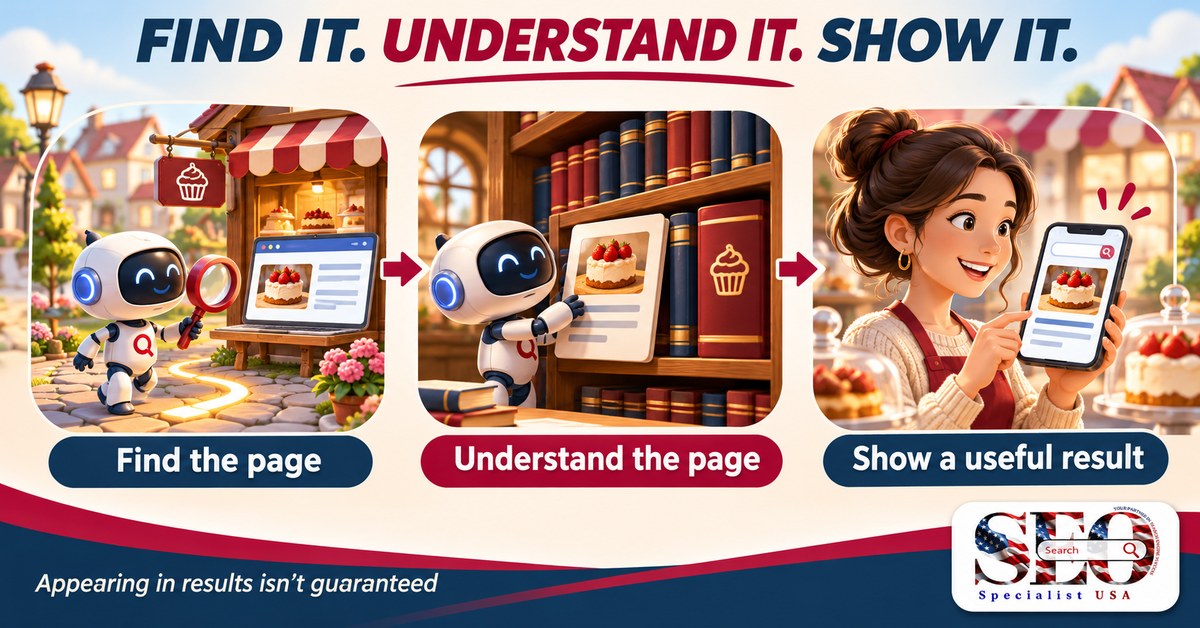
Finding a page and showing it in results are different stages.
First the search engine finds the page
Google uses automated programs to discover pages, often by following links, in a process called crawling. A clear link from the bakery homepage to its birthday cake page gives people and search engines a route to follow.
Then it learns what the page contains
After analyzing a page, Google may store information about it in its searchable collection, a process called indexing. Think of adding a book to the library catalog, with the important distinction that finding a page doesn’t guarantee its inclusion.
Finally it selects results for a particular search
When you search, Google selects relevant results from its collection using your question, language, location, and other context. The order in which those results appear is commonly called ranking.
SEO can remove obstacles and make a page clearer at these stages, although Google still decides which pages to include and where to place them. Google’s guide to how Search works explains the process and its limits.
Why Can Two Cake Searches Show Different Pages?
Someone searching for cake baking instructions wants a recipe, while a person searching for a birthday cake nearby probably wants a seller. Both searches mention cake, yet each calls for a different kind of page.
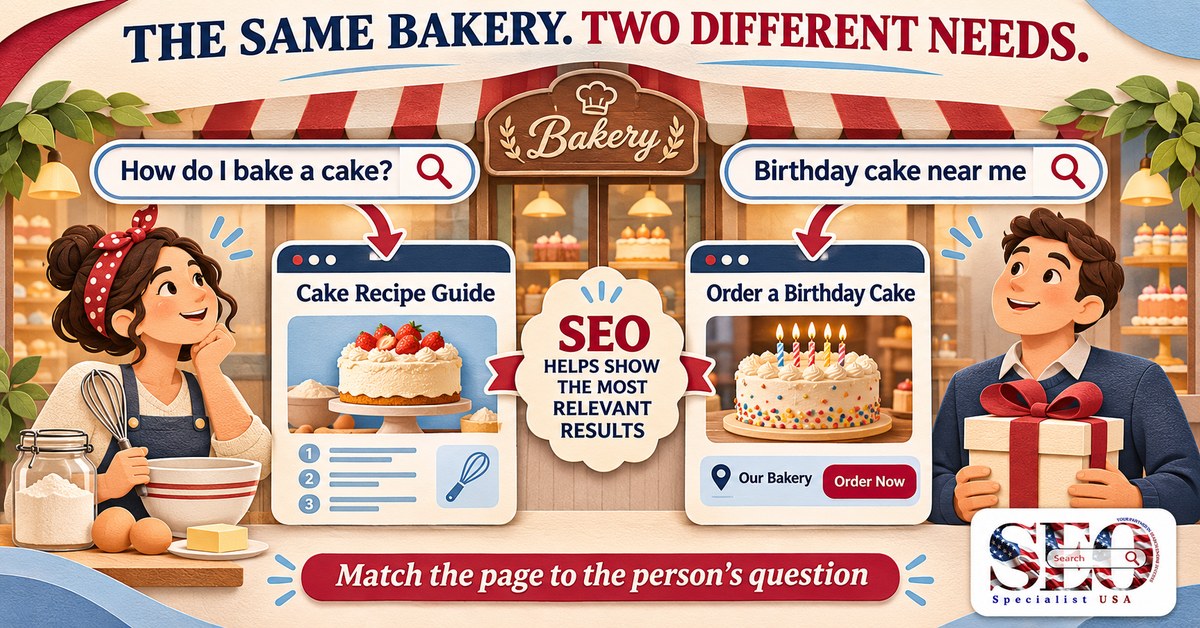
Start with what the person needs, then choose the page that answers it.
For the recipe search, ingredients, quantities, and baking instructions matter. For the nearby bakery search, location, cake options, ordering information, and pickup details become more useful.
Repeating a keyword won’t make a page helpful if it doesn’t answer the question behind those words. Someone ready to order needs buying information rather than a long tutorial that never explains how to place an order.
For your business, consider what someone would need to know next after landing on the page. An electrician’s repair page, a dentist’s appointment page, and a store’s product page will have different answers. Our SEO content creation services are relevant when those answers are missing or unclear.
Can SEO Change How Your Search Listing Looks?
SEO can influence the information a search engine uses to describe your page. The title is often the first thing someone reads, so it should describe the page clearly.

A clear listing gives the searcher a reason to investigate the page.
Compare these fictional examples:
Listing element | Vague wording | More helpful wording |
|---|---|---|
Title | Welcome to Our Website | Birthday Cakes in Austin |
Description | Learn more about our business. | Explore designs, pickup options, and ordering details. |
The second version gives you more useful information without exaggerated promises, and the page itself should deliver the details the listing suggests.
Although you can write a preferred title, Google may choose the displayed title from several sources on the page. Its title link guidance recommends descriptive, concise wording and discourages repeated keywords.
Does SEO Make Everyone See the Same Results?
SEO doesn’t make everyone see the same results because a person’s location and search context can change which pages are useful. You and a friend in another city might search for a birthday cake and see different nearby bakeries.
For nearby business results, Google explains that relevance, distance, and prominence are important. In everyday language: does the business fit the request, how far away is it, and how well known is it? Accurate business information helps Google understand the match. These points come from Google’s local ranking guidance.
A bakery should describe its real location, service area, and ordering arrangements accurately, since repeating city names won’t make it the nearest option to everyone.
This is where local SEO becomes useful for eligible businesses. The goal is to improve relevant local visibility and give nearby customers reliable information. Your own search on one phone is only a small view of the wider picture.
Does Better Visibility Automatically Mean More Customers?
Better visibility gives people a chance to notice your business and visit your website, but becoming a customer depends on how well your offering meets their needs.
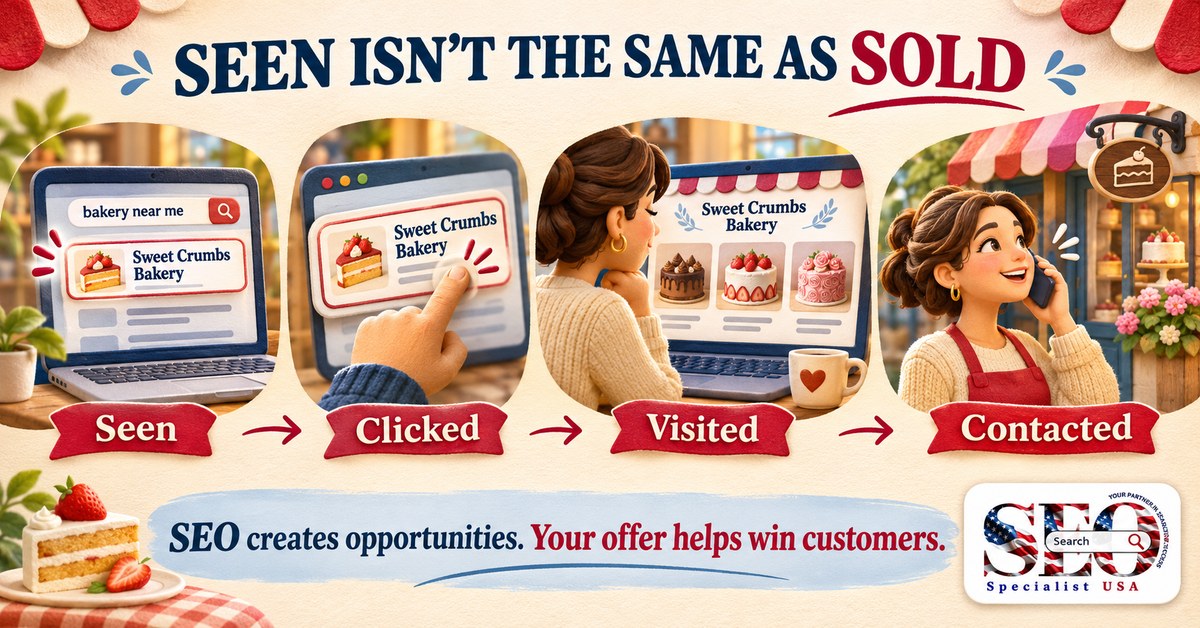
People can stop at any stage between seeing a result and contacting the business.
Our cake shopper might leave because pickup isn’t available on Saturday. Another visitor might need a design the bakery doesn’t offer. Someone else may be ready to order but unable to find a phone number.
Each situation needs a suitable response, since attracting more visitors won’t fix unavailable pickup times. Making contact details easier to find can remove a booking obstacle, although that change alone doesn’t promise better Google rankings.
Business owners should focus on reaching suitable people and helping them take the next step, keeping the discussion connected to customer needs rather than a traffic total alone.
Not sure why search visitors aren’t becoming inquiries? Share the page that matters most and the action you want visitors to take with SEO Specialist USA so we can discuss the problem and a suitable next step.
How Can You Tell if SEO Is Making a Difference?
Use a few clear questions instead of relying on your own search results. Google Search Console’s Performance report shows search queries, page appearances, clicks, and average position.
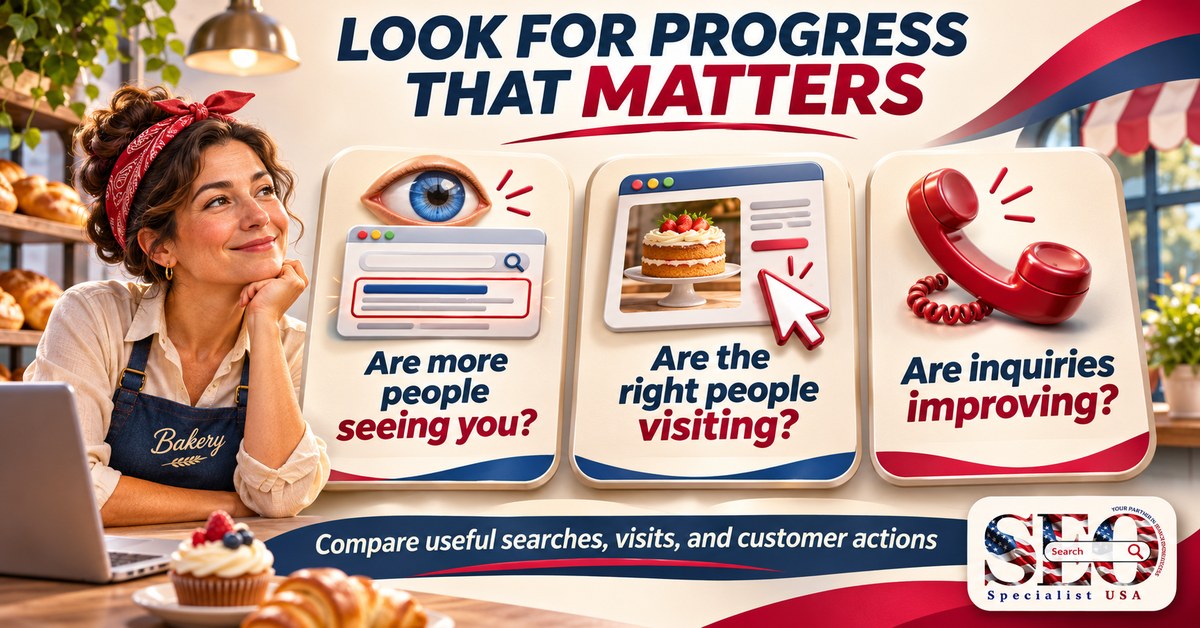
Connect changes in search visibility with visits and useful customer actions.
Are people seeing the right pages? Review the searches and pages behind your impressions, which record appearances in search results.
Are those appearances bringing visits? Compare clicks for the same page and relevant searches across similar periods to understand how often people open your results.
Are visitors a good fit? An increase in recipe readers may not help a bakery that needs local cake orders.
Are useful actions increasing? Review calls, completed forms, bookings, or purchases using your tracking and business records. Search Console alone doesn’t tell you which visitors became customers.
Record the date of important changes so you can compare performance before and afterward. Allow for holidays, seasonal demand, and other marketing activity. An increase after an edit is worth investigating; timing alone doesn’t prove the edit caused it.
What Should You Expect After Making SEO Improvements?
Some changes can appear quickly while others take months, so there’s no fixed date when every website should see the same result. Google also notes that some changes won’t produce a noticeable effect, as explained in its SEO Starter Guide.
Give the work a specific purpose, such as helping customers find the birthday cake ordering page, then review the relevant searches, visits, and inquiries over time.
Running Google Ads and improving organic search visibility are separate activities that you can use together, but paying for an ad doesn’t buy a better position in the unpaid results. Google’s explanation of how Search works makes that distinction clear.
How SEO Specialist USA Can Help Your Website Get Found
You can ask for help in everyday language by starting with the problem you can see: your main service page is hard to find, the wrong visitors arrive, or people visit without making inquiries.
An SEO audit can help investigate the website’s obstacles and identify priorities. The next step may involve clearer content, website fixes, or local visibility work. Our SEO services give you a place to explore those options.
Let’s talk about the searches that matter to your business. Share your website, main service, and target area with SEO Specialist USA, along with what customers should be able to find, so we can discuss where to start.
Frequently Asked Questions