
You can transform blogs with SEO in three powerful ways: by optimizing content around search intent, strengthening on-page and technical SEO elements, and integrating conversion strategies that turn readers into leads. When implemented correctly, these three steps turn ordinary blog posts into high-ranking, traffic-generating, and revenue-driving assets.
Key Takeaways
-
 SEO transforms blogs from passive content into active traffic assets.
-
Optimizing for search intent improves rankings and engagement.
-
Strong on-page and technical SEO increase visibility in search results.
-
Internal linking and structure boost topical authority.
-
Conversion optimization turns blog traffic into leads and sales.
-
Strategic blog SEO multiplies long-term ROI for businesses.
1. Transform Blog Structure Around Search Intent
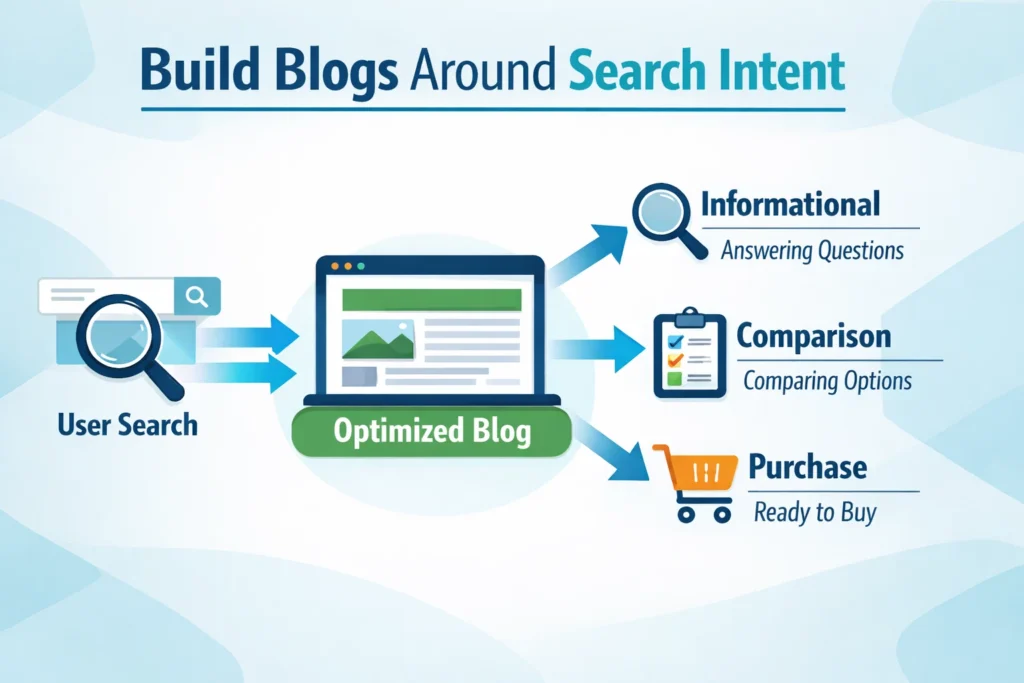
Most blogs fail not because the writing is bad — but because they’re not built around what people are actually searching for.
If your blog doesn’t match search intent, it won’t rank. And even if it ranks, it won’t convert.
Understand What the Reader Really Wants
Before writing or updating a blog post, ask:
- Is the reader looking for information?
- Are they comparing options?
- Are they ready to buy?
- Are they looking for a solution to a specific problem?
When your content directly answers that intent, Google rewards it — and readers stay longer.
For example, instead of writing a broad post like:
“Tips for Better Marketing”
You restructure it into something intentional like:
2. Transform Visibility With On-Page & Technical SEO
Clear. Specific. Search-driven.
Structure Content for Clarity and Rankings
Search engines prefer organized content. So do readers.
Strong blog structure includes:
- Clear H2 and H3 headings
- Short paragraphs (easy to scan)
- Direct answers near the top
- Bullet points where helpful
- FAQ sections for common questions
When you reorganize old blog posts this way, rankings often improve without rewriting everything.
Build Topic Depth, Not Just Word Count
Long posts don’t rank because they’re long. They rank because they cover the topic fully.
Instead of writing 2,000 random words, focus on:
- Covering subtopics clearly
- Answering related questions
- Using internal links to related posts
- Demonstrating real expertise
This builds topical authority, something Google increasingly values.
At SEO Specialist USA, blog audits often reveal that small structural changes can dramatically improve performance without creating entirely new content.
2. Transform Visibility With On-Page & Technical SEO
Even well-written blogs can stay invisible if the technical foundation isn’t right.
You might have valuable content, but if search engines can’t properly understand, crawl, or prioritize it, rankings won’t happen.
This is where on-page and technical SEO quietly do the heavy lifting.
Optimize Titles and Meta Descriptions the Right Way
Your title tag is one of the strongest ranking signals on a blog page.
Instead of something vague like:
“Marketing Tips for 2025”
It should be: “10 Proven Marketing Tips for Small Businesses in 2025”
Specific titles improve click-through rate and keyword alignment.
Meta descriptions don’t directly impact rankings — but they heavily influence clicks. More clicks = stronger performance over time.
Strengthen Internal Linking
Internal links help search engines understand:
- Which pages are important
- How topics connect
- What your website specializes in
They also keep readers moving through your site.
When older blog posts link to newer ones (and vice versa), authority spreads across your content. This builds topical relevance and improves overall rankings.
Many blogs miss this completely.
Add Schema and Technical Improvements
Small technical upgrades can make a big difference:
- FAQ schema to win rich results
- Proper heading hierarchy
- Optimized images with descriptive alt text
- Faster page load speed
- Mobile-friendly formatting
These improvements don’t change your message, but they dramatically improve how search engines interpret your content.
3. Transform Traffic Into Leads With Conversion Optimization
Traffic alone doesn’t grow a business.
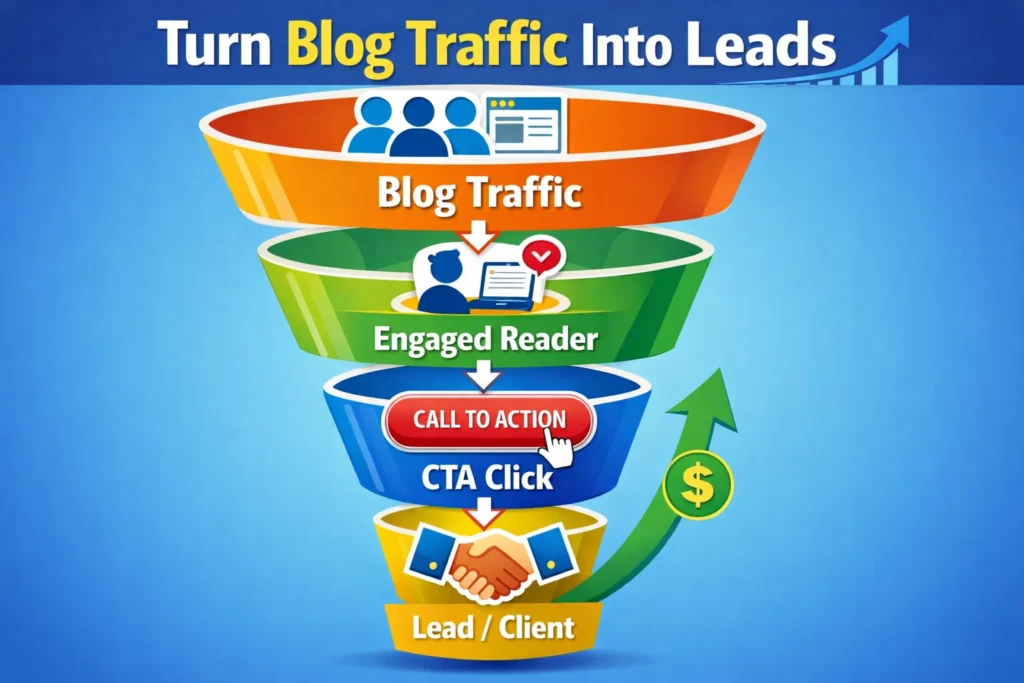
A blog can rank, attract visitors, and still produce zero revenue if there’s no clear path for readers to take the next step.
This is where most blogs fall short.
Add Clear, Contextual CTAs
Instead of placing one generic “Contact Us” button at the bottom, think strategically.
If your blog is about SEO improvements, a stronger call-to-action would be:
- “Get a Free SEO Audit”
- “Request a Blog Performance Review”
- “See How Your Content Is Ranking”
CTAs should feel like the natural next step — not a sales push.
Turn Educational Content Into Authority
When readers feel like they’ve learned something useful, they’re more likely to trust your expertise.
That trust turns into:
2. Transform Visibility With On-Page & Technical- Consultation requests
- Email sign-ups
- Service inquiries
- Demo bookings
Even small additions, like case results, real examples, or performance metrics — make your blog more persuasive without sounding promotional.
Improve Blog Layout for Engagement
Simple changes can increase conversion rates:
- Break long paragraphs into shorter sections
- Use clear subheadings
- Add visual separation between sections
- Highlight key insights
The easier your content is to read, the more likely someone stays, and takes action.
When SEO and conversion strategy work together, blogs stop being “content” and start becoming growth assets.
Real Results From SEO-Optimized Blog Campaigns
It’s easy to talk about strategy. What matters is performance.
After restructuring blog content around search intent, strengthening on-page SEO, and improving conversion flow, one of our clients experienced:
- A steady increase in organic impressions
- Higher keyword rankings across multiple blog posts
- More consistent inbound leads from blog traffic
- Improved engagement metrics (longer time on page, lower bounce rate)
The key difference wasn’t writing more content. It was optimizing existing content the right way.
When blogs are aligned with search intent, technically sound, and built with conversion in mind, they become long-term growth channels, not just informational pages.
At SEO Specialist USA, blog transformation focuses on measurable outcomes: visibility, authority, and revenue, not just publishing frequency.
How SEO Specialist USA Helps Transform Blogs Into Growth Assets
Most businesses don’t have a content problem, they have an optimization problem.
At SEO Specialist USA, we help turn underperforming blog content into measurable growth channels by focusing on strategy, structure, and performance, not just publishing more articles.
Our blog SEO process includes:
- Search intent analysis and keyword mapping
- Content restructuring for higher rankings
- Internal linking strategy development
- Technical cleanup and schema implementation
- Conversion-focused CTA placement
- Ongoing performance tracking and refinement
Instead of guessing what might work, we use real data to improve visibility, engagement, and lead generation.
Whether you’re starting fresh or have years of existing blog content, the right SEO strategy can unlock traffic you’re already sitting on.
CTA Button: Request Your Blog SEO Strategy
Frequently Asked Questions