
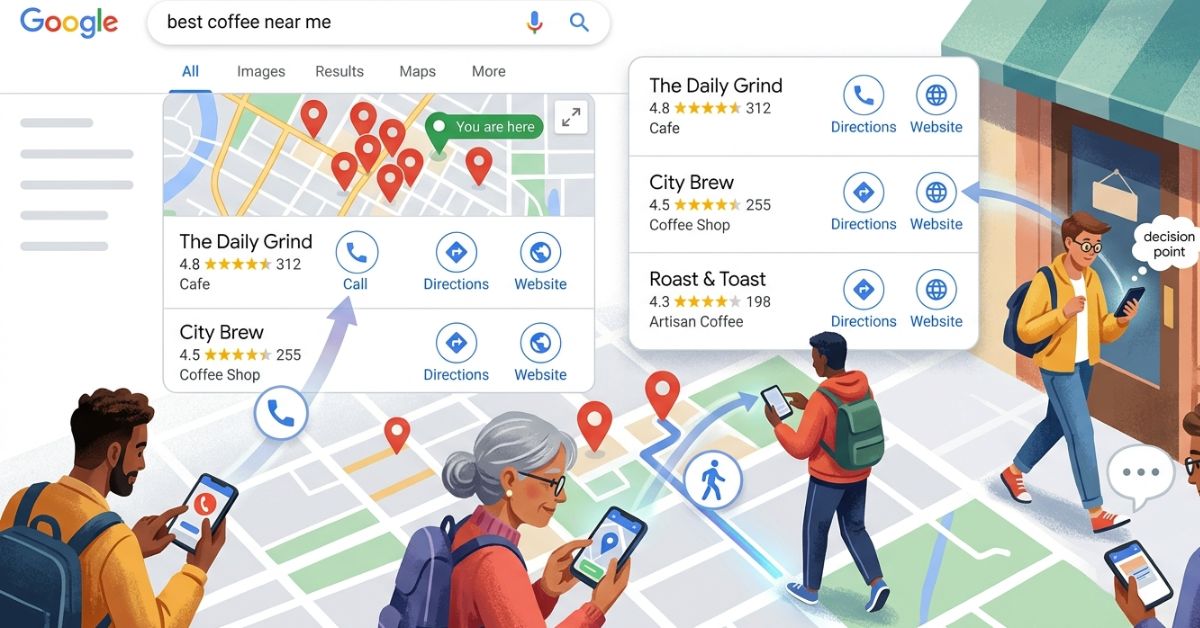
Local SEO helps attract local customers by making your business visible exactly when and where they are searching for your services. It puts your business in front of people with buying intent in your area, drives more calls and visits without paid advertising, and builds the trust and credibility that converts local searchers into paying customers.
Key Takeaways
-
 Local SEO targets customers who are actively searching for what you offer in your area
-
Appearing in Google’s Local 3-Pack dramatically increases calls, visits, and conversions
-
Local customers trust businesses with strong review profiles and optimized Google Business Profiles
-
Local SEO attracts customers 24/7, even when your business is closed
-
It delivers long-term, compounding customer acquisition without ongoing advertising costs
The Local Customer Search Behavior You Need to Understand
Before anything else, it helps to understand how local customers actually search. Most people do not browse websites randomly hoping to find a local business. They search with purpose. They type something into Google when they have a specific need, a specific location, and often a specific urgency.
Searches like ‘best Thai restaurant near me,’ ’emergency plumber in [city],’ or ‘hair salon open Sunday [neighborhood]’ are not casual. These are people who are ready to spend money. They just need to find the right business. Local SEO is the process of making sure that business is yours.
To see how local customer intent relates to keyword strategy, read how to find keywords for local SEO.
Local SEO Puts You in Front of Ready-to-Buy Customers
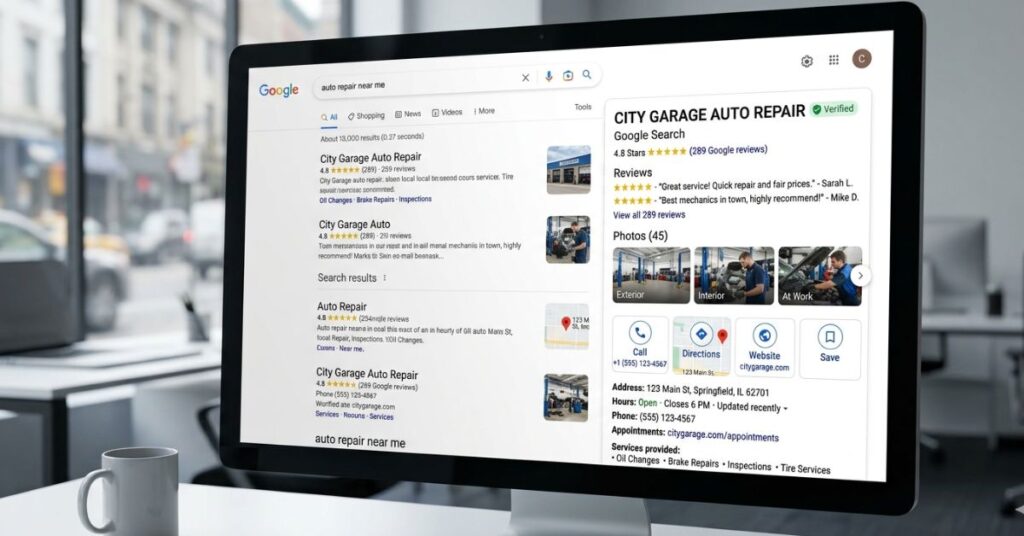
The people finding you through local SEO are not cold traffic. They are warm leads. Someone who types ‘HVAC repair Austin’ is not browsing. They have a broken air conditioner and they need it fixed. If your HVAC business appears in the top results for that search, you get the call.
This is the core reason local SEO is so effective at attracting local customers. The targeting is precise not because of complicated technology, but because the customer has already done the targeting themselves by typing exactly what they need and where they need it. Your job is simply to be visible when that moment happens.
How Search Intent Works in Your Favor
- Navigational intent: Customer already knows your business and searches your name to find your number or address. Local SEO ensures they find accurate information fast.
- Informational intent: Customer research before buying. Local SEO blog content and FAQ pages build trust during this stage.
- Transactional intent: Customer is ready to hire or buy. Strong local rankings, reviews, and a clear call-to-action convert these searches into revenue.
Google Business Profile: Your Most Powerful Customer Magnet
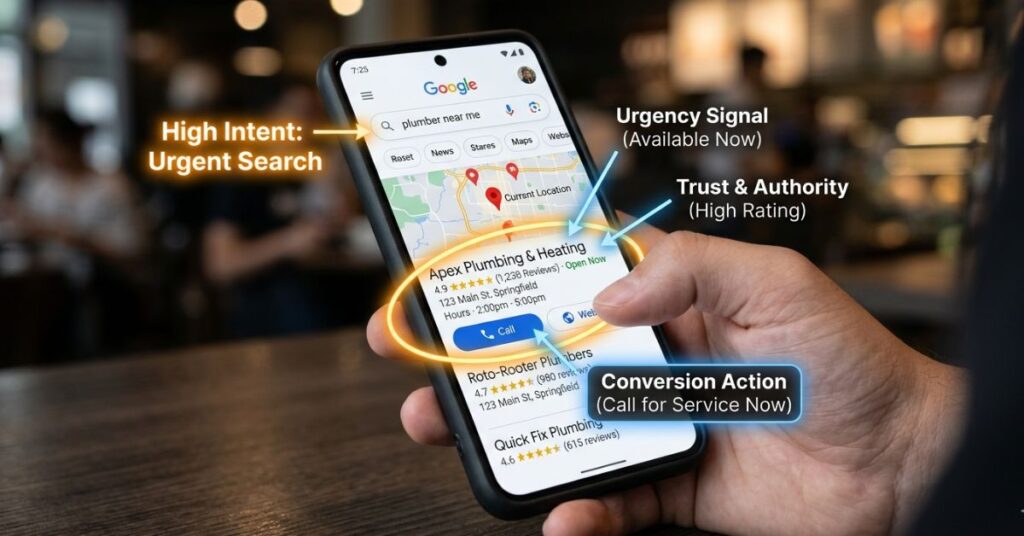
Your Google Business Profile (GBP) is the most direct local SEO tool for attracting nearby customers. When optimized properly, it appears in Google Maps, the Local 3-Pack, and voice search results. It shows your hours, phone number, address, photos, reviews, and services at a glance, everything a local customer needs to choose you.
What an Optimized GBP Does for Customer Attraction
- Shows your business to people searching nearby, even if they did not search your name
- Lets customers call, get directions, or visit your website with a single tap on mobile
- Displays your reviews prominently, which is the first thing most local customers check
- Allows you to post offers, announcements, and new services that reach people actively looking at your profile
- Shows up in Google Maps searches, which is how many local customers navigate to new businesses
A business with a fully optimized GBP consistently attracts more local customers than one with an incomplete or unmanaged profile, often with no additional advertising spend.
Learn what drives Local 3-Pack rankings and why it matters for your customer volume at what is the local SEO 3-Pack.
Local SEO Builds Trust Before the Customer Contacts You
Most local customers do not call the first business they find. They evaluate options before reaching out. They read reviews, check photos, look at the website, and compare how different businesses present themselves. Local SEO shapes every one of these touchpoints.
How Local SEO Builds Trust
- Reviews: A strong review profile with recent, specific reviews tells customers that others have had good experiences. It removes the risk of trying somewhere new.
- Accurate information: When your hours, address, and phone number are correct and consistent everywhere, customers trust that you are a reliable, professionally run business.
- Quality website: A fast, mobile-friendly, locally optimized website reinforces credibility. It signals that you take your business seriously.
- Content: Blog posts, FAQ pages, and case studies demonstrate expertise. A customer comparing two plumbers is more likely to call the one whose website answers their questions clearly.
- Photo quality: Professional photos of your work, team, and location make a strong impression. Customers form opinions quickly based on visuals.
All of these trust signals are either created or amplified through local SEO. By the time a customer reaches out, they have already decided they want to work with you. That is a completely different starting point from a cold ad click.
Local SEO Attracts Customers Around the Clock
Your staff go home. Your phone goes to voicemail. But local search never stops. A homeowner who discovers their roof is leaking at 10 PM does not wait until morning to search for a roofer. A parent whose child needs a dentist on a Saturday morning searches immediately.
Local SEO means your business is findable and presentable 24 hours a day, seven days a week. Your GBP shows your hours so customers know when to call. Your website answers their questions even when no one is available to respond. Your reviews convince them while you are asleep. You attract local customers at every hour without lifting a finger.
Local Content Marketing Attracts Customers at Every Stage
Not every local customer searches ready to buy. Some are researching. Some are comparing options. Some are not sure they have a problem worth addressing yet. Local content marketing meets customers at each of these stages and moves them toward a decision.
Examples of Local Content That Attracts Customers
- ‘How much does a roof replacement cost in [city]?’ — Attracts homeowners in the research phase
- ‘Best time of year to seal your driveway in [region]’ — Educates and builds authority for a seasonal service
- ‘What to do after a storm damages your roof in [city]’ — Captures urgent, time-sensitive searches
- ‘5 signs you need a new HVAC system’ — Reaches customers before they even know they have a problem
Each piece of content is an additional entry point into your business for local customers at different stages of awareness. Over time, a library of useful local content builds significant organic traffic that works continuously to attract new customers.
See how content strategy drives local customer acquisition at SEO content creation services.
Local SEO Targets Customers in Specific Neighborhoods and Areas
One of the most underused advantages of local SEO is hyper-local targeting. You can optimize for specific neighborhoods, suburbs, and zip codes within your service area, not just your main city.
If you are a dentist in Chicago, ranking for ‘dentist in Lincoln Park’ or ‘family dentist near Wicker Park’ can be more valuable than trying to rank for the broad city-wide term. People often search for services close to where they live or work, not just anywhere in the city. Neighborhood-level local SEO captures that high-intent, geographically specific traffic.
How to Target Specific Neighborhoods
- Create dedicated service area pages for each neighborhood or suburb you serve
- Include neighborhood names naturally in your content, not stuffed repeatedly
- Mention local landmarks, events, or context that reinforces your genuine presence in the area
- Get citations and links from neighborhood-specific sites, community boards, or local directories
For more on how local SEO translates into real revenue at the neighborhood level, read
Local SEO Drives Both Online and In-Person Customer Visits
For businesses with a physical location, local SEO drives actual foot traffic, not just website visits. Google Maps integration means customers who find your business in local search can navigate directly to your door. Direction requests from your GBP are a direct indicator of customers on their way to visit you.
For service-area businesses that go to the customer, local SEO drives phone calls and form submissions. Either way, the connection between a local search and a real customer interaction happens faster than in almost any other marketing channel.
Industries Where Local SEO Drives the Most Customer Attraction
While local SEO benefits virtually every business serving a local market, the customer attraction effect is especially strong in these sectors:
- Home services (plumbing, HVAC, roofing, electrical): Urgent, high-intent searches that convert immediately
- Healthcare and dental: Patients search for providers by location, specialty, and availability
- Legal services: People searching for attorneys are highly motivated and often need help quickly
- Restaurants and food: Near-me searches for dining are among the highest-volume local search categories
- Retail and boutique services: Customers researching local options before visiting or buying
- Fitness and wellness: Gym, yoga studio, and personal trainer searches are highly local and habitual
- Real estate: Buyers and sellers both search for agents and listings in specific neighborhoods
How SEO Specialist USA Attracts Local Customers for Your Business
SEO Specialist USA specializes in building local SEO strategies that generate a consistent flow of local customers for businesses across the US. The agency combines Google Business Profile optimization, local keyword targeting, citation building, review strategy, and local content creation into a single, integrated approach.
Every client receives a custom strategy based on their specific location, industry, and competition. The focus is always on the same outcome: more local customers who are ready to buy, more calls, more visits, and more revenue.
Frequently Asked Questions