
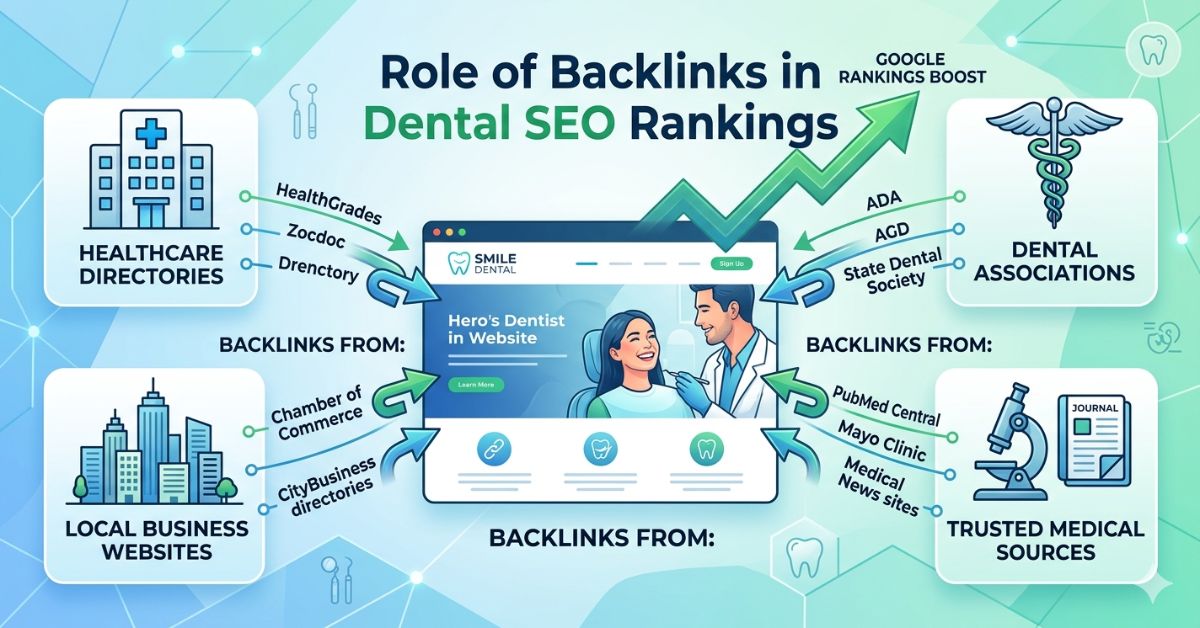
Backlinks are links from other websites pointing to your dental practice’s website. In dental SEO, they act as trust votes that tell Google your site is credible and worth ranking. High-quality backlinks from relevant, authoritative sources improve your domain authority, push your website up in organic search results, and support your Google Business Profile rankings for competitive local keywords.
Key Takeaways
-
 Backlinks are a direct ranking factor, practices with stronger link profiles consistently outrank those without them
-
Quality matters far more than quantity, one link from a local hospital or dental association beats dozens from irrelevant low-authority sites
-
Local backlinks from city-specific and healthcare-related sources carry stronger geographic relevance for dental practices
-
Backlinks work alongside GBP optimization, citations, and on-page SEO, not as a standalone fix
Why Backlinks Specifically Matter for Dental Practices
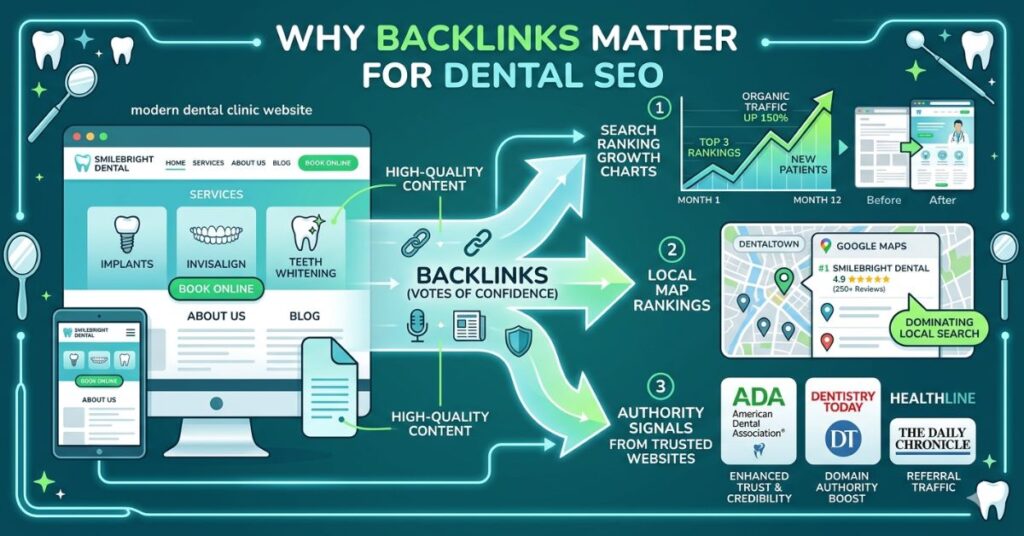
Dental SEO is competitive. In any mid-sized or large city, dozens of practices are targeting the same keywords: dentist near me, family dentist [city], cosmetic dentist [city]. When other ranking signals are equal, the practice with a stronger backlink profile wins. Google uses backlinks to measure how much the broader internet trusts and references your site.
Beyond rankings, backlinks also drive referral traffic directly. A link from a local health resource site or dental directory can bring potential patients to your site independent of Google searches.
Types of Backlinks That Actually Help Dental SEO
Local Healthcare and Directory Links
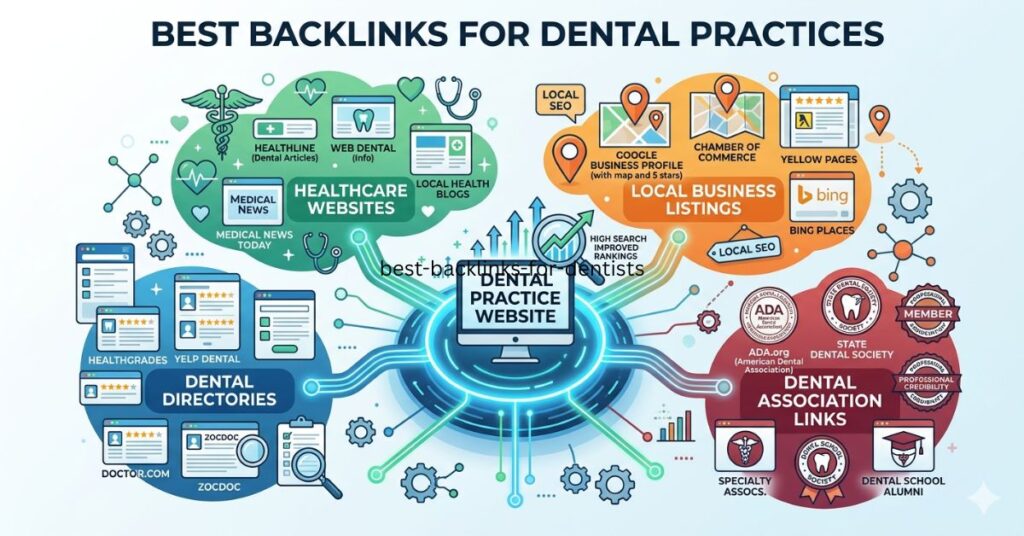
Links from local hospital websites, community health directories, medical association pages, and city business directories are among the most valuable for dental practices. They combine domain authority with geographic relevance, which Google weights heavily in local search.
Dental Directory Links
Platforms like Healthgrades, Zocdoc, WebMD’s doctor finder, RateMDs, and Vitals are high-authority dental and medical directories. Getting listed and linked from these platforms builds both local SEO authority and patient-facing visibility at the same time.
Local Business and Community Links
Links from your city’s chamber of commerce, neighborhood associations, local news websites, and community event pages build genuine local authority signals that support both your GBP rankings and organic search positions.
Dental Association Links
State dental associations, the American Dental Association (ADA) member directories, and specialty dental organizations provide high-trust links that carry topical relevance specific to dental practices. If you are a member of any of these, ensure your listing includes a link to your website.
Content-Earned Links
When your website publishes genuinely useful dental health content, other sites naturally link to it as a reference. Guides like ‘What to Do After a Tooth Extraction’ or ‘How to Manage Dental Anxiety in Kids’ attract links from parenting blogs, local community sites, and health resources.
What Dental Practices Should Avoid
- Buying links in bulk from link farms or private blog networks, these violate Google’s guidelines and create penalty risk
- Exchanging links purely for SEO gain without editorial relevance
- Getting links from irrelevant niches that have no connection to healthcare, local services, or your geographic area
- Targeting quantity over quality, 200 low-quality links will not outperform 20 strong, relevant ones
How Many Backlinks Does a Dental Practice Need?
There is no universal number. The right benchmark is your direct competitors, the practices ranking in the top three for your primary target keywords in your city. Analyze their backlink profiles using a tool like Ahrefs or Semrush, and build a strategy to match or exceed their link count from comparable or better sources.
For most local dental practices, building 3 to 5 high-quality local and directory links per month, consistently over 6 to 12 months, produces measurable ranking improvements without any manipulation risk.
How SEO Specialist USA Builds Backlinks for Dental Practices
SEO Specialist USA focuses on legitimate, sustainable link building for dental practices. This includes dental directory submissions, local citation building, local press outreach, and content strategy that earns editorial links naturally. Every link built is relevant, trackable, and contributes to long-term ranking authority.
Frequently Asked Questions