
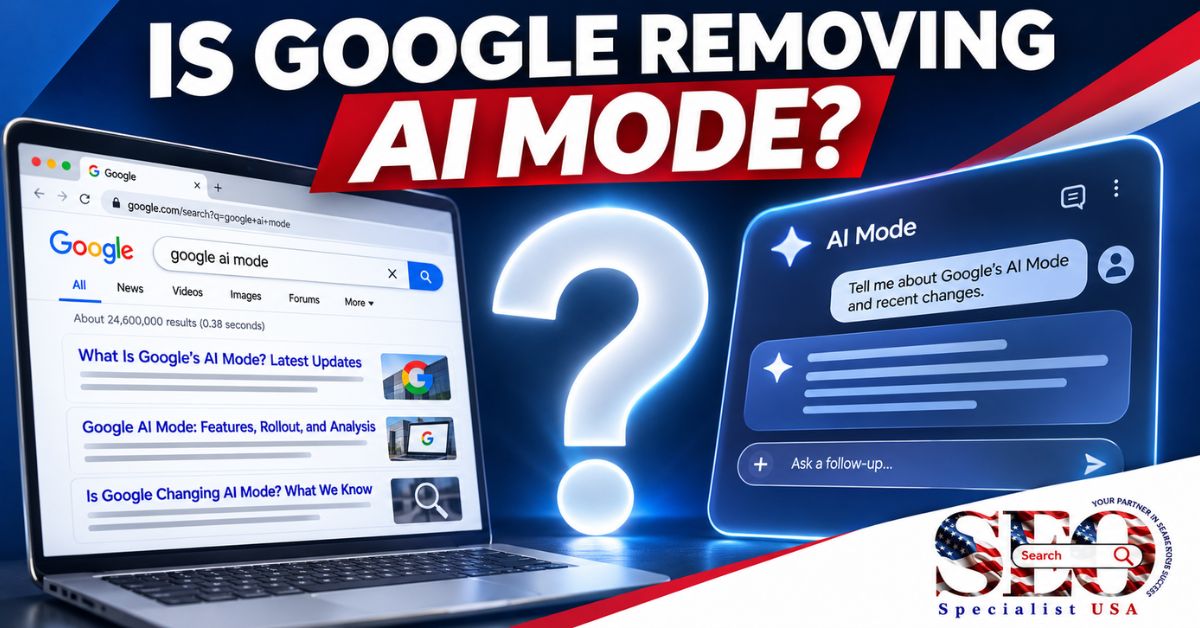
No, Google has not announced that it is removing AI Mode. SEO professionals spotted November 2026 tests in which the AI Mode tab and the “Ask anything” follow-up box disappeared for some searches. Google also acknowledged lower AI Mode monetization, but there is no confirmed connection between these interface tests and ad revenue.
Key Takeaways
- Google has tested hiding AI Mode entry points, not announced that AI Mode is being discontinued.
- Some observed Google AI Overviews also lacked the “Ask anything” follow-up box.
- Alphabet acknowledged lower monetization in AI Mode during its October 2026 earnings call, while also announcing expanded AI Mode advertising.
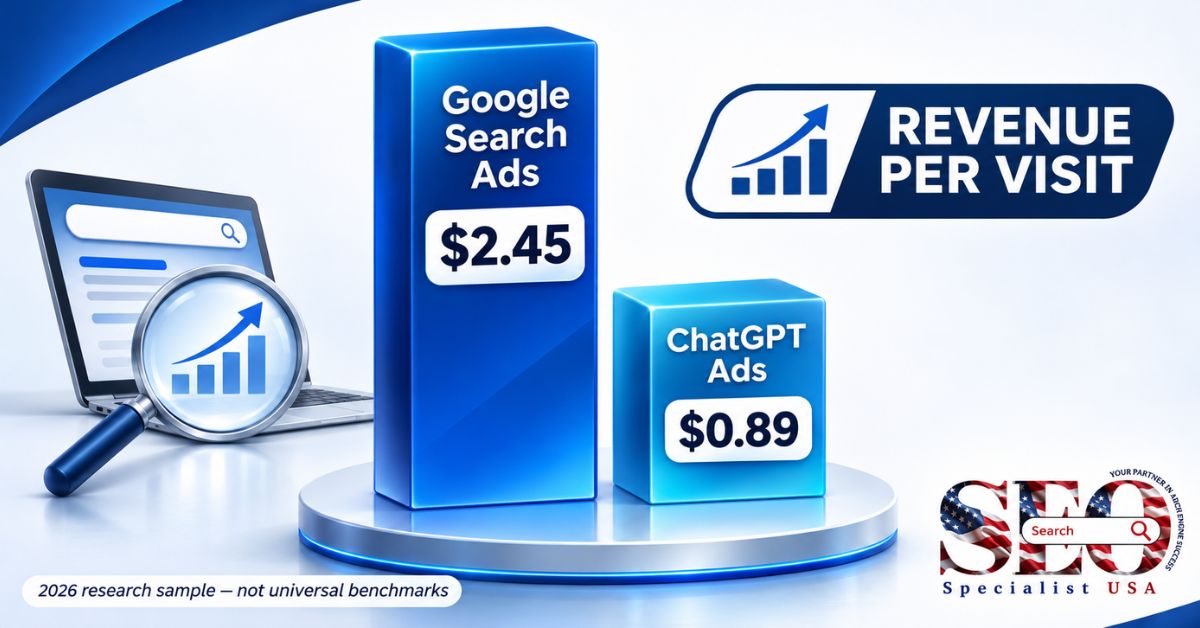
- A 2026 study found $0.89 revenue per ChatGPT ad visit versus $2.45 per Google Search ad visit in its observed sample. These are not guaranteed results for every advertiser.
- $0.26 was a calculated parity price, not the average amount advertisers pay for ChatGPT ad clicks.
- Businesses should continue improving traditional SEO while monitoring AI search visibility and leads.
What Is Google Actually Testing With AI Mode?
In November 2026, search professionals reported several unusual changes to Google’s interface. In some screenshots, the AI Mode tab no longer appeared alongside other Search navigation options.
Other screenshots showed an AI Overview without the “Ask anything” follow-up field.
Earlier reports also described tests where AI Mode buttons were absent from Google’s homepage.
Search Engine Roundtable documented those observations on November 13, citing screenshots shared by SEO specialist Glenn Gabe. Its report explicitly noted that the changes could not be reproduced consistently. That matters: an isolated search interface test is not proof of a product shutdown.
Google often experiments with how Search features appear, where buttons sit, and which features users see. These tests can measure usability, engagement, advertising performance, or other outcomes. Google has not publicly confirmed which of these factors motivated the particular AI Mode tests.
Is Google removing AI Overviews too?
No broader removal of AI Overviews was established by these reports. The observation concerned a follow-up input box inside some AI Overviews, not necessarily the AI-generated answer itself. AI Overviews and AI Mode are related but distinct Search experiences, so they should not be treated as interchangeable features.
If you want to understand how these AI answers affect website visibility, read our guide on how to show up in AI Overviews with SEO.
Did Google Admit That AI Mode Makes Less Advertising Revenue?
Yes, in a specific sense. During Alphabet’s October 28, 2026 Q3 earnings call, Chief Business Officer Philipp Schindler said that strong growth in AI Mode queries affected Search revenue growth because of lower monetization in AI Mode. The company did not disclose a precise revenue gap in that statement.
Lower monetization means Google was making less advertising revenue from the relevant AI Mode activity than it could from more established search behavior. It doesn’t automatically mean advertisers are losing money, nor does it prove that Google is hiding AI Mode because of revenue concerns.
In the same earnings call, Google described AI Mode queries as frequently exploratory and emphasized that many were incremental. It also said it was scaling ads in AI Overviews and AI Mode. On October 28, Google announced an expansion of AI Mode ads to ten additional countries and multi-turn ads in the United States.
Taken together, these statements point to an evolving business model, not an announced retreat from AI-powered Search.
What Does the New ChatGPT Ads Study Actually Show?
The separate discussion about ChatGPT advertising comes from the 2026 working paper Can Advertising Fund Free AI? Evidence from ChatGPT’s International Advertising Rollout, by Maximilian Kaiser and Christian Schulze.
The researchers analyzed early advertising traffic across websites and compared paid ChatGPT referrals with other traffic sources. In the observed financial sample, ChatGPT ad visitors converted less often and generated less revenue per visit than Google paid Search visitors.
revenue per visit
revenue per visit
conversion rate
conversion rate
| Metric in the study | Google Search ads | ChatGPT ads |
|---|---|---|
| Conversion rate | 1.17% | 0.37% |
| Revenue per visit | $2.45 | $0.89 |
Source: Kaiser and Schulze’s original research paper. Figures describe the study sample and early rollout period; they are not fixed benchmarks for every campaign.
Does the study say ChatGPT ads cost $0.26 per click?
Not exactly. The researchers calculated $0.26 as a parity price: an estimated click price at which ChatGPT advertising would deliver comparable revenue per ad dollar to the paid Search benchmark in their data. They used a $0.72 median paid Search click cost and the revenue-per-visit ratio between the two channels.
The paper also referred to a publicly reported ChatGPT ad campaign costing about $1.72 per click, or roughly 6.6 times the estimated parity price. That campaign was reported separately by Opascope, which said it generated approximately $89,000 in revenue on $60,000 in ad spend across 15 days. Its reported return on ad spend was 1.49×, although that does not tell us its profit after product and operating costs.
Consequently, “ChatGPT ads never work” would be an inaccurate takeaway. The study raises serious questions about early performance and pricing; it does not establish that every advertiser, product category, or future version of AI advertising will perform the same way.
Does This Mean Traditional Google Search Is Making a Comeback?
Traditional Search never stopped being useful. People still search for local services, compare providers, look up product specifications, read independent reviews, and visit websites to make decisions. AI experiences may answer some questions directly, but many searches still lead to web pages, products, businesses, and transactions.
The more useful question is not which interface will “win.” It is where your customers look for answers, and how your website can be found and trusted there.
For example, a homeowner searching “emergency roof repair near me” may need a local business immediately. Someone asking a broad AI assistant about roofing materials may be earlier in their research. Those are different kinds of intent, and they deserve different content and measurement strategies.
This is why a strong SEO campaign still starts with technical accessibility, relevant service pages, genuinely helpful information, trustworthy business details, and good user experience.
Is SEO Dead in 2026 Because of AI Search?

No. The language of search is changing, and AI answers are altering where users see information. But businesses still need their content discovered, understood, assessed, and presented to potential customers.
At Google I/O in May 2026, Google introduced additional AI-powered Search experiences. Some headlines described the era of “ten blue links” as over. That made for a dramatic headline, but it did not mean Google had stopped providing links to websites. In fact, even coverage using that phrase acknowledged that links remained available, although their prominence varied by search type.
SEO is more than a position in a list of links. It includes building pages that satisfy real intent, making them accessible to search systems, communicating expertise, and measuring whether visibility creates business results. Those foundations remain useful as search formats change.
The sensible response is to combine SEO and answer engine optimization (AEO). Our article on integrating AEO with traditional SEO explains how direct answers, topic coverage, and established SEO practices can work together.
What Should Businesses Do About Google AI Mode Changes?
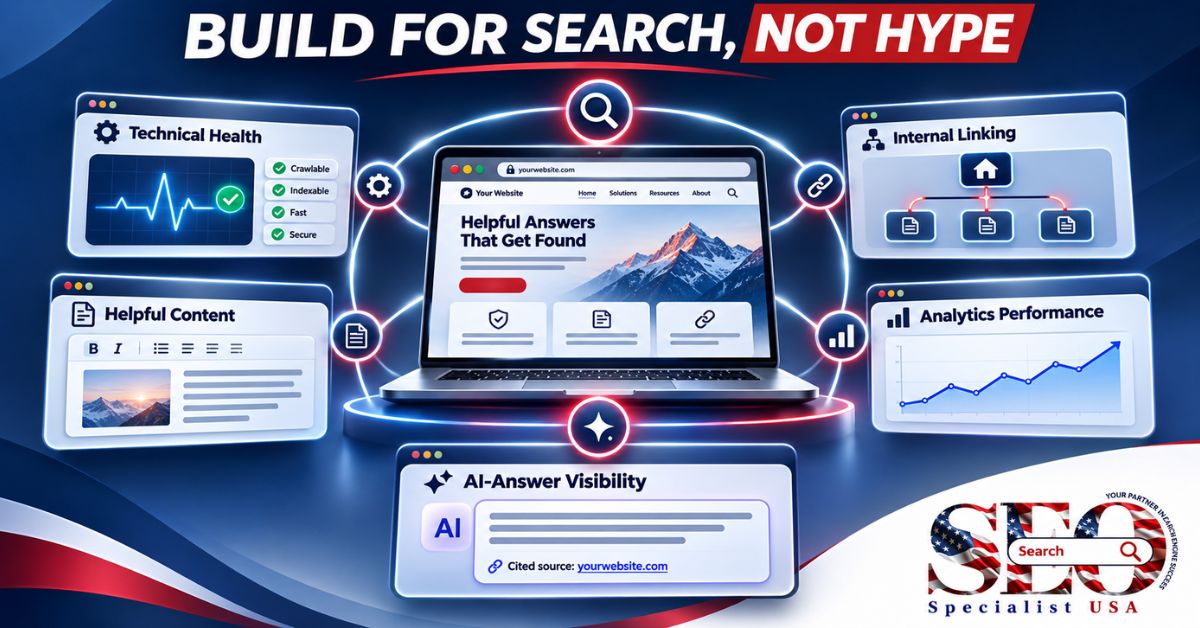
Instead of reacting to individual interface tests, take a practical approach.
Protect the fundamentals of organic visibility
Check that Google can crawl and index important pages. Review titles, headings, internal links, mobile performance, structured data, and whether your most valuable pages satisfy the intent behind their target keywords.
Our technical SEO checklist gives you a structured starting point. For larger issues, review our technical SEO services.
Answer the questions people actually ask
Add concise answers near the top of relevant pages, then support them with useful details, examples, limitations, and evidence. Don’t fill pages with repetitive AI-oriented phrases. A well-written explanation should help a person regardless of where they found it.
Build topic connections with useful internal links
Link related educational posts to each other and to the services they explain. For instance, a visitor exploring changing search behavior may benefit from our guides on how to use AI for SEO and how AI Overviews affect SEO for blogging.
Links should lead readers to the next useful answer, not interrupt the article with unnecessary promotions.
Track meaningful results, not just AI mentions
Monitor Search Console clicks, impressions, queries, and landing pages alongside GA4 conversions and qualified leads. Keep an eye on AI referrals where attribution is available, but avoid assuming that all AI-driven sessions can be isolated cleanly. See our article on whether GA4 shows Google AI Mode as a referrer.
Test AI visibility without abandoning proven channels
If your customers use conversational AI to research suppliers or service providers, see how your brand is described and cited. Identify missing coverage, unclear answers, and inconsistent information. Compare those findings with the search queries and landing pages already producing revenue.
At SEO Specialist USA, our AI SEO agency services help businesses assess visibility in AI-powered discovery while retaining an effective traditional SEO foundation. The goal is not to chase every interface change. It is to make your business useful and discoverable wherever customers search.
Frequently Asked Questions
Is Google officially shutting down AI Mode?
No. As of November 20, 2026, Google has not announced an AI Mode shutdown. Industry observers reported tests in which some interface entry points disappeared. At the same time, Google’s official communications described expanding AI Mode advertising. Testing how a feature is displayed is not the same as discontinuing the feature.
Why did the AI Mode tab disappear for some users?
The specific reason is not confirmed. Google regularly tests Search interfaces, and observers documented versions without the AI Mode tab. It is possible to speculate about user engagement or monetization, but the company has not publicly attributed these particular tests to a revenue problem.
Is Google removing the Ask Anything box from AI Overviews?
Some reported tests displayed AI Overviews without the “Ask anything” follow-up field. That is a change to the interface seen by certain users, not evidence that Google has removed all AI Overviews or disabled follow-up questions permanently. Availability may differ by test group and query.
Are ChatGPT ads worse than Google Ads?
A 2026 study found that early ChatGPT ad traffic produced lower average conversion rates and revenue per visit than Google paid Search traffic in its observed sample. This does not guarantee the same outcome for every account. Pricing, industry, customer intent, attribution, and campaign execution can all change the result.
Will AI replace SEO specialists?
AI can assist with research, drafting, analysis, and workflows. However, businesses still need accurate source validation, technical implementation, strategic prioritization, audience insight, and performance measurement. An SEO professional’s role changes as tools evolve, but AI-generated output alone cannot guarantee useful results or search visibility.
Should I stop investing in SEO and focus only on AI search?
No single channel deserves your entire strategy without evidence of results. Maintain technically sound pages, useful content, and clear conversion paths. Then test AI visibility where your audience actually searches. Compare leads and revenue over time, and adjust resources based on measured performance instead of viral predictions.
Final Thoughts: Focus on Search Users, Not Headlines
Google’s AI Mode experiments are real. Its lower AI Mode monetization is also real. But there is no verified evidence that Google is removing AI Mode because its ads earn less, and there is no sound basis for declaring traditional SEO dead.
Do not mistake a changing interface for the end of search optimization.
For businesses, the best response is straightforward: make your site easy to find, helpful to read, credible to reference, and effective at converting the right visitors. Adapt your SEO strategy as search evolves.
How does your site perform across Search and AI results?
Not sure how your website performs across traditional Search and AI-powered results? SEO Specialist USA can review your technical foundations, content gaps, and AI visibility opportunities.
Get Your AI Visibility Audit