
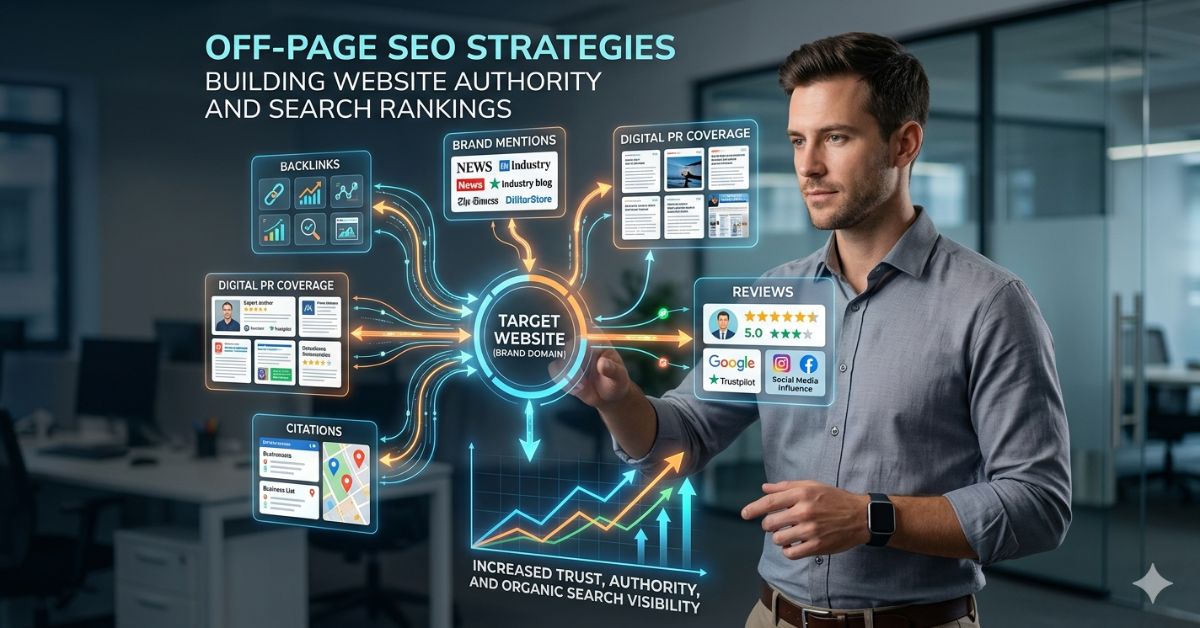
Off-page SEO refers to all the actions taken outside your website that influence how Google and other search engines rank it. The most significant off-page signal is backlinks, links from external websites pointing to yours. Off-page SEO also includes brand mentions, social signals, digital PR, review authority, and local citations. Together, these external signals tell Google how much the wider internet trusts and values your site.
Key Takeaways
-
 Off-page SEO focuses on building your site’s authority, trust, and relevance through external signals
-
Backlinks remain the most powerful off-page ranking factor, but quality and relevance matter far more than quantity
-
Off-page SEO works alongside on-page and technical SEO, none of the three pillars works effectively in isolation
-
Brand mentions, review profiles, and digital PR are increasingly recognized as off-page signals by Google’s AI-powered ranking systems
-
Off-page SEO takes longer to show results than on-page changes, but its effects are more durable
The Three Pillars of SEO and Where Off-Page Fits
SEO is built on three interconnected pillars. On-page SEO covers everything on your website, content, title tags, meta descriptions, heading structure, and internal linking. Technical SEO covers how your site is built, crawlability, page speed, mobile usability, and indexing. Off-page SEO covers everything outside your site that influences rankings.
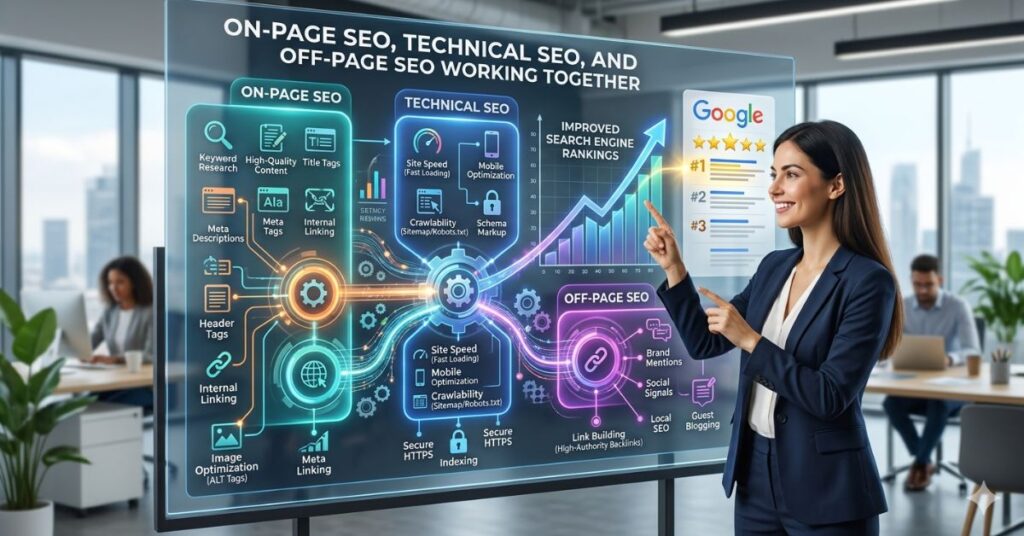
Most businesses focus on on-page and technical SEO first, which is correct. But without strong off-page signals, a well-optimized website will plateau. Google needs external validation that your site deserves to rank, and off-page SEO is how that validation is built.
See how all three pillars work together in SEO Specialist USA’s full SEO services.
Core Components of Off-Page SEO
1. Backlinks (Link Building)
A backlink is a link from another website to yours. Google treats each backlink as a vote of trust. When authoritative, relevant websites link to your content, Google interprets this as evidence that your site provides value. The quality of the linking site, the relevance of the page context, and the anchor text all affect how much value each backlink passes.
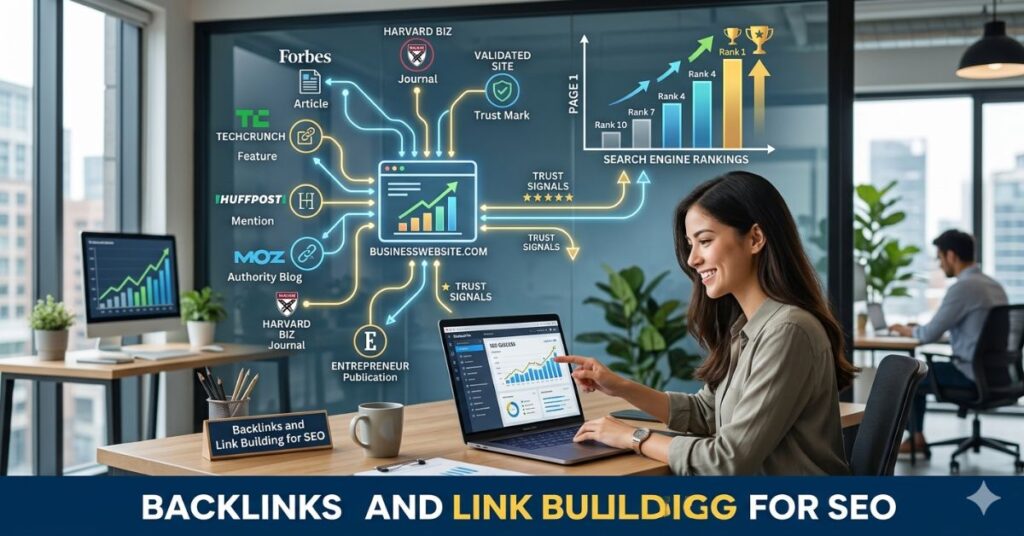
Not all backlinks help. Links from low-authority, irrelevant, or manipulative sources can be neutral at best and harmful at worst. Sustainable link building focuses on earning contextually relevant links from sites your target audience would recognise as credible.
2. Brand Mentions
Google’s algorithms, particularly following the rise of entity-based search, track brand mentions across the web even when they do not include a direct link. A brand that is consistently mentioned in news articles, industry publications, forums, and community sites builds a stronger entity profile in Google’s knowledge graph, which correlates with improved organic visibility.
3. Digital PR and Media Coverage
Appearing in press coverage, industry reports, and editorial content generates high-authority backlinks while simultaneously building brand recognition. Digital PR is one of the most effective and sustainable off-page SEO strategies because editorial links from news sites and industry publications carry significant authority and are earned rather than purchased.
To understand how press coverage contributes to SEO, read are press releases good for SEO.
4. Local Citations and Directory Listings
For businesses serving a local market, citations, mentions of your business name, address, and phone number across directories and platforms, are a critical off-page signal. Consistent NAP data across platforms like Google Business Profile, Yelp, and Apple Maps builds the geographic authority that drives local rankings.
Local SEO and off-page SEO overlap significantly. Explore local SEO services for a deeper look.
5. Review Signals
Customer reviews on Google, Yelp, Trustpilot, and industry-specific platforms contribute to off-page authority in two ways. They are a direct ranking signal in local search and a trust signal that influences click-through rates from search results. More recent, higher-rated reviews from a diverse range of customers correlate with stronger local and organic rankings.
6. Social Signals
Social media shares, engagement, and profile authority are not direct ranking factors in Google’s algorithm. However, they contribute indirectly by distributing content to audiences that may then link to it, by driving referral traffic that improves engagement metrics, and by building brand familiarity that increases branded search volume. The relationship between social and SEO is indirect but real.
Off-Page SEO vs On-Page SEO: The Key Difference
On-page SEO is within your control, you can edit a title tag or update a page’s content today and see Google re-index it within days. Off-page SEO is largely earned over time through the actions of others: who chooses to link to you, which publications cover you, how customers review you. This is why off-page SEO requires a longer-term investment mindset and why it produces more durable results than on-page changes alone.
For a complete view of on-page strategy alongside off-page, see on-page SEO services.
Why Off-Page SEO Matters for Rankings
Google’s core goal is to return the most trustworthy, authoritative result for every query. On-page content tells Google what your page is about. Off-page signals tell Google whether to trust it. A page with excellent content but no external authority signals will consistently lose to a page with strong backlinks from relevant sources.
Studies by Ahrefs and Semrush consistently show that the number of unique referring domains pointing to a page is one of the strongest correlates of top-10 rankings. Pages ranking in positions one through three almost always have significantly more authoritative backlinks than those ranked below them.
▶ View Our Off-Page SEO Services https://www.seospecialistusa.com/seo-services/off-page/
How SEO Specialist USA Delivers Off-Page SEO
SEO Specialist USA provides a dedicated off-page SEO service covering high-quality link building, brand citation management, digital PR outreach, and local authority building. Every off-page campaign is built on white-hat methods with full transparency on which links are being built and why.
The team focuses on relevance and authority over volume, building link profiles that strengthen rankings sustainably rather than producing short-term spikes followed by penalties.
Frequently Asked Questions