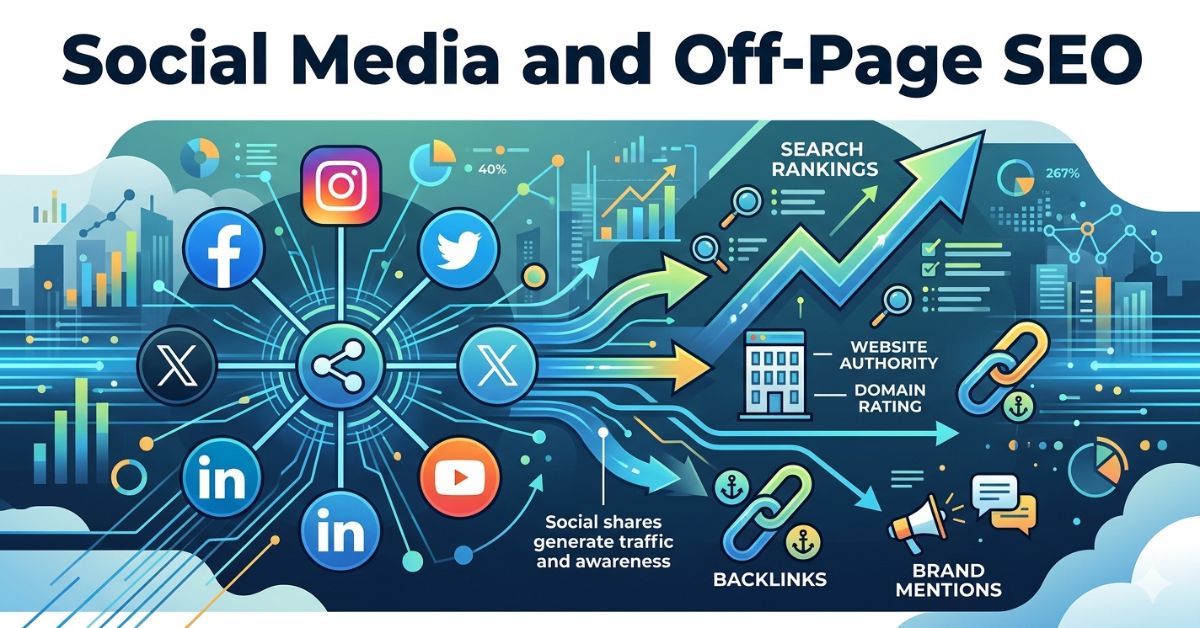
Social media is part of off-page SEO, but not in the way most people assume. Social media shares, likes, and follower counts are not direct Google ranking factors. However, social media contributes to off-page SEO indirectly in ways that do influence rankings: it distributes content that earns backlinks, increases brand search volume, drives referral traffic that improves engagement metrics, and builds entity authority that Google’s AI-driven systems increasingly recognise. Ignoring social media entirely is a missed off-page opportunity.
Key Takeaways
-
 Google has confirmed that social media metrics (likes, shares, followers) are not direct ranking signals in its algorithm
-
Social media contributes to off-page SEO through content amplification, brand visibility, and indirect link earning
-
Increased branded search volume, people searching directly for your brand after seeing it on social, is a positive trust signal Google tracks
-
Social profiles themselves rank in search results for branded queries, making them part of your overall online visibility strategy
-
YouTube, which is owned by Google, has a more direct connection to search visibility than other social platforms
The Official Position: Social Signals Are Not Direct Ranking Factors
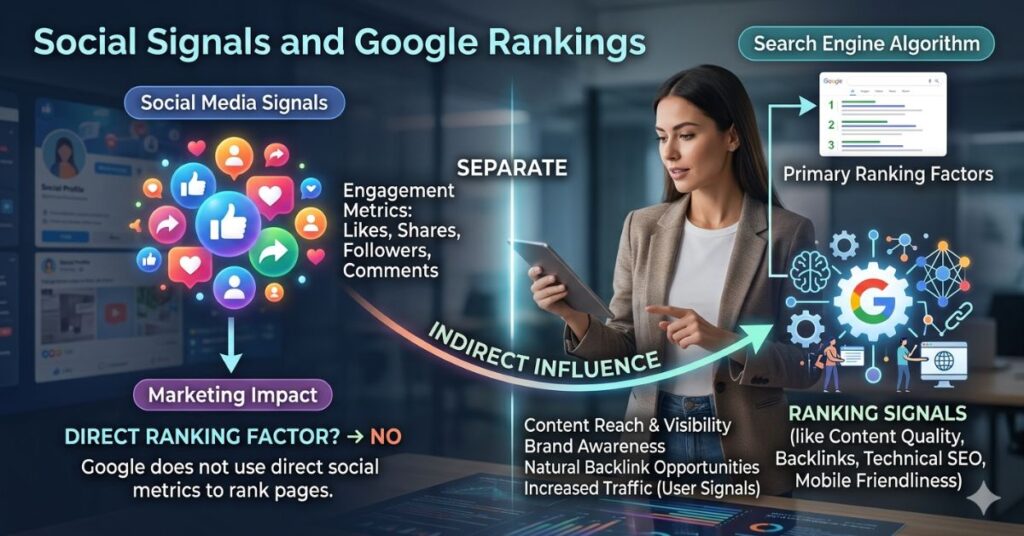
In 2014, Google’s Matt Cutts stated clearly in a video response that Google does not use Facebook likes or Twitter retweets as direct ranking signals. More recently, Google’s John Mueller has reiterated that social media signals are not part of the core ranking algorithm. The reasoning is practical: social signals are too easy to fake and too volatile to be reliable quality indicators.
This doesn’t mean social media has no relationship with SEO. It means the relationship is indirect, and understanding how it works is what separates businesses that extract SEO value from social from those that treat the channels as completely separate.
How Social Media Contributes to Off-Page SEO Indirectly
1. Content Distribution and Link Earning
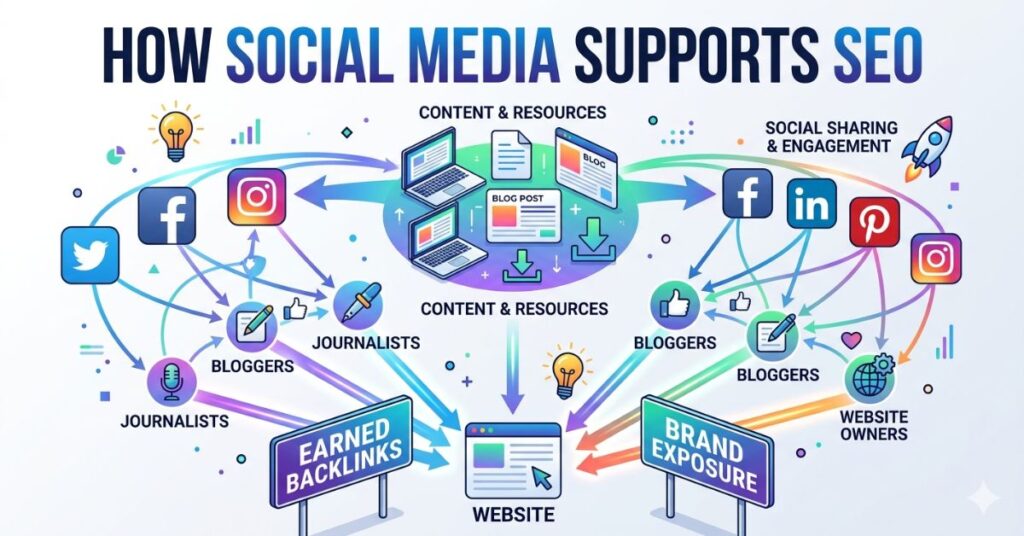
The primary indirect SEO value of social media is content distribution. When you publish a genuinely useful piece of content and promote it across your social channels, it reaches an audience that includes bloggers, journalists, website owners, and industry professionals. If any of them find the content valuable enough to share on their own sites, you earn backlinks that directly improve rankings.
This chain, social post → audience discovery → editorial link, means that social media is effectively a link-earning distribution channel. The content still earns the link, but social media accelerates the distribution that makes link earning possible at scale.
2. Brand Search Volume and Entity Recognition
When people regularly encounter your brand on social media, some of them will subsequently search for your brand name directly on Google. An increase in branded search volume is a positive trust signal. Google’s entity recognition systems use branded search patterns as one of the inputs for understanding how well-known and trustworthy a brand is.
A brand with growing social followings, consistent posting activity, and strong engagement will typically see corresponding growth in branded search queries. This signals to Google that the brand has real-world recognition, which correlates with stronger organic rankings over time.
3. Social Profiles Ranking for Branded Queries
Your LinkedIn company page, Instagram profile, Facebook business page, X (formerly Twitter) account, and YouTube channel all appear in search results when someone searches for your brand name. A strong social presence means you control more of the first-page results for your own brand, pushing out potentially negative results or competitors who might otherwise appear.
This is technically part of your overall search visibility rather than a traditional ranking signal, but it represents genuine business value from your social media presence that operates through search.
4. Referral Traffic and User Engagement
Traffic from social media that lands on well-optimised pages with strong content can improve dwell time, reduce bounce rate, and increase pages-per-session metrics. While Google has not confirmed these engagement metrics as direct ranking signals, Google’s ongoing investment in user satisfaction signals suggests they matter as part of the broader quality assessment. A page that consistently satisfies visitors from multiple sources, including social, signals genuine value.
5. Local Business Social Profiles as Citations
For local businesses, Facebook Business Pages, Google Business Profile posts, and LinkedIn company pages function as citation-like signals. Your business name, address, and phone number displayed consistently on these social platforms reinforces the NAP consistency that is a direct local ranking factor.
For how local citations and off-page signals work together, see local SEO services.
YouTube: The Social Platform With Direct SEO Connections
YouTube deserves special mention because it is owned by Google. YouTube videos appear directly in Google search results for many queries, particularly tutorials, how-to content, product reviews, and educational topics. A strong YouTube presence means your content can rank in two different Google-controlled surfaces, web search and YouTube search, from a single video.
YouTube channel authority, video SEO (titles, descriptions, tags, transcripts), watch time, and engagement metrics all influence video ranking on the platform. Videos that rank well on YouTube are then more likely to appear in Google search results, creating a combined organic visibility benefit that no other social platform offers to the same extent.
LinkedIn for B2B Off-Page SEO
LinkedIn holds a specific position in off-page SEO for B2B businesses. LinkedIn domain authority is exceptionally high, and articles and posts published on LinkedIn can rank in Google search results independently from your website. Publishing original insights, research, and thought leadership on LinkedIn extends your content’s search visibility beyond your own domain.
LinkedIn company and personal profiles rank strongly for branded search queries, and links in LinkedIn posts, while typically nofollow, contribute to brand distribution that can generate dofollow links elsewhere through the same content amplification mechanism described above.
What This Means for Your Off-Page SEO Strategy
Social media should be part of your off-page SEO strategy, not as a ranking shortcut, but as a content distribution and brand building channel that supports link earning and entity recognition over time. The businesses that extract the most SEO value from social media are those that use it to amplify high-quality content to audiences capable of linking to it.
Practical Integration of Social and Off-Page SEO
- Publish link-worthy content (original research, data studies, comprehensive guides) and distribute it across relevant social channels to maximise the audience of potential link sources
- Maintain consistent brand information across all social profiles to reinforce NAP consistency for local SEO purposes
- Use YouTube for video content that targets informational queries you want to own across both video and web search
- Engage actively on LinkedIn if your audience is B2B, original articles and insights can earn mentions and links from industry publications
- Monitor social mentions of your brand and identify unlinked mentions that could become backlinks through polite outreach
- Treat social platforms as discovery surfaces for journalists and bloggers who may cover you, not just customer communication channels
How SEO Specialist USA Integrates Social Into Off-Page Strategy
SEO Specialist USA treats social media as one component of a comprehensive off-page strategy, not as a standalone channel. Content amplification through social, brand mention monitoring, and YouTube optimisation are built into off-page campaigns where relevant to the client’s audience and industry.
The primary off-page focus remains link quality and authority building, with social media used strategically to accelerate the distribution and discovery of link-earning content.
Frequently Asked Questions