
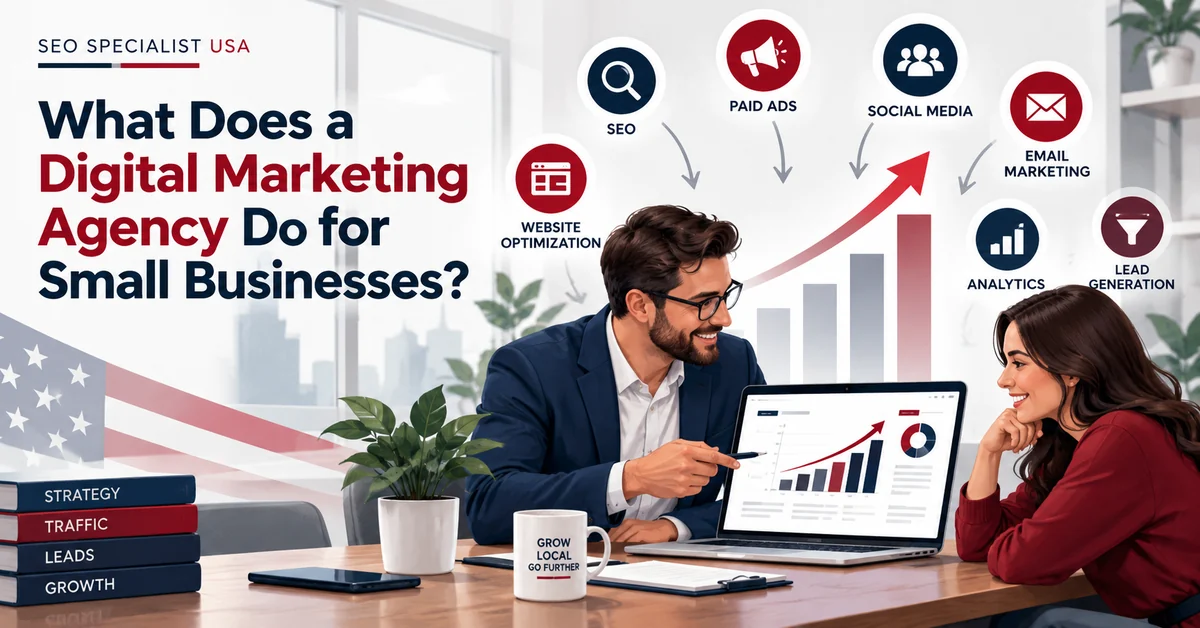
A digital marketing agency helps small businesses attract customers, turn online attention into enquiries or sales, and see which marketing efforts are worth paying for. Depending on the business, it may manage SEO, local search, ads, content, social media, email, website improvements, and tracking. The work should follow business goals.
Key Takeaways
- An agency's real job is to connect marketing activity with useful outcomes, such as qualified calls, booked appointments, and sales.
- Small businesses don't need every channel at once. An agency should identify the most urgent problem before recommending a package.
- The first 90 days often involve discovery, fixing important gaps, launching focused work, and learning from the results.
- Ask for completed deliverables, clear account ownership, transparent spending, and reporting that includes lead quality.
- Recent survey findings show why this matters: many owners spend little time on marketing and remain unsure what's working.
Why Small Businesses Hire Marketing Agencies in the First Place
Imagine you run a roofing company with a decent website and a few positive reviews. Your existing customers recommend you, but new enquiries arrive in waves. You see competitors appearing on Google Maps and in ads, yet you can't tell what it would take to compete sensibly.
You talk to a digital marketing agency. A weak sales pitch starts with a fixed package: four blogs, eight social posts, a few backlinks, and monthly reporting. A more useful conversation starts with your business: Which roofing jobs are profitable? How far can your crews travel? Where do customers drop out of the enquiry process? Can someone answer the phone when an urgent repair request comes in?
The answers can change the entire plan. If your website already attracts local visitors but nobody can complete the quote form on a phone, fixing the form may matter more than adding another campaign. If your service pages don't explain roof repairs and replacements, better content might come before paid ads. There's no value in buying every service just because the agency offers it.
This isn't only a question of skills. Business owners have limited time. A 2025 Fiverr survey of nearly 6,000 small businesses across 25 countries reported that 70% spent fewer than five hours a week on marketing. That helps explain why some owners want experienced people to plan and execute the work rather than trying to learn every platform themselves. [1]
What Should an Agency Do in Its First 90 Days?
The following is a planning example, not a fixed timeline or a claim about what every agency includes. A one-time consultant may do only discovery and recommendations. A retained agency may handle implementation and reporting as well.
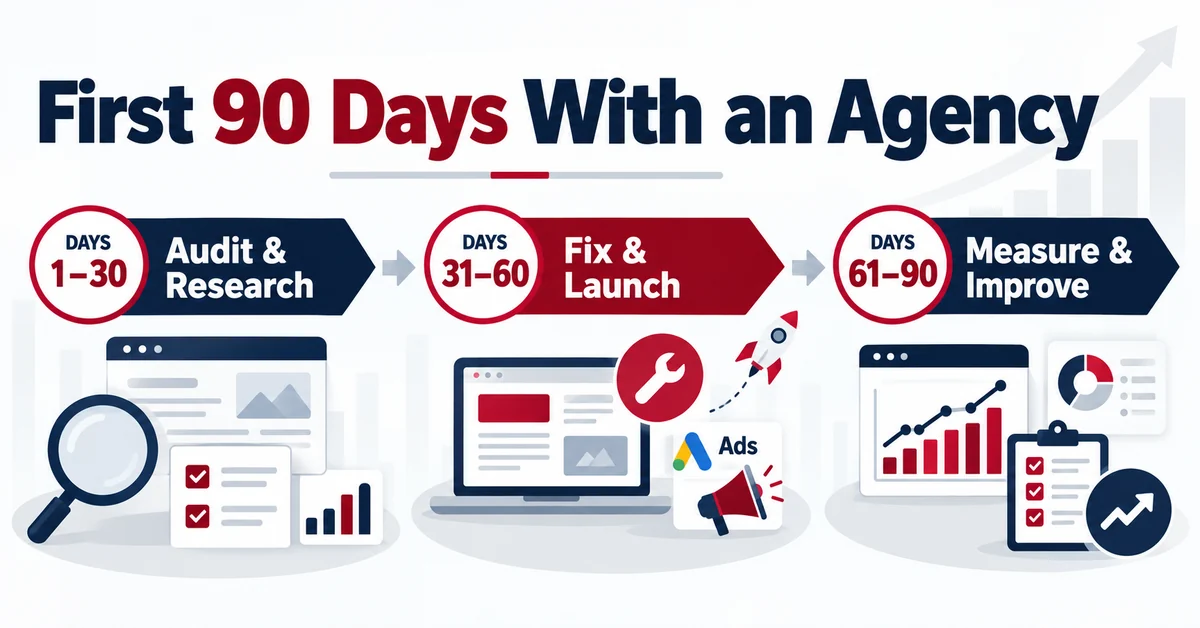
Days 1 to 30: Understand the Business and Find the Biggest Gaps
The agency should discuss your audience, pricing, service area, customer value, competitors, capacity, and previous marketing. Then it can review the website, Google Business Profile if relevant, advertising accounts, lead handling, and available performance data.
What you could receive: a brief audit, a baseline report, tracking recommendations, agreed goals, and a prioritized work plan. You should know what the agency wants to fix first and why. A list of 70 automated website warnings without context isn't a strategy.
Days 31 to 60: Fix Important Problems and Launch Focused Work
For a local company, that might mean clarifying service pages, correcting business information, improving mobile contact buttons, and starting a targeted search campaign. An online retailer may need better product categories, a more usable checkout, or properly measured product ads.
What you could receive: links to the pages changed, campaign settings or creative for review, a clear implementation log, and confirmation that important actions are being tracked. Don't accept optimization completed as the only explanation of what was done.
Days 61 to 90: Review What Happened and Adjust
This is where the agency compares the work with actual signals: relevant traffic, enquiries, qualified leads, booked calls, orders, and cost. It should explain changes in demand, spend, and implementation before jumping to conclusions.
What you could receive: a plain-English performance review, work completed, what didn't perform as expected, and next steps. Ninety days won't prove the long-term value of every SEO effort, but it should produce better visibility into the work and a plan for learning.
The Services a Digital Marketing Agency Might Handle
The right services depend on how people buy from your business. Here's what each channel is meant to accomplish.
|
Agency service |
Typical work |
Best business question |
|---|---|---|
|
SEO |
Improve important pages, crawlability, useful content, and organic search visibility |
Can customers find us when they search? |
|
Local SEO |
Review business profile information, local pages, reviews, and location relevance |
Can nearby customers discover and trust us? |
|
Google Ads |
Build campaigns, choose targets, test ads, manage spend, and review leads |
Can paid search bring relevant enquiries at a sustainable cost? |
|
Social media marketing |
Plan posts, creative, and paid social campaigns |
Where do customers discover or evaluate our brand? |
|
Email marketing |
Build consent-based follow-ups and customer campaigns |
Can we help existing prospects and customers return? |
|
Website and conversion work |
Improve landing pages, mobile forms, navigation, and contact paths |
Why do visitors leave without taking action? |
|
Analytics and reporting |
Track meaningful actions and interpret results |
Which activities deserve more of our budget? |
SEO and Local Search Build Discoverability
SEO helps people find relevant website pages in organic search. An agency may investigate why a high-value service page isn't indexed, why a product category doesn't match search intent, or why the site has overlapping pages. Local SEO adds the business profile, location relevance, business information, and the experience a nearby customer sees when choosing a provider.
For example, a roof replacement page should explain the service, the area served, common decisions homeowners face, and how to request an estimate. A Google Business Profile should give customers accurate information and a sensible path to contact the company. Those assets work together, but they're not interchangeable.
For deeper guidance on local visibility, see SEO Specialist USA's local SEO services. If a website has unresolved search visibility issues, an SEO audit can help establish priorities.
Advertising Can Test Demand, but Clicks Aren't Customers
A paid campaign can put a business in front of selected audiences and searches. The agency may handle targeting, messaging, landing pages, spend controls, and conversion measurement. What it can't do by itself is make a poor offer attractive or guarantee that every enquiry becomes a sale.
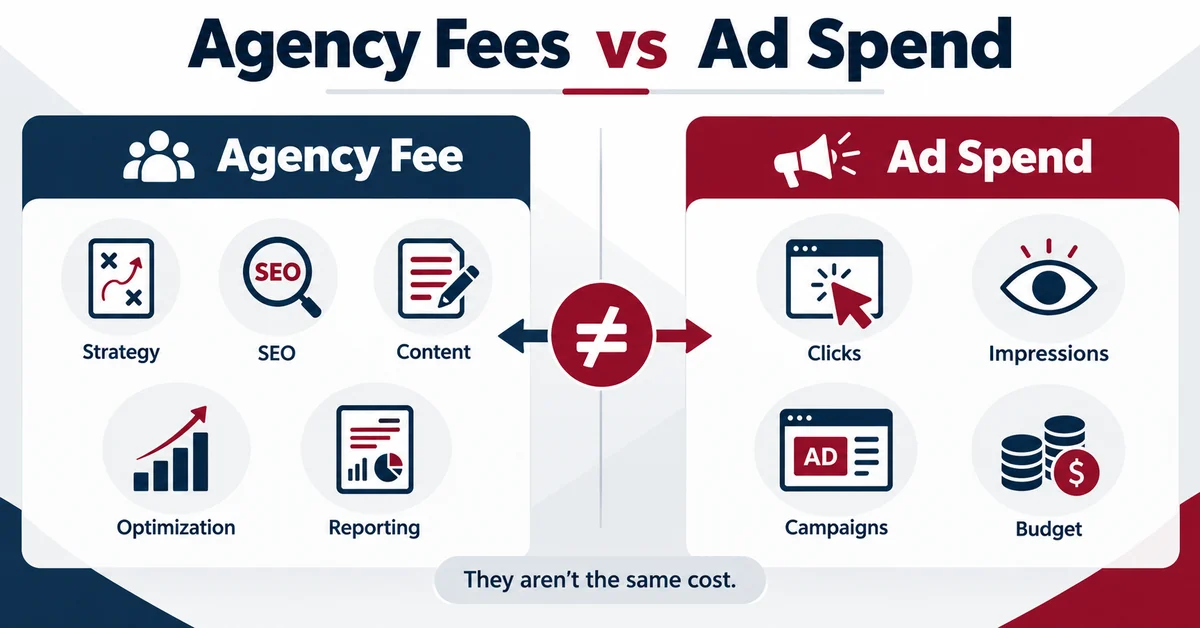
Be clear about the difference between media spend, the agency management fee, and any creative or software costs. Those aren't necessarily one combined price, and you should see each charge in the proposal.
Content, Email, and Social Help Buyers Make Decisions
Some customers search for a provider and call immediately. Others check before-and-after work, compare prices, read reviews, or return several times before making contact. Useful content and email follow-ups can support that journey. Social media may show the team, finished projects, customer stories, or products in use.
More posts aren't automatically better. Ask which customer question each piece answers and what role it plays in the buying journey. The business should also agree in advance who replies to messages, provides estimates, handles appointments, and follows up with enquiries. Those tasks aren't automatically part of marketing management.
A Small Business Doesn't Need Every Channel at Once
A service company, an ecommerce store, and a business-to-business firm may all want more leads, but the work behind that goal can be completely different.
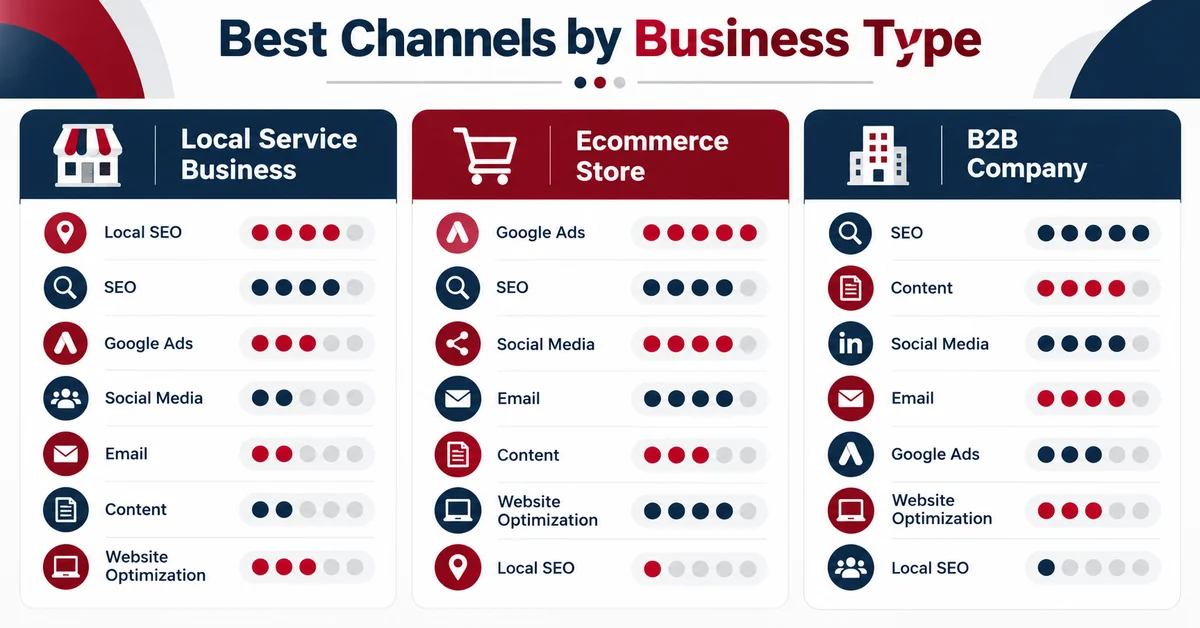
Consider three fictional examples. A roofing contractor may benefit from stronger local service pages, accurate business information, and working call tracking. A skincare shop might need better category pages, product images, checkout usability, and carefully controlled paid product campaigns. A B2B accounting firm may need credible industry-specific content and a clear consultation process.
One size doesn't fit all. A good agency can explain why it is recommending a channel and what evidence would make it change that recommendation.
What Do Recent Small Business Marketing Statistics Tell Us?
Marketing is becoming more competitive, but the research also reveals a gap between spending and knowing what works.
|
Research finding |
Why it matters to a small business |
|---|---|
|
18% felt very confident about marketing effectiveness in a 2025 Constant Contact survey of 2,500 decision-makers across four markets [2] |
Owners need reporting that explains business results, not just activity |
|
92% planned to maintain or increase advertising spend into early 2026 in Intuit's 2025 US survey of over 1,000 marketing leaders [3] |
More spending raises the importance of budget allocation and measurement |
|
97% read reviews for local businesses in BrightLocal's 2026 survey of 1,002 US adults [4] |
Reviews and reputation are part of the customer's research journey |
|
54% said they'd visit a business website after reading positive reviews in that BrightLocal survey [4] |
A credible profile should connect to a helpful website |
These figures come from different surveys with different populations and questions. They don't measure the return on hiring an agency, and they don't prove that one channel works for every business. They do explain why a small business should demand clarity about customer behavior and marketing outcomes.
What Should the Business Owner Actually Pay For?
Many agency proposals are hard to compare because different expenses are bundled together. Ask for a scope that separates ongoing management from advertising spend and optional production costs.
|
Cost category |
Example |
Question to ask |
|---|---|---|
|
Agency fee |
Strategy, reporting, campaign management, or agreed SEO work |
What actions and deliverables are included? |
|
Ad spend |
Payments to Google, Meta, or other advertising platforms |
Is this billed directly to our business account? |
|
Production |
Website changes, photo shoots, video, or landing pages |
Is the work included, outsourced, or billed separately? |
|
Tools |
Reporting, call tracking, email software, or subscriptions |
Who owns the account and can cancel it? |
You don't always need an ongoing retainer. If the immediate problem is a broken enquiry process or a specific SEO decision, a one-time project or consultation may be more suitable. Compare the scope, not just the monthly fee. Our article on how much you should pay for SEO explains the variables affecting SEO pricing.
What a Useful Monthly Report Should Actually Show
A report shouldn't stop at impressions, clicks, rankings, or follower growth. Those can help explain how a campaign is performing, but they aren't the same as revenue or completed jobs.
A worthwhile summary includes what changed, what happened, what the business learned, and what comes next. It should separate genuine customer actions from weaker signals such as clicks on a phone button that never became a conversation.
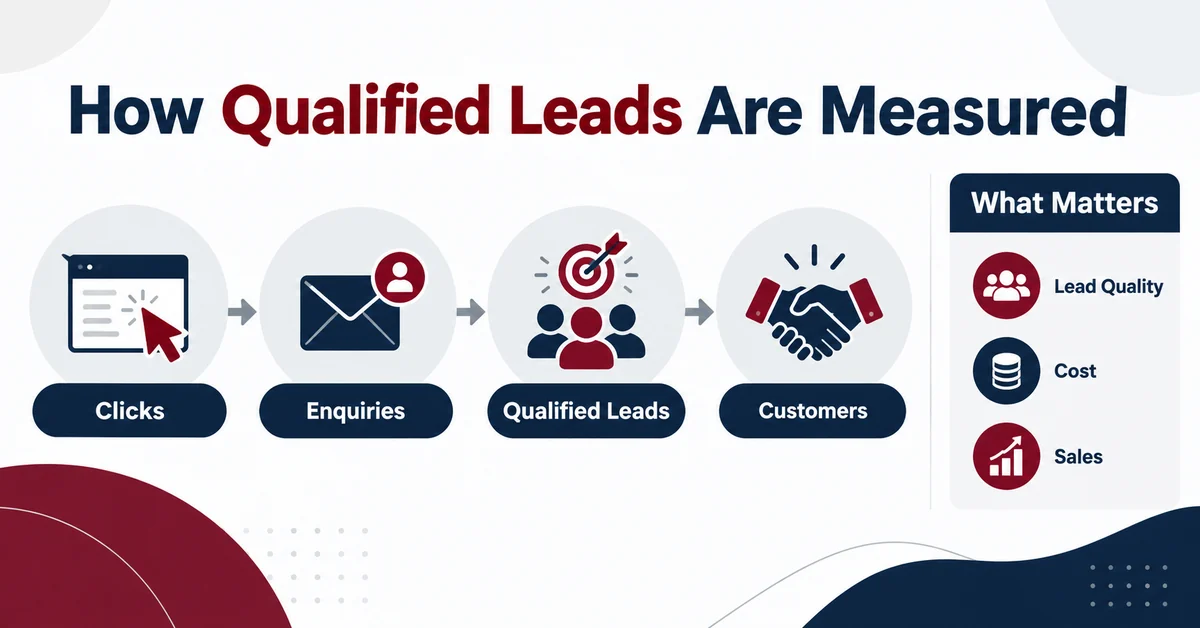
Here's an illustrative example. A campaign gets 1,000 website visits, 60 enquiries, 20 qualified leads, eight booked calls, and five customers. Those figures don't represent a client or industry average. They show why the further down the journey you can measure, the better the decisions you can make.
If the campaign costs $1,200 in total and produces 20 qualified leads, the cost per qualified lead is $60. If five become paying customers, the marketing cost per acquired customer is $240. These are simplified calculations; profitability also depends on order value, gross margin, staffing, and which costs are included.
A real report should note limitations. Google Analytics and ad platforms can measure actions, but they can't always confirm which calls became booked jobs without connected call tracking or sales records. Results can also involve multiple channels and touchpoints.
What Business Owners Are Saying About Marketing Agencies
It's worth looking beyond agency websites when deciding what good service looks like. Reddit discussions don't provide representative survey data, and individual allegations can't be independently verified. But they do show the questions owners ask when a paid agency relationship feels unclear.
In a February 2026 discussion on r/digital_marketing, a multi-location law firm owner described receiving impressions, clicks, and keyword reports while struggling to understand lead quality and business progress. The owner wanted to know how to separate meaningful tracking from a polished sales pitch. [5]
In a July 2026 discussion on r/smallbusiness, an owner of a local service business described paying for several marketing services while feeling unable to control the advertising and analytics setup the agency had created. The concern wasn't just the fee; it was losing access to the accounts. [6]
The lesson isn't that every agency behaves this way. It's that reporting, access, and responsibilities should be agreed before work begins.
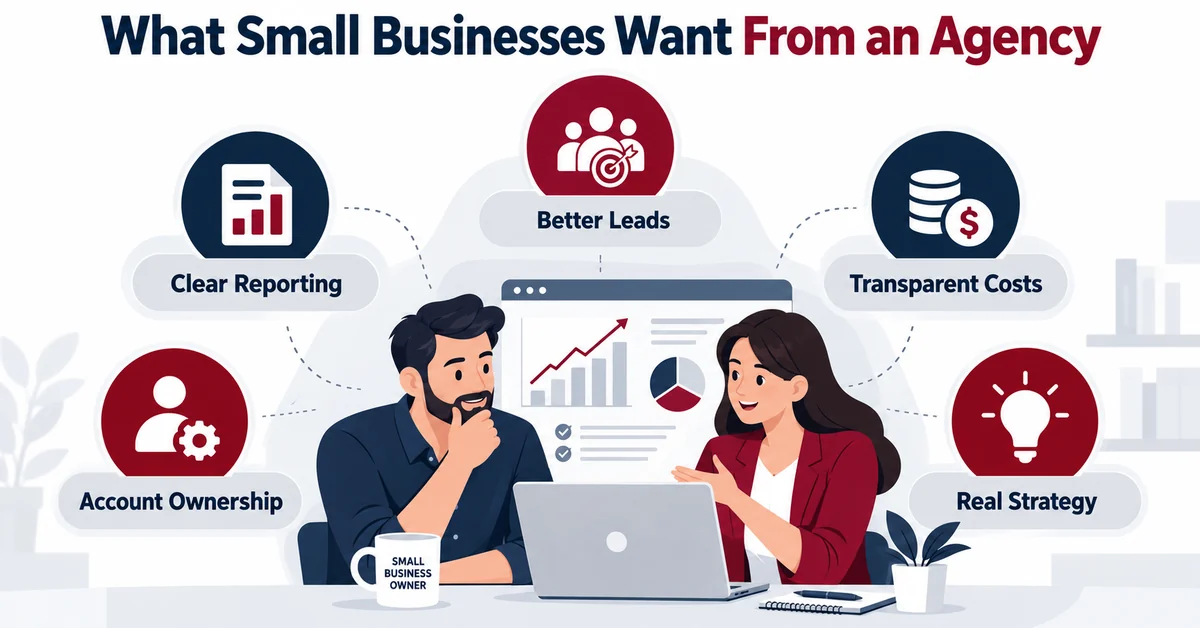
Ask for Proof of Work, Not a Pile of Screenshots
A useful report might say: We rebuilt the mobile enquiry form, added location-specific service details, and tested two advertising messages. Qualified calls increased, but the second campaign's cost is too high, so we're reallocating spend.
That's more helpful than We optimized the website and increased impressions.
Keep Ownership of Your Business Accounts
Your business should retain appropriate owner or administrator control of the website, Google Analytics, Google Search Console, advertising accounts, and important marketing assets. An agency can receive the permissions it needs without becoming the sole gatekeeper. Know how to revoke access when the agreement ends.
Know Who Is Responsible for Sales Follow-Up
An agency may generate leads, but turning them into customers also depends on your pricing, availability, response speed, and sales process. Agree who returns calls, sends estimates, books appointments, and records outcomes. Don't pay for marketing and then assume someone else is automatically handling sales.
Seven Questions to Ask Before Signing an Agency Contract
- What problem are we solving first? Ask for the evidence behind the agency's first recommendation.
- Which services are actually included? Get a written list of deliverables and a clear explanation of what's excluded.
- Who will do the work? Know the strategist, person responsible for implementation, and your main contact.
- Who owns the accounts and content? Keep control of your important business assets and confirm your exit terms.
- What's the full cost? Separate management fees, advertising spend, production, and software.
- How will you track qualified leads? Agree on measures that reflect your sales process and avoid confusing clicks with customers.
- What would cause the strategy to change? The agency should be willing to stop weak tactics, revise priorities, and explain tradeoffs.
For an SEO-specific hiring checklist, see How to Choose an SEO Company.
When an Agency Makes Sense and When It Doesn't
Hiring a digital marketing agency may be worthwhile if you have a clear offer, room to serve more customers, a budget you can evaluate sensibly, and a specific problem that requires expertise or consistent execution.
It may be premature if you can't respond to enquiries, the offer isn't ready, the website needs only a minor fix, or you haven't established what an additional customer is worth. A focused review may be more appropriate than a large campaign.
The same principle guides good SEO: prioritize work according to what matters for the actual website, not according to the number of tasks on a monthly checklist. SEO Specialist USA explains this approach in its guide to prioritizing SEO work.
How SEO Specialist USA Can Help Small Businesses
SEO Specialist USA focuses on the search side of digital marketing: diagnosing visibility problems, improving useful service pages, reviewing technical issues, and helping local businesses connect relevant search traffic with business goals.
For a small business, that might mean checking indexing and mobile usability before writing another blog, improving an existing service page before creating a new one, or clarifying what search visitors should do next. The goal is a plan you can understand and measure, not a long list of unexplained tasks.
If your business needs help with search visibility, start with an SEO audit or contact SEO Specialist USA to discuss your priorities. Get SEO Help
Frequently Asked Questions
What does a digital marketing agency do for a small business?
A digital marketing agency plans and manages online activities that help a small business attract suitable customers. Services may include SEO, paid ads, content, social media, email, and analytics. The exact responsibilities should be based on business goals and documented in the agreement.
What should a small business expect from a marketing agency each month?
Expect a clear account of completed work, relevant performance results, spending, problems, and next actions. The report should explain how campaigns contribute to enquiries or sales, not just display clicks, impressions, or follower counts without context.
Is hiring a digital marketing agency worth it for a small business?
It can be worthwhile when the business has a realistic budget, a clear customer offer, and enough capacity to handle more enquiries. Compare the cost of the agency with the quality of its work and the value of customers gained.
How much does a digital marketing agency charge small businesses?
Pricing varies with the scope, channels, workload, and level of support. Some agencies use monthly retainers, while others offer projects or consulting. Ask for a quote that separates the agency's fee from ad spend, creative work, and software charges.
Can a digital marketing agency guarantee more sales?
No agency can guarantee sales from every campaign. Results depend on market demand, competition, budget, the offer, and how quickly the business responds to leads. A responsible agency should agree on measurable goals and explain the risks and assumptions.
Should a small business start with SEO or paid advertising?
Start with the channel that fits customer intent, budget, and urgency. SEO can support organic discovery over time, while paid ads can test demand sooner. An agency should assess the website and customer journey before recommending either approach.
Who owns Google Ads and analytics accounts when an agency manages them?
The business should generally retain owner-level control of its advertising, analytics, and website accounts. Give the agency the permissions needed to work. Confirm account ownership, data access, and transfer procedures in writing before the engagement starts.
How can I tell if an agency is delivering good results?
Compare its work with agreed goals, qualified leads, booked appointments, orders, and costs. Ask what changed and why. Strong reporting makes it possible to distinguish greater visibility from genuine business results and shows what the agency plans to improve next.
Final Thoughts
A good marketing agency should make your business easier to find, easier to trust, and easier to contact. But the real value comes from knowing which efforts deserve attention, which results are meaningful, and when a plan needs to change.
Before signing a contract, make sure you understand the work, the budget, the people responsible, and what you'll own at the end. That's more useful than any promise of instant growth.
Sources and Editorial Notes
[1] Fiverr International, Small Business Month Survey, May 8, 2025. Nearly 6,000 businesses surveyed across 25 countries. https://investors.fiverr.com/news-releases/news-release-details/fiverr-small-business-month-survey-marketing-seen-key-growth
[2] Constant Contact, The State of Small Business Marketing, September 3, 2025. Survey of 2,500 small-business decision-makers across the US, UK, Canada, and Australia. https://www.constantcontact.com/news/2025-09-03-the-state-of-small-business-marketing-effort-is-up-while-confidence-has-declined
[3] Intuit SMB MediaLabs, 2025 Small Business Advertising Trends Report. Survey of more than 1,000 US marketing leaders. The 92% figure combines maintain and increase intentions, not observed spending. https://quickbooks.intuit.com/r/small-business-data/advertising-trends-2025/
[4] BrightLocal, Local Consumer Review Survey 2026, February 11, 2026. US adult consumer panel, n=1,002. Questions concern consumers and local reviews, not marketing agencies. https://www.brightlocal.com/research/local-consumer-review-survey/
[5] r/digital_marketing, Deep into hiring a digital marketing company. Help me cut the noise, February 2026. First-person, unverified anecdote. https://www.reddit.com/r/digital_marketing/comments/1r55j84/deep_into_hiring_a_digital_marketing_company_help/
[6] r/smallbusiness, I'm sick of my marketing agency, July 2026. First-person, unverified anecdote. https://www.reddit.com/r/smallbusiness/comments/1v83u2r/im_sick_of_my_marketing_agency_questions_about/